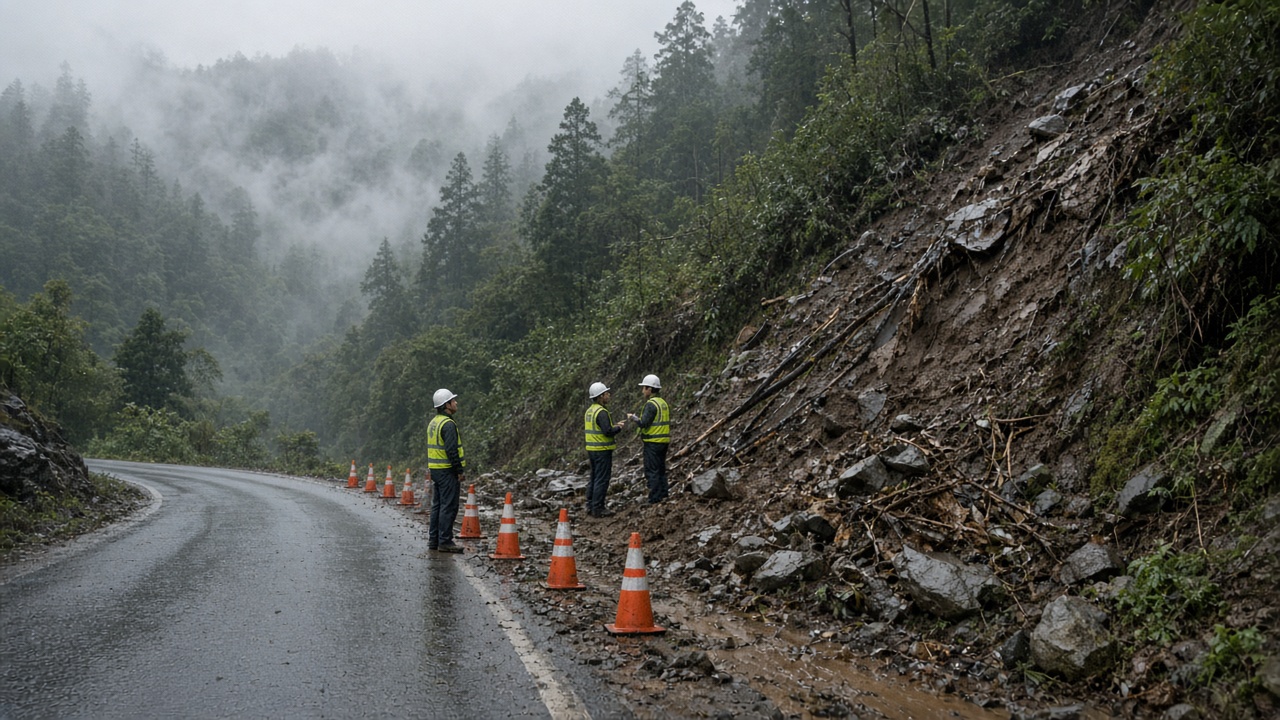
Taiwan’s Forestry and Nature Conservation Agency issued orange mudslide advisories for 42 riverside villages in Nantou, Chiayi, and Taichung on Wednesday, closing popular trails including sections of the Batongguan Historic Trail and Hehuanshan approaches until engineers resurvey saturated slopes. The alert follows three days of orographic rainfall that dropped more than 600 millimeters on Yushan’s windward faces without a named typhoon.
Why central Taiwan is exposed
Last year’s Typhoon Krathon left debris chutes and weakened root mats along the Central Cross-Island Highway corridor. The Soil and Water Conservation Bureau said 18 monitored streams crossed yellow alert discharge thresholds overnight, triggering automatic text messages to village chiefs. Several hot spring towns in Ren’ai Township suspended shuttle buses to trailheads even before formal closures posted.
Geologists note that September sun can bake surface crusts while deeper soils remain fluid—a combination that produces shallow landslides when afternoon thunderstorms arrive. CWA radar showed training cells parked over Puli for six hours Tuesday, exactly the pattern rescue teams fear after holiday hikers crowd parking lots on clear mornings.
Recreation and indigenous access
Permit holders for restricted mountain entries received SMS cancellations with rebooking links, but indigenous hunters who use ancestral paths said blanket closures complicate ceremonial schedules. Agency officials promised case-by-case escorts when tribal councils file requests 48 hours ahead, a compromise tested during April’s flood season.
Commercial tour operators in Sun Moon Lake reported a wave of last-minute cancellations, pushing revenue toward lowland bike paths that agencies consider safer but ecologically stressed from overtourism. Hotels offered rerouted day trips to paper museums and black tea farms, a pivot that does little for guides certified for high-altitude treks.
Preparedness checklist
Residents are asked to pack go-bags with three days of medication, not just the overnight kits promoted for typhoons. SWCB’s mobile app now layers mudslide potential atop rainfall maps; downloads spiked 40 percent since Monday. Fire departments in Taichung pre-positioned pumps near Qingshui cliff roads, where a 2023 slide blocked evacuation routes for twelve hours.
Forecasters see a brief drying trend before the next plum-rain front, buying time for drone surveys. Until those flights finish, the agency’s message is blunt: the mountains are open for science teams, not selfie runs—Golden Week crowds will have to find drama closer to sea level.
Highway crews on alert
The Directorate General of Highways stationed extra patrols along the Central Cross-Island Highway, where minor rockfalls already narrowed one lane near Taroko Gorge approaches. Tourist buses headed to Hehuanshan sunrise viewpoints were rerouted to lower elevation lookouts, adding an hour to itineraries but keeping passengers off slopes engineers marked unstable.
County governments opened gymnasiums as overnight shelters for residents in yellow-tier villages, a precaution rarely activated without a typhoon name attached. Volunteers stocked sandbags at fire stations in Zhuolan, repeating drills from 2024 when an unnamed front triggered mudflows that buried a farm road overnight.