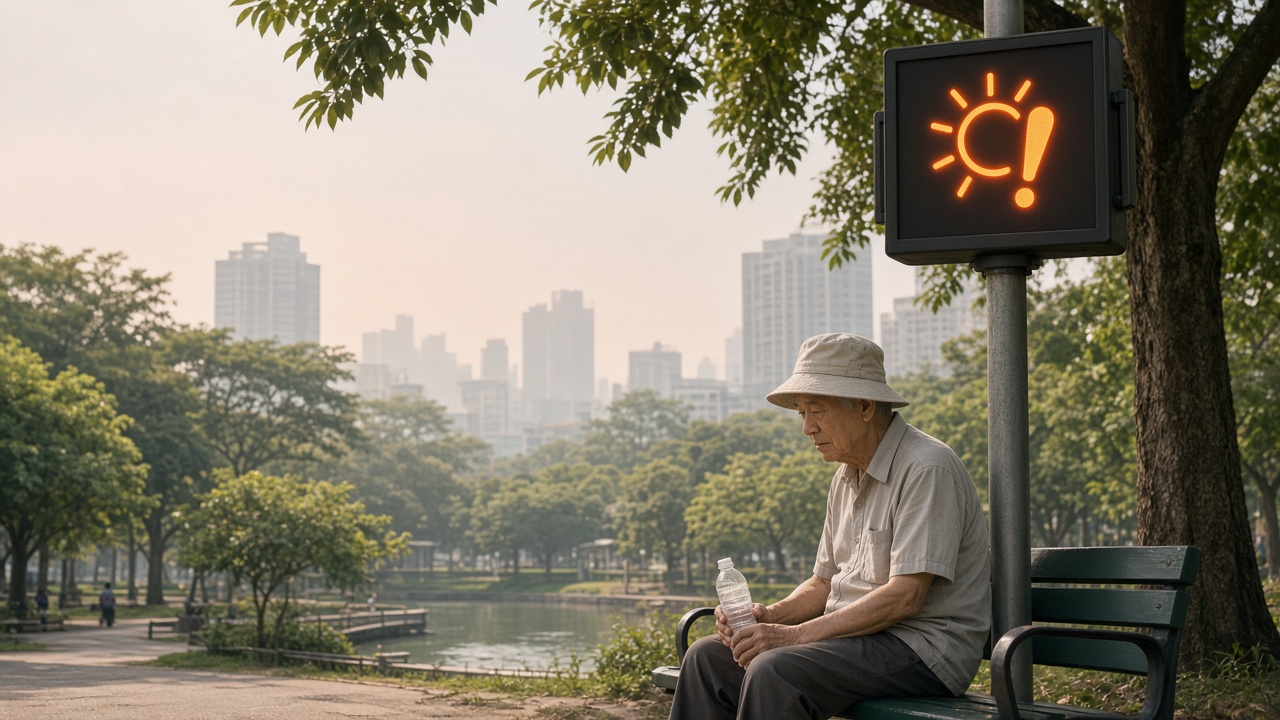
Taiwan’s Ministry of Health and Welfare widened its late-summer heat-illness advisories on Wednesday, adding six central and southern counties to the “orange” tier after the Central Weather Administration logged three consecutive days of apparent temperatures above 38°C in Chiayi and Tainan. The move is less a surprise heat wave than a recognition that September humidity is keeping wet-bulb stress high even when afternoon clouds roll in.
What changed on the alert map
Orange alerts now cover Taipei, New Taipei, Taoyuan, Taichung, Tainan, Kaohsiung, Pingtung, Chiayi, and Hualien. County health bureaus must open cooling centers through 8 p.m., extend outreach to construction sites, and report heat-related emergency visits twice daily. Yellow advisories remain for outlying islands where sea breezes blunt peak heat but dehydration risk stays elevated for fishers and tour guides.
Officials stopped short of work stoppage orders. Labor Ministry guidance still allows outdoor shifts when employers provide shade, hourly breaks, and electrolyte drinks—a standard union leaders in Kaohsiung say many small contractors ignore until an inspector calls.
Hospital capacity in the capital
Taipei City Hospital said its three emergency departments treated 142 suspected heat illnesses between Saturday and Tuesday, up 28 percent from the same week last year. Most cases were dizziness and cramps among delivery riders and seniors who skipped air conditioning to save on electricity bills after Taipower’s summer rate tier kicked in.
Physicians emphasize that heat stroke can arrive without thirst. “We are seeing people who drank water but not salt,” said Dr. Lin Mei-hua, an emergency physician at Wanfang Hospital, who is not a government spokesperson. Intravenous fluids and aggressive cooling remain the protocol when core temperature crosses 40°C.
Guidance for households
The health ministry urged families to check on neighbors who live alone, especially on upper floors where rooftop heat reradiates into apartments at night. Pediatricians added a reminder that school athletic practices in the afternoon should move indoors when the wet-bulb globe temperature exceeds ministry thresholds—several districts in New Taipei delayed junior-high scrimmages on Tuesday after a student fainted during drills.
Masking is no longer central to public messaging, but clinicians note that heat stress plus poor ventilation in packed MRT cars can compound lightheadedness; the Taipei Rapid Transit Corp. said it would run fans at full speed in underground sections regardless of outdoor wind.
Climate context without the sermon
September used to be when Taipei residents felt relief. CWA data show the island’s coastal plains now average two extra “extreme heat” days in the month compared with the 1991–2020 baseline. The ministry’s alert system, revised in 2024 after a deadly outdoor race in 2023, is designed to trigger before wet-bulb readings hit the thresholds researchers associate with reduced outdoor labor tolerance.
Energy planners watch the same numbers: higher alert days correlate with peak air-conditioning load that strains Taipower’s gas-fired fleet. For now, the public health ask is simpler—treat heat like typhoon prep, not background noise, until the plum-rain transition actually arrives.