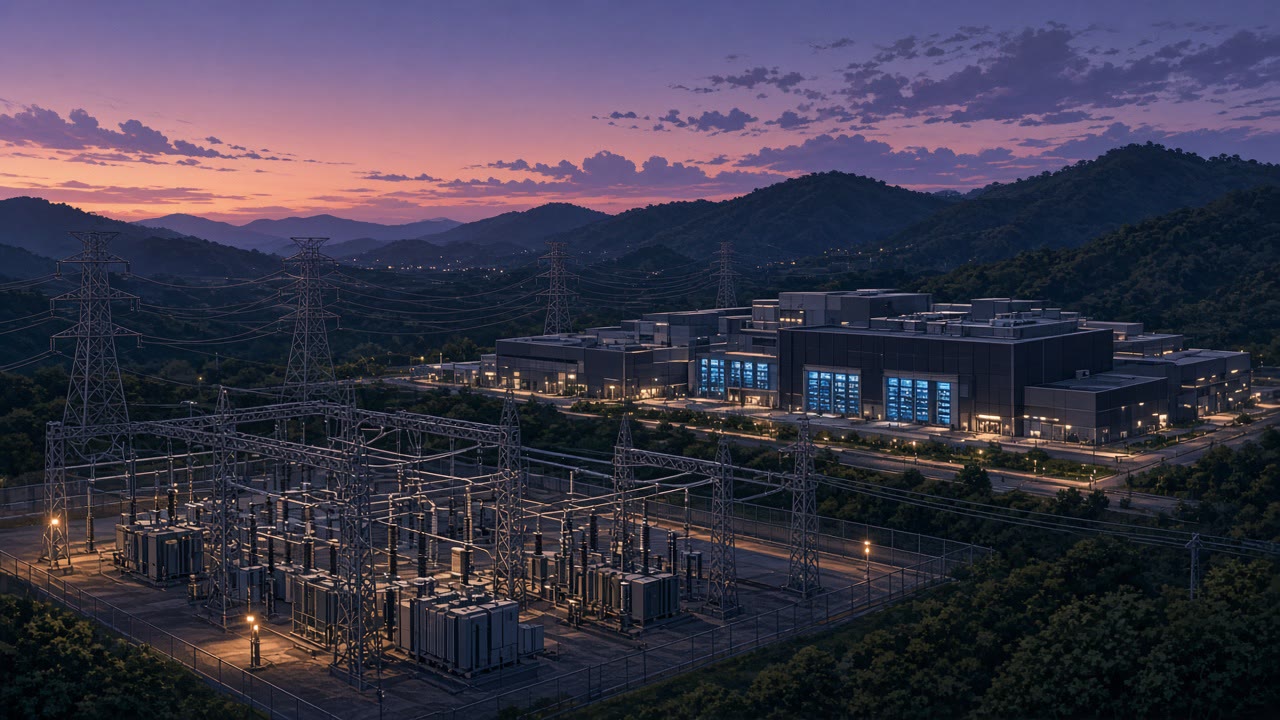
Landlords hosting GPU clusters in the Hsinchu Science Park are renegotiating megawatt power budgets with Taiwan Power Company after a late-summer demand spike triggered voluntary curtailment drills, according to lease amendments and utility briefings reviewed by InfoHandle.
Why contracts are reopening
AI training and inference racks draw steadier baseload than the cyclical fab tools next door, but their peaks are sharper when labs launch thousand-GPU fine-tuning jobs. Taipower’s industrial tariffs include demand charges that punish 15-minute spikes; two colocation operators said their bills jumped 18 percent year over year even before adding new halls.
Science-park rules cap per-building draw without substation upgrades. Several AI tenants hit those caps in August when heat waves pushed chiller loads higher. Taipower asked large users to participate in a load-shed rehearsal; AI operators complied but demanded clearer rules on which workloads must pause first.
Shared infrastructure with fabs
Chip manufacturers already co-fund substation expansions with predictable schedules tied to lithography tool installs. AI landlords want similar co-investment language: if a GPU farm signs a ten-year lease, Taipower should model feeder upgrades on the same timeline as a new EUV bay.
One amendment seen by InfoHandle splits upgrade costs between a foundry tenant and an AI colocation provider sharing a feeder line. The AI operator gains guaranteed headroom for an additional two megawatts; the fab retains priority during grid emergencies defined in a new annex.
Policy pressure in Taipei
The Bureau of Energy is drafting guidance on labeling AI datacenters as “strategic load” without exempting them from carbon fees. Legislators from Hsinchu counties asked whether AI clusters should receive the same interruptible-rate discounts as semiconductor plants that can throttle non-critical tools.
Environmental groups counter that renewable credits sold to AI tenants must not crowd out manufacturing lines already paying green premiums. Taipower officials told a closed industry forum that any discount requires demonstrated flexibility—meaning tenants must prove they can shed inference batches within minutes.
Technical mitigations on the ground
Operators are installing battery buffers and shifting some inference to night windows when Taipower’s grid mix includes more nuclear and offshore wind. A Hsinchu colocation firm piloted liquid-cooled rear-door heat exchangers to cut chiller demand, trading capex for lower demand charges.
GPU vendors’ power-capping firmware is now part of procurement checklists. Buyers want cards that honor 300-watt ceilings during grid events without crashing training jobs—a requirement that pushed one lab to keep a “warm standby” CPU cluster for checkpointing.
What tenants are signing
New leases include power-attestation clauses: tenants report expected job schedules monthly so landlords can bid into Taipower’s demand-response auctions. Failure to report triggers fees, mirroring fab practices for tool energization notices.
Smaller AI startups without balance-sheet depth are pooling purchases through science-park incubators that negotiate block rates. The incubators act as a single Taipower account, reducing per-tenant minimum demand charges that made solo GPU closets uneconomic.
Outlook for Taiwan’s AI buildout
Consultants at the Taiwan Institute of Economic Research estimate Hsinchu could add 400 megawatts of AI-specific load by 2028 if current lease pipelines convert. Without feeder upgrades, half that capacity may stall in planning committees.
For operators in the park, the story is not model weights—it is whether electrons arrive on time. Hsinchu’s AI clusters are learning the same lesson fabs learned decades ago: the wafer is only as fast as the substation behind it.
Water and heat reuse
Some park buildings are piping waste heat from GPU rows into district hot-water loops serving nearby dormitories, a project Taipower counts as discretionary load reduction during audits. AI tenants receive modest tariff credits when they prove recovered megawatt-hours quarterly.
Water-stressed townships downstream of the park asked whether cooling towers for AI halls will compete with agricultural irrigation during drought years. Landlords responded with closed-loop designs that cut freshwater draw by 30 percent compared with legacy air-cooled datacenters.
Financing tools
Two Taiwanese banks launched green capex lines earmarked for substation upgrades tied to AI leases. Borrowers must publish curtailment playbooks to qualify—another sign that electrons, not FLOPs, gate Hsinchu’s next expansion wave.