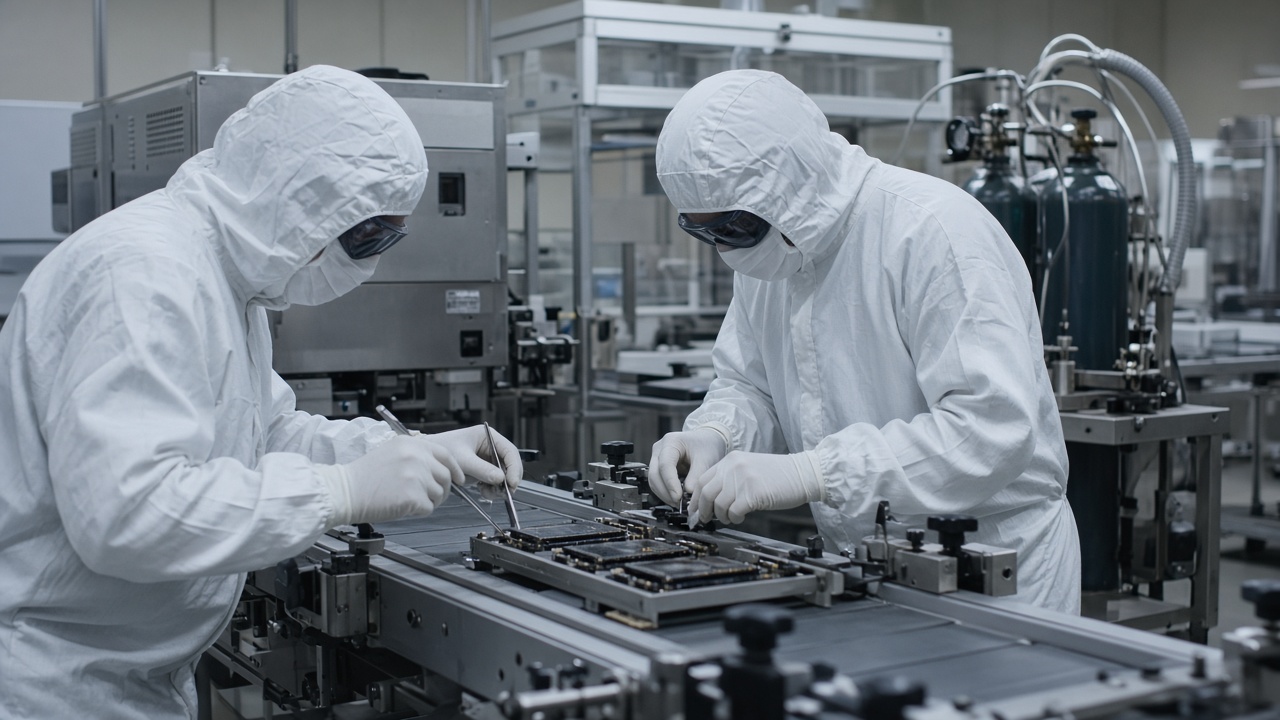
Several Intel Foundry customers have pushed advanced packaging tape-outs into early 2027 as substrate and interposer capacity at Arizona and Oregon campuses fails to keep pace with front-end wafer commitments, according to program managers and supplier letters reviewed by InfoHandle.
Where the queue stalled
The delays hit multi-die tiles bound for AI accelerators and networking ASICs that were slated for Intel 18A silicon plus Foveros Omni packaging. Engineers said mask data and silicon wafers cleared internal sign-off, but packaging slots disappeared when a third-party organic substrate vendor reduced allocations after a yield excursion in August.
Intel Foundry Services executives told partners in a September webinar that Arizona Module 1 remains on track for high-volume manufacturing, yet the packaging line beside it is still running qualification lots rather than customer production. That mismatch leaves fabs holding finished die in nitrogen storage while system integrators miss rack-ship dates promised to hyperscalers.
What customers are doing
Two U.S. chip designers said they moved one product family back to a Taiwan competitor for CoWoS-style integration while keeping a second SKU on Intel for geopolitical diversification. A networking vendor paused a 2026 platform refresh and will instead ship a single-die variant with lower memory bandwidth—an engineering compromise buyers hoped to avoid when they signed foundry statements of work last year.
Defense contractors with trusted-foundry requirements have fewer options. One program office accepted a six-month slip after Intel offered expedited slots on an older Foveros generation with narrower memory interfaces, trading performance for schedule certainty.
Substrate and interposer supply
Packaging bottlenecks are not unique to Intel, but the foundry’s public bet on U.S. advanced packaging magnifies each shortage. Substrate suppliers in Japan and Taiwan are prioritizing long-term Nvidia and AMD orders, leaving smaller Intel Foundry logos at the back of allocation meetings.
Equipment vendors report longer lead times for thermocompression bonders and laser-assisted debond tools Intel ordered for Oregon expansions. Until those tools arrive, technicians are manually rebalancing work-in-process between lines, which caps weekly unit output regardless of wafer input.
Contract and liability language
Customers are re-reading force-majeure and capacity clauses. Some statements of work tie liquidated damages to packaging delivery dates, not wafer acceptance. Legal teams are negotiating credits against future mask sets rather than cash penalties—a sign both sides expect the crunch to persist through at least one more holiday build season.
Intel has not disclosed which logos slipped; spokespeople said the foundry is “actively sequencing customer ramps” and investing in substrate pre-buy agreements. Analysts tracking capital intensity note Intel is still spending on packaging clean rooms even as external investors question the pace of external customer revenue.
Support and integration risk
Platform software teams feel the packaging delay as much as silicon teams. Board-support packages and power-virus scripts were validated on integrated tiles; single-die fallback parts need new validation cycles with OEMs who expected plug-compatible modules.
For Intel’s own products, the packaging queue competes with external foundry customers—a tension familiar from TSMC’s Apple-first scheduling, but newer to Intel Foundry marketing slides that promise neutral capacity.
What changes next quarter
Suppliers expect a modest release of packaging slots after Oregon qualifies a second substrate vendor in October. Customers said they will believe the capacity when tape-out confirmation emails include firm ship weeks, not quarters.
Until then, the story is less about node bragging rights and more about whether finished die can leave Arizona in a package a server OEM can actually solder down—a bottleneck sources describe as the gating item for 2026 U.S. AI rack builds, not the transistor pitch alone.
Tooling vendors and lead times
Packaging equipment makers said Intel accelerated purchase orders for die-attach and mold compound systems in July, but shipping slots remain six to nine months out because Asian fabs booked the same tools first. Intel is air-freighting some modules to Oregon while civil work finishes in Arizona, a costly workaround that does not add net capacity until installers commission the lines.
Metrology vendors report more requests for inline X-ray on stacked dies after customers refused first articles with hidden voids. Each additional inspection step adds cycle time, reinforcing why tape-out dates slip even when wafers are ready.
Customer communication norms
Foundry account teams now send weekly packaging queue position emails with numeric ranks instead of vague “green/yellow” status lights. Chip executives said the transparency helps their CFOs explain revenue pushes to boards, even when the news is unwelcome.
Industry conferences this fall will test whether Intel can announce new external logos without answering the packaging question first. Partners said they will listen for named substrate suppliers and committed square footage, not slide art of fabs alone.