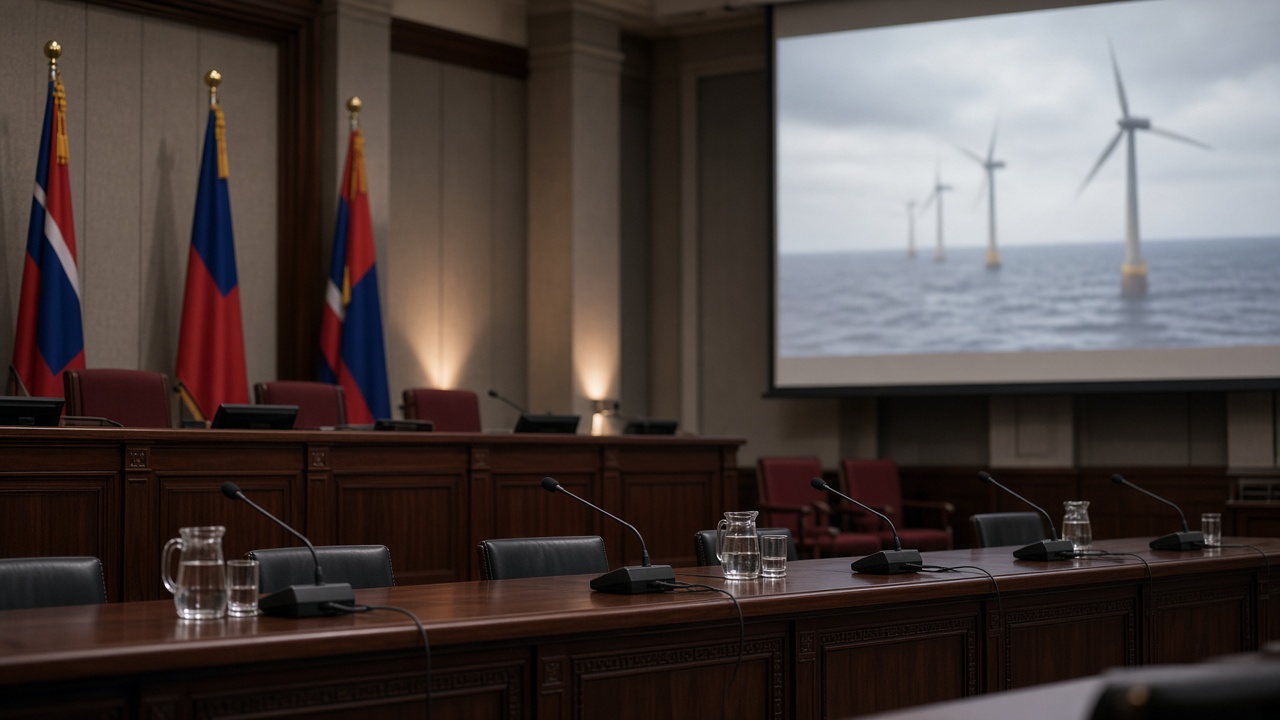
Taiwan’s Legislative Yuan Economics Committee summoned Taipower executives and two offshore wind developers Tuesday, ordering a public week-by-week chart of expected energization dates after several round-two projects missed internal targets tied to summer peak demand.
Calendar and control
Committee chair Ko Ju-chun opened the session by citing Bureau of Energy slides showing at least three farms shifting commercial operation dates from the third quarter of 2026 toward December. Opposition lawmakers asked whether delayed megawatts would force additional gas units online during typhoon season, when maintenance windows are already tight. Taipower Vice President Lin Ming-huang said reserve margins remained above the statutory floor but conceded that “localized congestion” near Changhua substations could worsen if cable landings slip further.
Developers Wpd and Copenhagen Infrastructure Partners testified that harbor queue times and typhoon shutdowns consumed most of their July–August installation days. They asked the Ministry of Economic Affairs to coordinate military exclusion zones earlier next season—a procedural request, not a budget line, but one that requires Legislative notification under existing offshore statutes.
Environmental groups seated in the gallery argued that faster energization should not shortcut fisheries consultation; Ko replied that the committee would hold a separate hearing on marine habitat offsets before any contract renegotiation bill advances.
Vote versus statute
No bill advanced Tuesday. The tangible output was a bipartisan motion directing Taipower to file the energization chart within 14 days and to brief the committee again after the Mid-Autumn recess. A Kuomintang lawmaker proposed withholding part of a grid modernization fund until the chart publishes; Democratic Progressive Party members said they would consider the idea if Taipower’s response lacks substation-level detail.
That fight is about disclosure, not yet appropriations. Still, it gives whips a hook if September storms damage onshore export cables—as happened in 2024—without a backup timeline.
District effect
Changhua County fishermen’s associations submitted a petition asking for compensation language in any revised contracts. Their concern is not abstract: delayed export cables prolong construction traffic in ports they rely on during the autumn squid season. The committee clerk counted 42 petitioners in the log, enough to matter in a tight county race but far below the threshold for a floor fight.
What changes law or money
Tuesday’s hearing changes neither tariffs nor auction rules. It does place a calendar on the record—something Taipower avoided in spring briefings. If the chart shows December energization while peak demand forecasts still assume October megawatts, the next fight will be a supplemental budget for gas storage, not press releases about green leadership.
Staffers for both major caucuses said they will compare the forthcoming chart against typhoon repair budgets already queued at the Transportation Committee. A mismatch there would give opposition lawmakers grounds to slow unrelated energy tax items—a procedural consequence even if no statute changes this month.