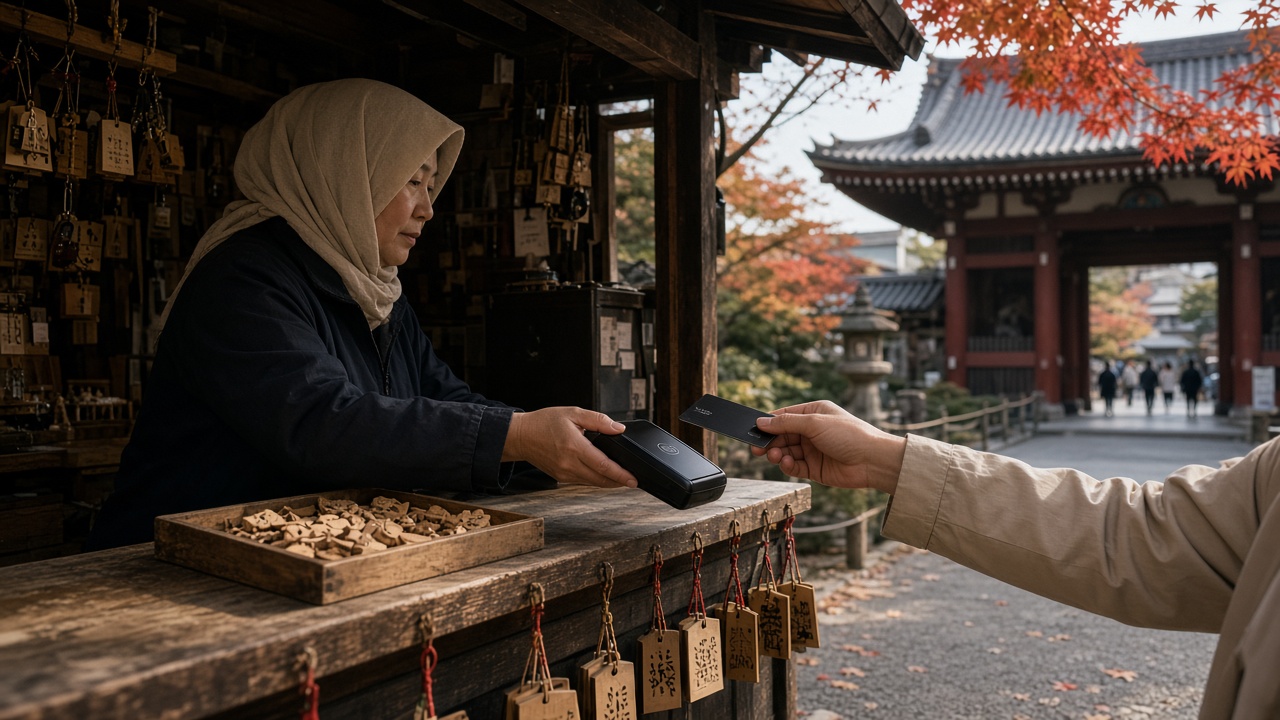
Mitsubishi UFJ Financial Group Inc. began a limited pilot this month that pays inbound tourists dynamic foreign-exchange cashback on contactless card spend at participating merchants in Tokyo’s Chiyoda and Osaka’s Namba districts. Rebate percentages adjust weekly based on hotel occupancy feeds and transit gate volumes shared by municipal tourism boards, an experiment MUFG says could widen if Silver Week spending clusters as forecast.
How the pilot works
Foreign-issued Visa and Mastercard credentials tapped at registered souvenir, dining, and drugstore terminals can earn cashback credited in yen to a linked mobile wallet within 48 hours. The FX spread MUFG normally embeds in acquirer pricing is partially rebated when algorithms predict underutilized weekday slots, nudging tourists toward off-peak shopping that smooths merchant staffing.
Cashback rates published in English and simplified Chinese inside the MUFG inbound portal have ranged from 0.3% to 1.2% during the first two weeks—below aggressive fintech travel cards but meaningful on high-ticket electronics purchases subject to tax-free procedures. Participating merchants display QR decals verified by MUFG Bank’s acquirer arm, not third-party buy-now-pay-later brands.
Why inbound FX matters now
Japan Tourism Agency statistics show visitor spending recovering faster than 2019 levels in nominal yen terms, even as global card issuers compete on FX fees for tourists. MUFG earns acquirer margin on each tap; rebating a slice trades short-term spread for volume and data on where tourists actually spend, not just airport duty-free.
The yen’s volatility against the dollar and Korean won this summer made static FX pricing look expensive on social media travel forums. Dynamic rebates let MUFG respond without publicly cutting interchange tables that would affect domestic merchants too.
Data partnerships and privacy
Occupancy signals come from hotel associations that aggregate anonymized reservation counts; transit boards supply ticket-gate entries from IC card readers at major stations. MUFG’s privacy notice states personal card identifiers are hashed before joining tourism feeds, and tourists can opt out in the wallet settings.
Financial Services Agency officials viewed the pilot briefing in August under the sandbox-style dialogues MUFG maintains for payment innovation. No statutory waiver was needed because cashback is a marketing rebate, not a deposit product.
Merchant and municipal incentives
Chiyoda Ward tourism office co-marketed the pilot with autumn culture week events, hoping to pull visitors from Ginza luxury strips into smaller shotengai arcades. Osaka Namba merchants joined after seeing Kyoto experiment with municipal discount vouchers that did not integrate card rails.
Rebates stack with tax-free shopping procedures where eligible, though customs limits still apply. MUFG staff at airport pop-up desks help tourists register cards before they ride the Narita Express, reducing support calls about declined contactless taps on older terminals.
Risks and competition
PayPay and other QR wallets run parallel tourist campaigns with fixed coupons; MUFG’s angle is automatic FX rebates without scanning codes. If the Bank of Japan widens rate differentials with the Federal Reserve, MUFG may shrink cashback ceilings to protect acquirer margin—executives said parameters are reviewed every Friday.
Foreign fintech cards marketing zero FX fees remain the benchmark on Reddit travel threads. MUFG is betting bank-grade dispute resolution and branch ATMs still matter when tourists lose cards or need stamped tax documents.
Silver Week stress test
Respect for the Aged Day and equinox holidays will crowd transit gates; algorithms should lower rebates when occupancy exceeds thresholds, preventing runaway subsidy costs. MUFG set a yen cap per card per week transparent on its website.
Analysts covering megabanks treat the pilot as immaterial to group profit this quarter but watch for signs MUFG will bundle cashback with MUFG Card platinum offers for repeat visitors from Taiwan and Southeast Asia.
What success looks like
Internal targets include higher tap share at mid-tier merchants and more wallet sign-ups than static coupon campaigns achieved in 2025 tests. If metrics hit, MUFG may expand to Fukuoka and Sapporo before winter ski season, linking rebates to snowfall forecasts and onsen occupancy—another layer of dynamic FX marketing built on Japan’s inbound recovery.