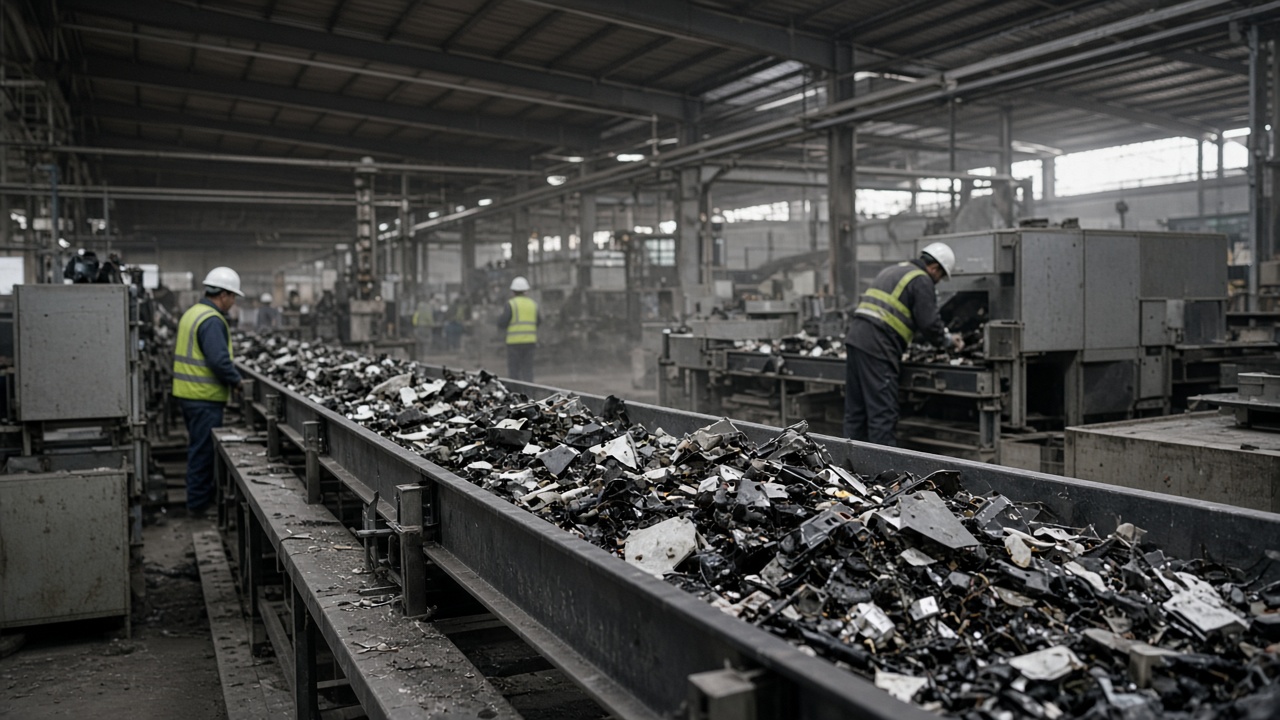
Phoenix-based battery recycler Circline Materials closed a $118 million Series B led by climate infrastructure funds that priced the round around clarified Internal Revenue Service rules on advanced manufacturing production credits for black-mass recovery, according to term sheets and investor memos reviewed by InfoHandle.
What the round actually bought
About sixty percent of proceeds earmarks a second hydrometallurgical line in Mesa, Arizona, doubling throughput for nickel-cobalt-manganese concentrate pulled from end-of-life EV packs and consumer electronics. The remainder funds working capital for feedstock contracts with fleet operators retiring early-model Teslas and Nissan Leafs at scale.
Founders retained roughly thirty-eight percent voting control after the raise, with new investors taking one board seat and observer rights on a government-relations committee. Prior Series A backers participated pro rata; no public strategic from an automaker joined this tranche despite courtship calls last spring.
IRA credit math that closed the deal
Investors said the round would have stalled in Q2 without Treasury guidance tying §45X credits to domestic processing steps Circline already performs—shredding, sorting, and chemical precipitation—not merely warehousing imported black mass. The clarification let funds model a credit stack atop offtake prices without assuming a future rulemaking win.
One lead investor’s memo projects $42 million in annual credit value at full Mesa capacity, discounted heavily in the model. Even at half that, returns clear fund hurdles if lithium carbonate spot prices stay above 2024 lows.
Dilution and governance
Employees saw option pools refreshed by four points post-money, a concession founders negotiated to keep senior metallurgists from jumping to larger recyclers in Nevada. Liquidation preferences are standard 1x non-participating; no aggressive ratchets tied to credit rule reversals, though investors inserted a covenant to pause expansion if Congress sunsets §45X early.
Jordan Ellis’s sources note the round is growth capital, not rescue: Circline hit nameplate output on its first line in July and had nine months of runway before signing term sheets. The raise accelerates timing rather than staving off insolvency.
Feedstock and offtake risk
Circline signed a three-year minimum-volume deal with a cathode producer seeking U.S.-sourced sulfate, but pricing floats with LME nickel within bands. If OEMs slow EV retirements, feedstock teams must chase grid-storage decommissioning—a thinner, messier stream with inconsistent cell formats.
Competitors in the Carolinas argue Arizona water rights could cap hydrometallurgy expansions. Circline’s prospectus addendum acknowledges drought contingency plans including recycled process water loops capitalized in this round.
What if the next round does not exist
Management’s base case funds Mesa II through operating cash flow by 2028 if credits and sulfate spreads hold. A downside scenario delays a planned Texas satellite plant and licenses technology to a European partner instead of building greenfield—an exit path investors listed but rank below IPO or strategic acquisition by a mining major.
Public-market recyclers trade at volatile multiples tied to commodity moves; Circline stayed private to avoid explaining quarterly black-mass accounting to analysts unfamiliar with IRA stacks.
Regulatory watch items
Commerce Department export controls on battery-grade lithium chemicals could affect cross-border sulfate sales even when credits are domestic. Circline hired a former DOE loan-program adviser as chief policy officer, signaling intent to pursue federal debt alongside tax credits if rates stay elevated.
For founders, the business in one sentence: buy predictable scrap flows, recover cathode metals in Arizona, and let §45X credits turn thin processing margins into infrastructure-grade returns—provided lawmakers do not move the credit goalposts before Mesa II ships its first ton.
Construction and permitting
Mesa city planners approved air-quality permits for the second line in August after Circline added scrubbers beyond baseline requirements. Construction contractors said steel lead times, not environmental appeals, remain the schedule risk.
Local workforce programs partner with community colleges to train technicians on hydrometallurgy safety, a hiring pipeline investors listed as mitigation for labor shortages that stalled a competitor’s Nevada expansion.
Investor roster details
The Series B syndicate includes two energy-transition funds, a pension-backed infrastructure account, and a family office with existing mining stakes. No single investor holds more than twenty-two percent of the round, limiting blocking rights on future M&A.