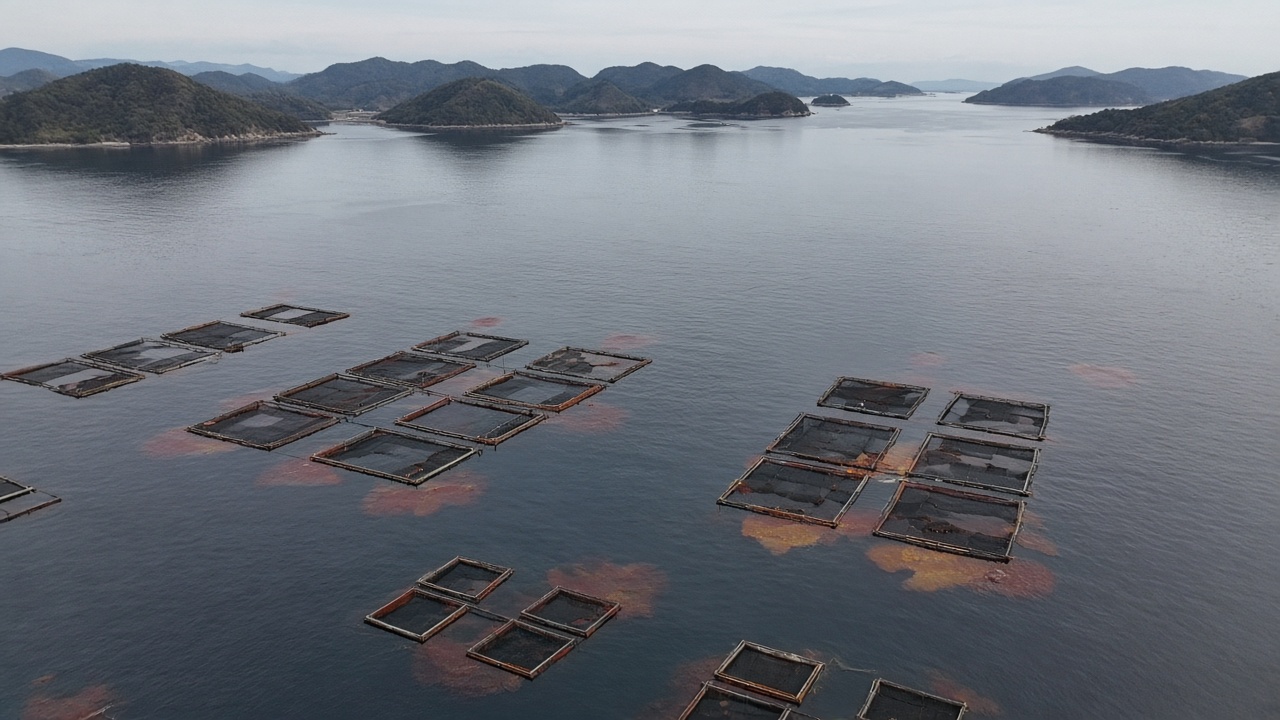
Ehime and Hiroshima prefectures widened red-tide monitoring across the Seto Inland Sea on Tuesday after farmed fish losses from August blooms exceeded ¥1.8 billion, mostly amberjack and red sea bream pens near Uwajima and Etajima.
What expanded
Coastal offices now sample chlorophyll and Karenia species weekly at 42 stations, up from 18 during normal summers, and publish color-coded maps by Friday for aquaculture cooperatives. Fishing boats equipped with portable fluorometers received subsidies to report surface streaks through a Fisheries Agency app that pushes SMS alerts when cell counts cross harvest-hold thresholds.
The Fisheries Research and Education Agency deployed a research vessel to trace nutrient plumes from rivers that saw record September rain, mixing agricultural runoff with warm surface layers that favor noctiluca and karenia patches.
Harvester impact
Uwajima's largest cooperative said 1.2 million fish died or were culled prematurely when oxygen collapsed under dense blooms. Insurance payouts cover roughly 60 percent of documented losses, but farmers still pay feed loans on empty pens. Hiroshima processors warned wholesale prices for farmed bream could rise 12 percent before Silver Week unless fresh harvests resume.
Export buyers in Hong Kong asked for third-party lab certificates on every shipment—a new cost small farms struggle to absorb.
Policy response
Ehime Governor remarks at a briefing urged upstream municipalities to tighten phosphorus discharge permits before autumn typhoons stir sediments. Hiroshima paired with steelmakers on experimental river buffers, though environmental groups want binding limits, not volunteer planting.
The national Fisheries Agency said it may classify the Inland Sea as a "priority red-tide zone" eligible for faster disaster loans, similar to measures used after 2022 blooms off Shikoku.
Climate context
Scientists note Inland Sea temperatures stayed 1.4 degrees Celsius above the 1991–2020 average through mid-September, lengthening bloom windows. Cruise operators canceled kayak tours near rust-colored slicks, hitting tourism towns recovering from pandemic slumps.
What comes next
Monitoring expansion continues through November; farmers hope cooler nights will break the cycle before year-end harvest targets. Until maps stay green for two consecutive weeks, insurers expect more culls—and consumers may see slimmer sashimi platters at autumn festivals.
Retail and restaurants
Supermarket chains Aeon and Life Corporation said they would label farmed fish by harvest bay and test date, reassuring shoppers after social-media videos of rust-colored water near pens went viral. Osaka sushi associations asked members to diversify toppings with Pacific saury and mackerel while bream supplies tighten, avoiding price spikes that could scare Silver Week diners.
Volunteer science
University student groups in Matsuyama began shoreline water sampling on weekends, uploading results to the prefectural map layer after a Fisheries Agency tutorial. Coordinators said citizen data helped pinpoint a storm drain outfall that spiked phosphorus after September 12 rains, giving city engineers a target for temporary filter bags before the next front arrives.