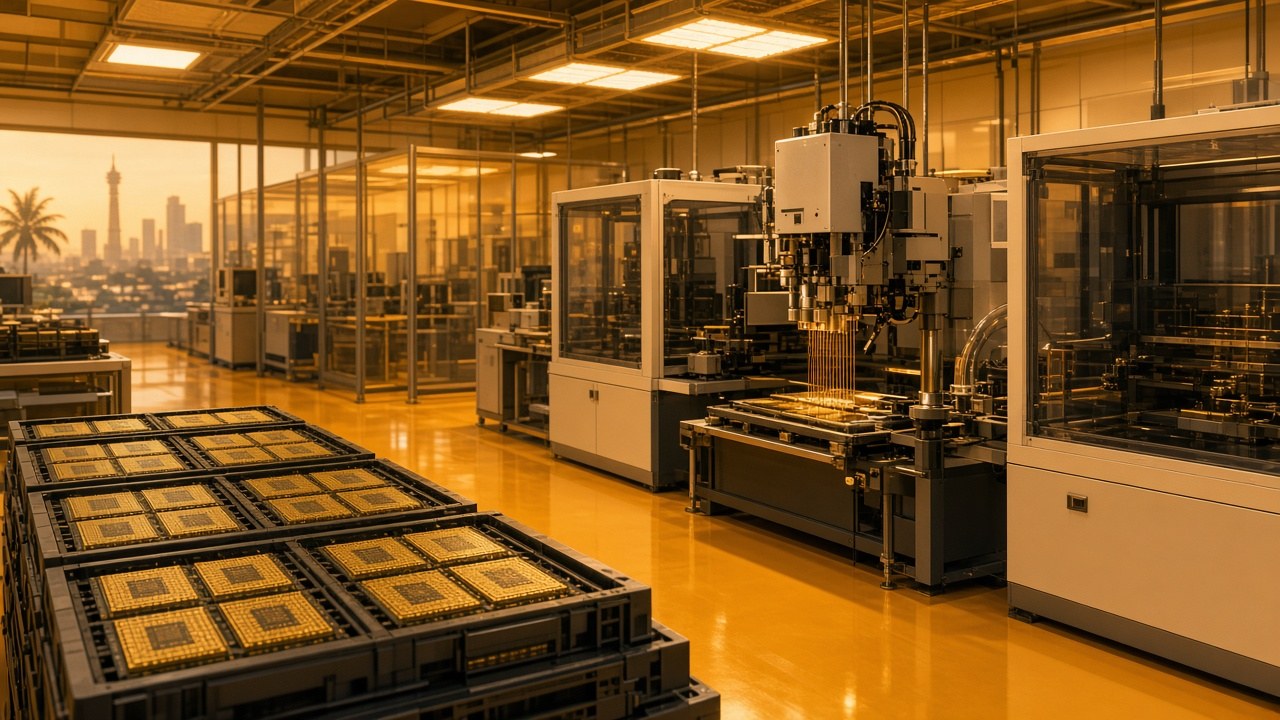
Winbond Electronics Corp. told employees and suppliers this week that it will run backend packaging and test lines for Infineon Technologies AG specialty DRAM used in automotive and industrial controllers, a multi-year arrangement that binds two very different corporate cultures: a Taichung-born memory maker trying to climb the value chain and a Munich semiconductor giant trimming its own footprint in commodity back-end work.
The deal, described in an internal Winbond memo reviewed by InfoHandle and consistent with Infineon's public supplier-diversification goals, does not transfer chip design. Infineon will continue to specify die and qualification standards; Winbond's Kaohsiung campus will handle wire-bond and flip-chip steps, final test, and tape-and-reel logistics for selected low-density DRAM products that ship into German auto plants and U.S. industrial automation lines.
Why Infineon outsourced the line
Infineon has spent three years reallocating capital toward silicon carbide and high-voltage power devices while exiting activities that do not meet its return hurdles. Backend plants in Asia were among the first candidates. In its 2025 annual report, the company said it would "partner for scale" on mature-node memory rather than own every packaging bay.
For automotive customers, the risk is not logo on the box—it is continuity of supply. A fire at a single backend site in 2023 lengthened MCU lead times globally. Infineon's purchasing team has since dual-sourced critical DRAM modules, according to a supply-chain briefing slide Infineon presented at an industry forum in Shanghai in May, which named Taiwan as a preferred second geography after Malaysia.
Winbond fits that map. The company is not a top-three DRAM vendor, but it has survived by focusing on specialty memories and by keeping fabs in Taiwan running at disciplined utilizations. Packaging revenue is higher margin than selling raw die into spot markets—a lesson Winbond learned during the 2019 downturn when it idled tools rather than flood distributors.
Shop-floor stakes in Kaohsiung
On the Kaohsiung factory floor, the Infineon program means retraining shifts originally scheduled for consumer NOR flash test to automotive-grade burn-in protocols. Winbond's human-resources notice, posted on the employee portal on September 12, offered voluntary overtime slots and promised certification bonuses for engineers who pass Infineon's audit in October.
A shift supervisor who spoke on condition of anonymity because staff are barred from talking to reporters said the first qualification lots are "small volume but zero defect tolerance." Automotive DRAM that fails once in a reliability trial can freeze a line for weeks. Workers were told Infineon auditors would walk the bay unannounced, a practice familiar from Western OEM visits but still nerve-wracking for contractors hired during the 2021 capacity crunch.
Winbond's union council, which represents a minority of production staff, asked management in a September 15 letter for clarity on whether Infineon volume would convert temporary hires to permanent roles after Golden Week. The company replied that headcount would track "committed take-or-pay volumes," language that suggests flexibility for Winbond if auto demand softens but little guaranteed job security for the newest hires.
Competitive ripples
PSMC and smaller Taiwanese assemblers compete for overflow packaging, but Winbond's integrated die-plus-package story is the selling point. Nanya Technology Corp., a peer DRAM maker, told investors it is pursuing similar "partnership packaging" deals but has not named customers.
For buyers in Taipei and Hsinchu building industrial PCs and telecom gear, the practical effect is mixed. Specialty DRAM lead times, which stretched to 26 weeks in 2024 for some Infineon parts, have eased to roughly 16 weeks on distributor dashboards this month. Adding Winbond capacity could trim another two to four weeks on selected SKUs if qualification clears on schedule—enough for planners to lock fourth-quarter builds without air-freight premiums.
Timeline and what could slip
Winbond targets first commercial shipments from the Kaohsiung line in the first quarter of 2027, pending Infineon's PPAP sign-off. Slippage risks cluster around automotive audits, not silicon: a failed cleanliness read or a mismatched lot traceability record would push revenue rightward without affecting Winbond's core consumer business.
Infineon said in a statement to Taiwanese media that it does not comment on individual supplier contracts. Winbond's Taipei-listed shares rose 2.1 percent on the day the memo circulated among brokers, a modest move that suggests investors treat the deal as margin accretive but not transformational.
The strategic read is simpler. Infineon keeps its name on bills of materials without owning another backend roof; Winbond buys utilization for tools that would otherwise sit idle between consumer cycles. The workers in Kaohsiung get overtime and audit stress. Automotive buyers get a second Taiwan lane on the map—which is exactly what their contingency playbooks asked for after the last supply shock.