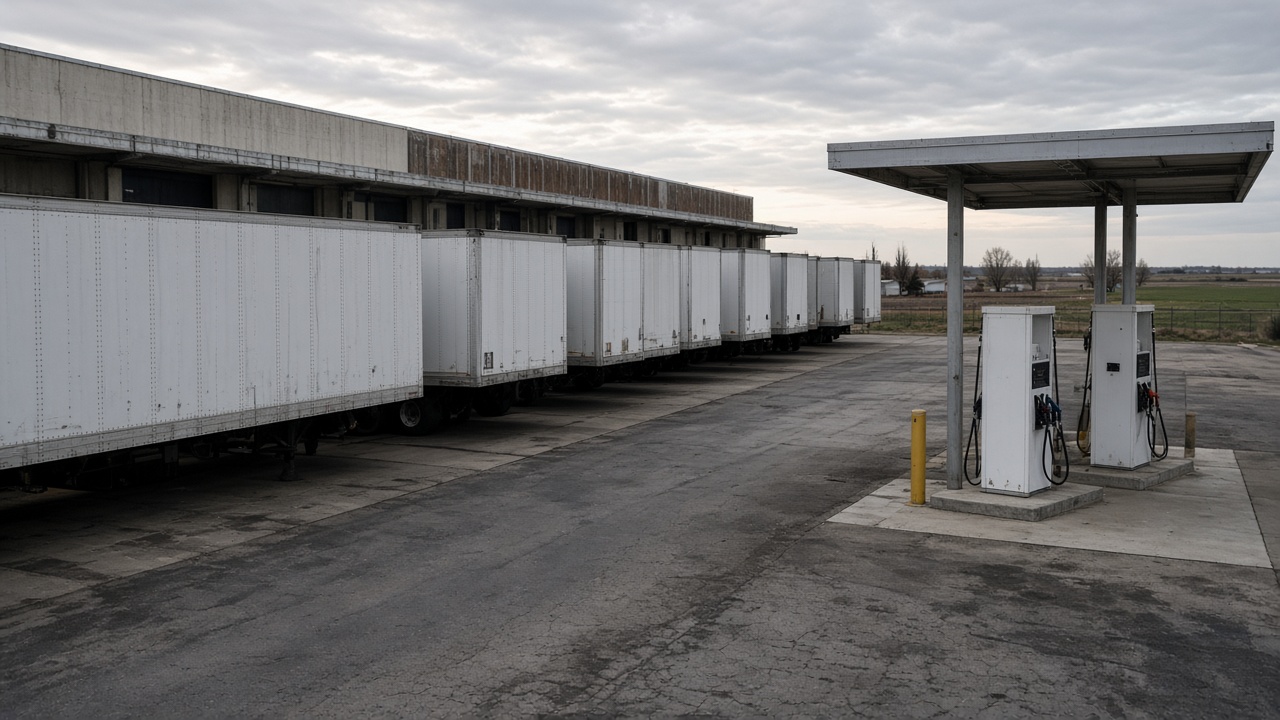
Dollar General’s supply-chain leadership reopened negotiations with its captive trucking fleet this month after diesel spreads on the Gulf Coast blew past the cents-per-mile assumptions baked into 2026 budgets, people with knowledge of the talks said.
Who made the call
Chief operating officer Jeff Owen told regional distribution vice presidents on an internal call that private fleet contract rates tied to 2025 rack indexes were “no longer economic” once Middle East shipping disruptions lifted U.S. ultra-low-sulfur diesel premiums, according to two participants. The company is not exiting private trucking—roughly half of outbound store deliveries still ride company-owned tractors—but it is resetting lane pricing and asking drivers to accept revised fuel-surcharge tables that lag spot markets by one week instead of two.
Employees in the Goodlettsville, Tennessee, headquarters heard a different emphasis than investors did on the June earnings call. Finance chief Donny Lau told analysts that transportation productivity helped offset “substantial” fuel inflation in the first quarter, when gross margin still expanded 65 basis points to 31.6%. Inside the fleet organization, dispatchers were instructed to prioritize backhaul loads that keep tractors out of empty deadhead lanes where third-party brokers have been quoting surge pricing.
Why the private fleet still matters
Dollar General has pitched its private fleet as a structural savings lever—management has said a company truck runs about 20% cheaper than a purchased transportation move when utilization stays high. That math frays when diesel at the rack jumps faster than surcharge formulas recover. EIA data show Gulf Coast ULSD spot differentials widening in late summer as Yanbu-related export reroutes tightened Atlantic Basin distillate balances, even before retail pump prices fully reflected the move.
The discounter added $62 million of distribution and transportation capital in the first quarter alone, much of it tied to new temperature-controlled capacity and yard expansions. Renegotiating fleet rates now is less about capital retreat than about protecting the operating-margin framework CEO Todd Vasos reiterated in March: shrink reduction and private brands cannot subsidize fuel forever if spreads stay elevated through holiday inventory builds.
Store workers feel the second-order effects
Store managers in the Southeast said late trailer arrivals ticked up after the spread blowout, especially on consumables that originate in Gulf-adjacent DCs. Corporate messaging blamed weather and carrier capacity, but two managers said private fleet tractors were redeployed to higher-volume lanes, lengthening replenishment cycles at smaller stores. Owen’s team promised to restore service levels by adding third-party miles only where the spread-adjusted private rate exceeds broker quotes—a discipline that sounds efficient until brokers themselves index to the same diesel spike.
What investors are watching
Shares have traded sideways since the Q1 print beat expectations, suggesting the street believes shrink and merchandising initiatives can carry earnings. Transportation is the swing factor: the 10-Q explicitly ties Middle East conflict language to fuel and freight risk, and any failure to reset fleet economics quickly would show up as gross-margin pressure in the consumables-heavy back half.
For Dollar General, the fight is not whether to own trucks—it is whether the people driving them still win against a diesel market that reprices faster than a discount retailer’s surcharge table. Negotiations with fleet employee councils and owner-operator partners are expected to conclude before peak Halloween-candy miles, when every delayed trailer becomes a shrink risk on seasonal SKUs.
Competitors are not standing still
Regional grocers and big-box rivals that rely entirely on purchased transportation have less fixed-cost pain but more exposure to spot spikes. Dollar General’s bet is that renegotiated private rates plus AI-assisted routing—executives highlighted an enterprise “AI operating system” on the last earnings call—can claw back half the diesel delta by year-end. If spreads normalize after Yanbu-linked distillate flows stabilize, the company may look prescient; if Gulf premiums persist into holiday peak, analysts said SG&A deleverage targets could slip even as same-store sales hold up.
Union representatives for fleet drivers said they want fuel-adjustment clauses indexed weekly rather than monthly, a demand management has so far resisted citing administrative cost. The outcome of those talks will determine whether private fleet savings survive the next rack spike without pushing more miles to brokers.