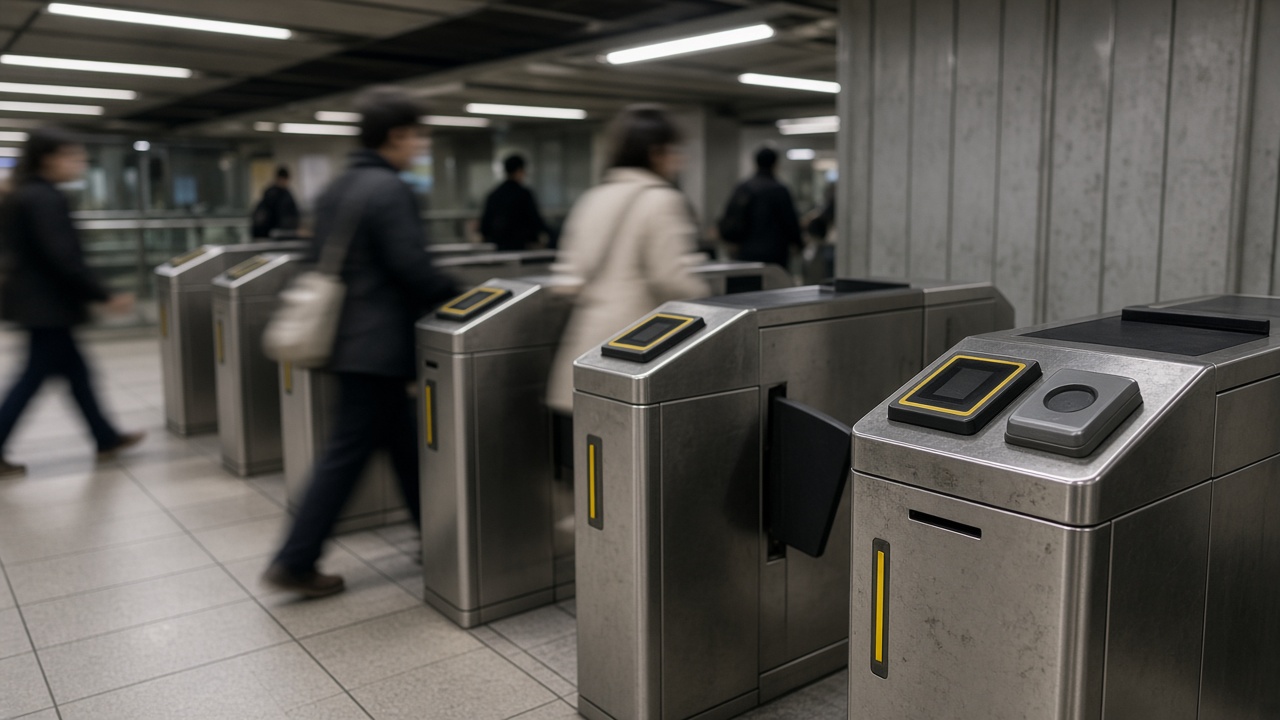
EasyCard Corp. and Taoyuan Metro Co. expanded a co-branded credit-card tap-to-ride pilot to every station gate on the Taoyuan Airport MRT line Thursday, allowing holders of selected EasyCard-linked Visa and Mastercard products to enter and exit using the credit function instead of stored-value purses. The rollout finishes a trial that began on a subset of A-line stations in March, when gate firmware was split between “bank card contactless” readers and traditional IC sensors.
What the product costs a person
Riders tap the same physical co-branded card on the bank-contactless pad—not the IC sensor—to ride; fares post as credit-card charges rather than deducting NT dollar balance from the EasyCard purse. Taoyuan Metro’s FAQ still states that only the stored-value EasyCard function earns the twenty-percent citizen-card discount; credit taps bill full published fares, identical to generic contactless Visa or Mastercard gates introduced earlier on the line.
For a commuter from Taipei Main Station to Airport Terminal 1, that means roughly NT$160 per ride on credit versus discounted stored-value fares near NT$128 when eligible promotions apply—a gap Tyler Brooks readers should weigh against credit-card rewards. If you carry a balance, transit charges accrue purchase APR like any retail swipe unless your issuer codes transit as a promotional category, which Taiwan issuers rarely do.
Who it is for
The pilot targets dual-wallet travelers: tourists who already linked EasyCard co-brand products for convenience-store purchases but forgot to top up before a train, and business riders who want one card for airport rail plus hotel incidentals. Local residents with auto-load EasyCards gain little unless they prefer consolidated credit statements for reimbursement.
EasyCard Corp. said participating issuers include several Taiwan banks whose co-brand programs share BIN ranges whitelisted in gate controllers; cards without the co-brand flag must still use generic contactless readers or stored value. Mobile wallets bound to the same co-brand credit account follow the credit path when users select the credit line in Apple Pay or Google Pay—not the prepaid EasyCard token.
Gate mechanics
Station staff training materials distinguish three pads: IC for stored value and single-journey tokens, bank contactless for credit and debit, and QR readers for some mobile payment apps. Mis-taps on the IC pad with a co-brand credit card require a trip to the information counter to reconcile incomplete entries—a pain point the expanded pilot addresses with louder floor decals at Taoyuan, Sanchong, and Airport Terminal 2 stations.
Entry and exit must use the same card or bound phone; mixed taps trigger maximum-fare holds until resolved, the same rule as plain contactless bank cards. EasyCard said hold releases post within seven business days for co-brand credit taps, matching Visa and Mastercard clearing cycles.
What issuers gain
Banks earn interchange on transit spend that might otherwise ride on prepaid purses funded by cash top-ups that bypass credit revenue. Co-brand issuers also harvest transaction data on airport-bound riders—a segment affluent enough for lounge and travel insurance upsells. EasyCard Corp. gains firmware relevance as Taipei Metro expands its own contactless credit acceptance, reducing fears the transit card becomes a provincial stored-value niche.
Issuers did not introduce new annual fees with the pilot; the fight is share of wallet on airport trips during Golden Week, when Taoyuan line volumes spike with outbound travelers.
Missed statements and disputes
Credit taps appear on card statements with Taoyuan Metro merchant descriptors; riders disputing fares must call the issuer, not EasyCard’s 412-8880 hotline, unless the charge posted to the stored-value ledger by mistake. EasyCard’s website still hosts three-month ride history for stored-value trips; credit-only taps require issuer apps or paper statements.
If you miss a payment, late fees hit the whole statement balance—not isolated transit charges—so a NT$160 ride can become expensive when bundled with other spending. Autopay in full remains the default advice for co-brand credit commuters.
Comparison with plain contactless
Taoyuan Metro already accepted generic contactless credit cards; the co-brand pilot integrates issuer BIN lists so co-brand cards route fares into EasyCard partner settlement files for faster dispute handling. Functionally, riders without co-brand cards see no change Thursday; riders with them get dedicated customer-service routing at EasyCard call centers trained on credit-function gate errors.
Taipei Metro’s broader July contactless rollout covers more networks on TRTC; Taoyuan’s co-brand pilot remains issuer-specific, not a universal transit wallet.
What happens next
EasyCard and Taoyuan Metro will monitor mis-tap rates and credit hold complaints through October before marketing the feature in airport arrival halls. Participating banks may offer limited transit cashback if interchange economics allow—none announced Thursday.
For cardholders, the actionable step is confirm whether your EasyCard co-brand defaults to credit or stored value in mobile wallets; picking the wrong token still fails at gates or double-charges if you switch mid-journey. Read the sleeve insert: issuers updated terms effective September 18 to describe Taoyuan gate liability and fare adjustment procedures when credit taps fail overnight reconciliation.