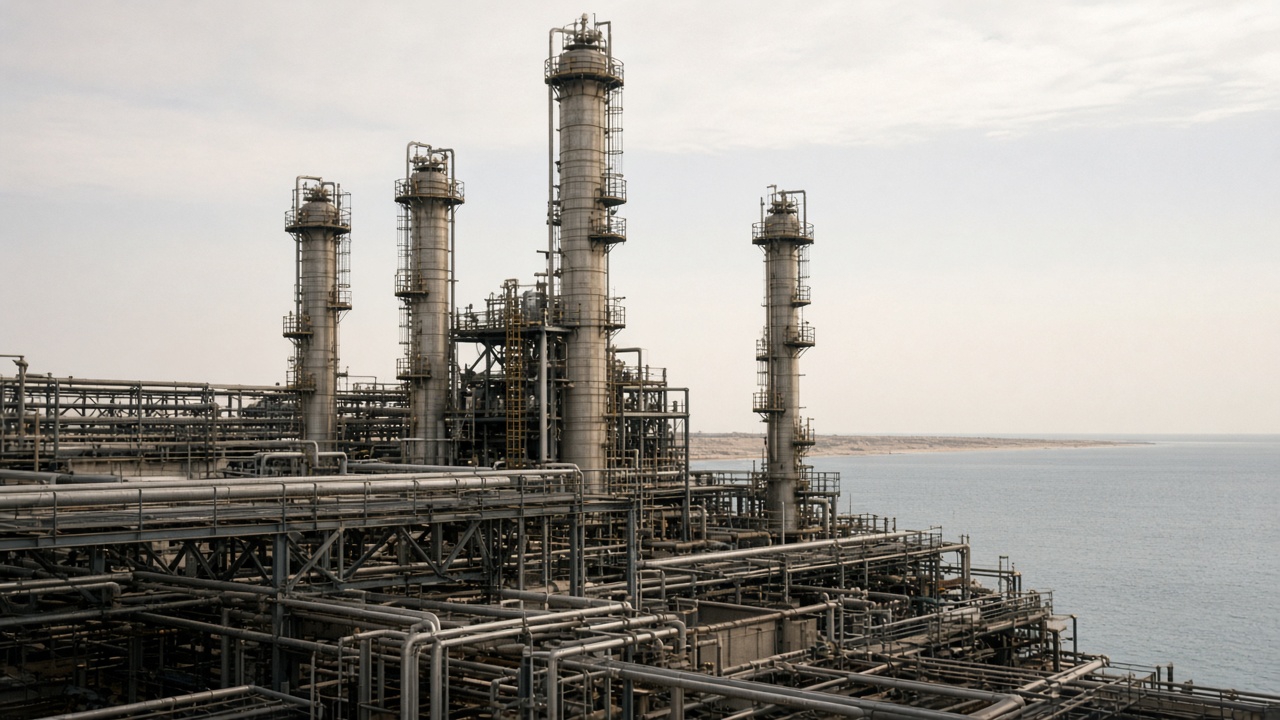
U.S. integrated oil majors led a broad energy rally on Thursday after Saudi officials said the SAMREF refinery at Yanbu resumed partial operations on distillate units that had been curtailed following aerial attacks near the Red Sea export hub.
Who led and by how much
Exxon Mobil shares rose 2.8% and Chevron added 2.3%, pacing the S&P 500 energy sector’s 2.1% gain. The move came even though neither company issued fresh earnings guidance; traders instead marked down the probability of a prolonged outage at a site that normally processes more than 400,000 barrels per day of crude into diesel, marine fuel, and sulfur products. Exxon owns half of SAMREF through Mobil Yanbu Refining Company; Chevron rallied in sympathy as Gulf shipping insurers trimmed war-risk premiums on Red Sea voyages that still bypass the Strait of Hormuz chokepoint.
Partial restart, not full barrels
Saudi Energy Ministry statements described a “phased restart” of hydrocracking and desulfurization trains while crude distillation remained below nameplate. Industry sources cautioned that export loadings from Yanbu—one of the few unimpeded outlets for Gulf barrels since Hormuz transits slowed—would recover gradually. A partial resumption supports U.S. Gulf Coast refining margins by easing Atlantic distillate tightness without flooding crude markets the way a full SAMREF return might.
The context is fresh violence, not routine maintenance. SAMREF was among facilities Iran’s Revolutionary Guard warned could be targeted after U.S. and Israeli strikes on Iranian energy infrastructure; subsequent attacks on Qatar and UAE sites kept risk premia embedded in Brent futures above $82 in early September trading. Thursday’s bounce reflected relief, not resolution.
Mechanism for U.S. holders
Fund managers said the trade was a beta play on downstream exposure: Exxon’s downstream and chemical segment benefits when export arbitrage reopens, while Chevron’s larger Permian footprint still ties it to WTI-Brent spreads that tighten when Red Sea disruptions ease. Options flow showed call buying in both names at strikes 5% above spot, a pattern desks associate with short-covering after geopolitical headlines rather than new long-only allocation.
Analysts at Goldman Sachs and Morgan Stanley kept neutral ratings but raised near-term earnings estimates for Gulf Coast crack spreads, noting that U.S. refiners had run near 94% utilization before the Yanbu scare. Any sustained SAMREF recovery could pull that number down a point or two—bad for independent refiners, less meaningful for majors with integrated portfolios.
What would falsify the rally
Traders listed three tripwires before Friday’s close: a confirmed second strike on Yanbu berths, a Fujairah loading halt that re-tightens east-west arbitrage, or OPEC+ language hinting at supply increases to punish consumer countries stocking strategic diesel. Exxon investors also watch the long-dated SAMREF upgrade framework Exxon and Aramco signed in December 2025; capex there is years out, but a damaged unit today could push maintenance spending forward.
For U.S. pension funds indexed to the S&P 500, the day’s action was a reminder that energy still moves on Middle East logistics even as tech dominates headline weight. Partial Yanbu resumption bought a session of relief; it did not reopen Hormuz or restore the pre-war freight map Gulf shippers memorized in spreadsheets.
Downstream versus upstream
Exxon’s upstream-heavy investors noted that SAMREF exposure is primarily downstream and joint-venture equity, meaning the restart supports cash flow at the refining segment without instantly adding crude volumes to an oversupplied Atlantic market. Chevron holders focused instead on dividend coverage: both companies yield near peer averages, and any sustained crack spread widening helps cover payouts when Brent-linked production revenues fluctuate with Hormuz risk. ETF flows into the Energy Select Sector SPDR fund turned positive for the first time in two weeks, albeit on modest volume compared with tech inflows.
Independent refiners without Middle East equity lagged the majors in Thursday’s session, underscoring how narrowly the trade tied to Yanbu headlines rather than domestic utilization alone.
Energy economists at the EIA noted that U.S. crude exports through Gulf Coast ports remain elevated, so any Red Sea relief primarily affects distillate balances rather than domestic production quotas—a nuance equity investors sometimes blur when they bid the XLE ETF on headline risk alone.