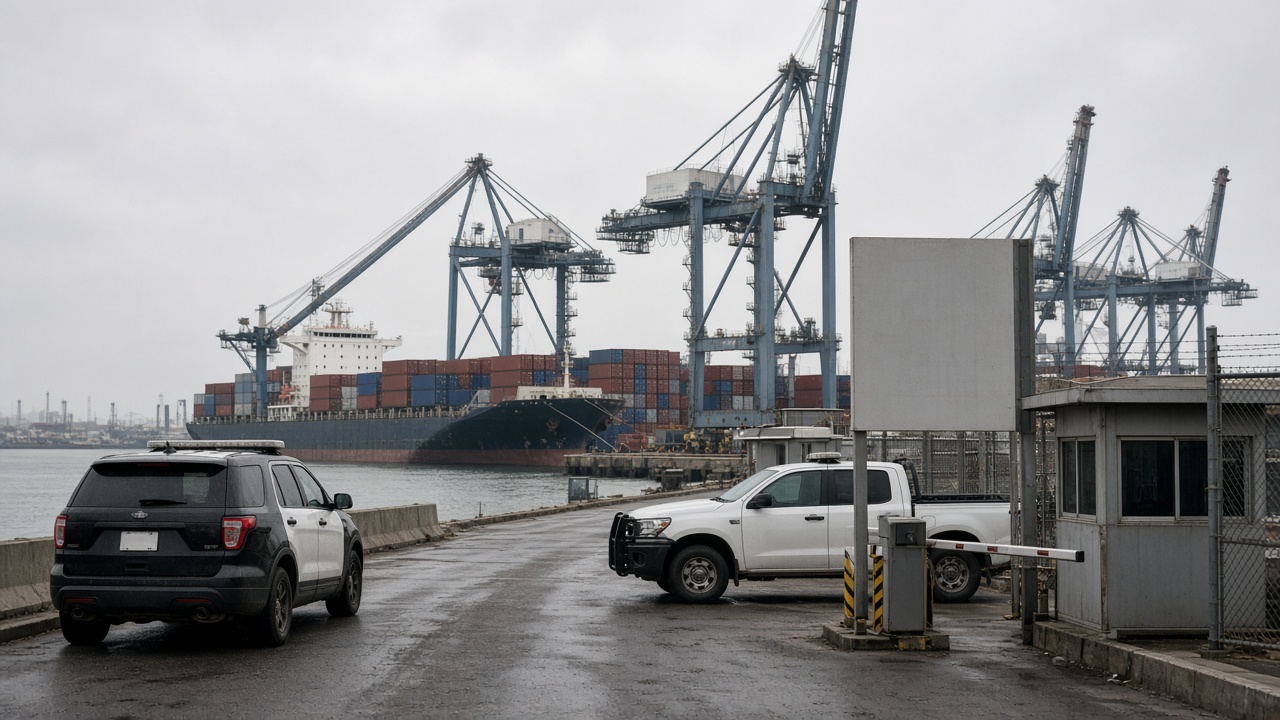
Port Houston ran a region-wide ransomware response drill on Thursday, severing live connections to terminal operating systems at two container complexes while Gulf carriers and insurers watched whether the nation’s busiest export gateway could recover bookings without paying extortionists.
Why the port moved now
Executive director Roger Guenther told reporters the exercise was scheduled before this month’s Middle East shipping disruptions, but insurers accelerated mandatory cyber endorsements on war-risk policies covering Hormuz detours. Several underwriters now require proof that a port can operate manual gate queues and restore manifests from offline backups within stated hour limits.
The drill did not stop all traffic: bulk and petrochemical berths stayed online while container gates at Barbours Cut and Bayport entered simulated lockdown. Truckers received SMS prompts directing them to staging lots rather than live appointment systems.
What was tested
Participants practiced isolating domain controllers, rotating privileged credentials, and printing paper manifests last used during Hurricane Harvey congestion. Cyber teams injected a fictional “encrypt-and-leak” note demanding bitcoin, mirroring incidents that hit smaller regional ports in Europe last year.
Coast Guard Sector Houston-Galveston observed radio procedures for notifying vessels in the ship channel. CISA liaisons scored how quickly operators shared indicators with the Multi-State Information Sharing and Analysis Center. No federal agency classified the event as a real incident.
Who is exposed if drills fail
Export grain and resin shippers already face longer Gulf sailings when carriers avoid certain chokepoints. A ransomware pause at Houston would stack containers bound for Latin America and West Africa, compounding chassis shortages that trucking groups flagged after diesel surcharges climbed across Texas.
Terminal operators said customer data rooms were not exfiltrated in the simulation, but public affairs staff practiced breach notifications to stevedores and railroad partners. Union officials demanded advance warning before future drills affect paycheck-affecting gate time.
Confirmed versus claimed
Port leadership confirmed roughly six hours to restore simulated booking flows using clean backups, beating an internal twelve-hour target. Vendors marketing “incident-free” guarantees were not part of the official scenario; InfoHandle could not verify marketing claims circulating on LinkedIn within an hour of the drill.
Law enforcement has not linked Houston to any active ransomware group. FBI Houston said it supported the exercise but opened no case file.
Lessons for shippers
Beneficial cargo owners should keep redundant delivery order contacts on file and test whether their logistics platforms can accept CSV manifests when APIs fail. Insurance brokers advised documenting drill participation to renew policies that now exclude silent ransom payments without law enforcement coordination.
Railroads serving the port published parallel maintenance windows to avoid colliding with cyber exercises during peak vessel arrivals. Misaligned schedules could create false positives in cargo tracking dashboards.
What comes next
Port commissioners will review after-action reports in a public safety committee hearing next week. Guenther said results may justify shared backup colocation with neighboring Texas ports, a politically sensitive idea after past competition disputes.
Until then, Gulf shippers should treat Houston’s drill as a benchmark: if the largest U.S. export port still needs six hours to reopen gates in simulation, smaller terminals with thinner IT benches face harsher odds when criminals strike during a real fuel shock.
Operators pledged to publish a redacted timeline of decision points—when leadership chose isolation over partial operations—so insurers can compare exercises across the Gulf South without exposing sensitive credentials.
Vendor and access risk
IT directors said the hardest simulated decision was whether to disable remote desktop tools used by crane maintenance vendors. Cutting access slowed repairs in the drill; leaving it open preserved fictional malware lateral movement. Port counsel warned that contract language with OEMs rarely spells out cyber shutdown rights.
Smaller Gulf terminals watching Houston’s exercise said they lack dedicated fusion centers and may lean on state fusion liaisons if insurers demand similar playbooks by year-end.
Shipping line perspective
Container lines told InfoHandle they track port cyber status in the same dashboards as berth depth and crane counts. A ransomware delay at Houston during peak export season could cascade to blank sailings from Latin American feeders that connect through the ship channel.
Thursday’s drill ended with a public all-clear text to registered truckers, a customer communication channel the port built after pandemic-era appointment chaos. Repeating that channel during a real event may be as valuable as the technical recovery itself.