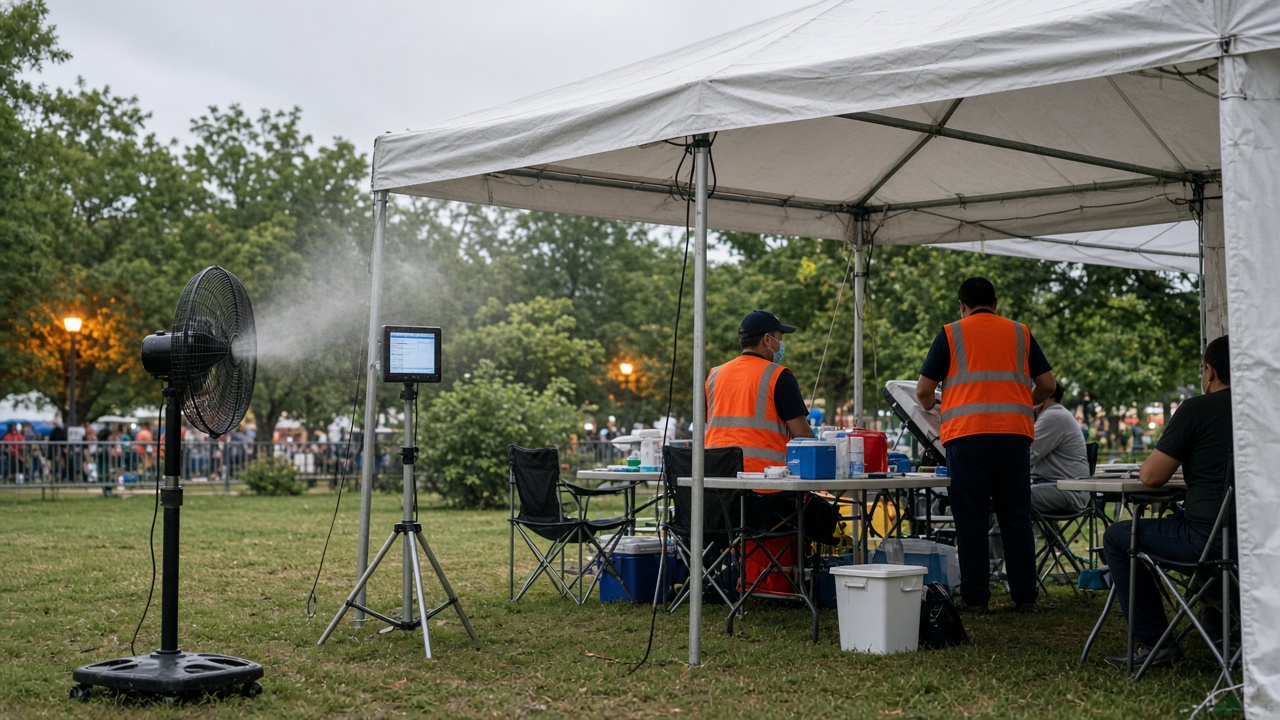
Japan’s health ministry circulated an updated outdoor-event triage protocol to prefectural directors this week, asking Silver Week organizers to stage cooling lanes and oral rehydration before ambulance calls spike. The memo ties Environment Ministry WBGT readings to on-site medical decisions and mirrors severity steps from the 2024 heatstroke clinical guideline emergency physicians already use in hospitals.
What organizers must post
The Ministry of Health, Labour and Welfare packet asks festivals with more than 5,000 expected attendees to run two parallel tracks: environmental monitoring and patient sorting. Staff record WBGT every thirty minutes when the index crosses 28 degrees Celsius, the threshold at which the environment ministry urges extra water stations and shaded rest zones. When WBGT hits 31, volunteer medics switch to an “active cooling first” script—ice towels, mist fans, and oral rehydration solution—before calling emergency services unless consciousness is impaired.
Prefectural governments in Kanagawa, Osaka, and Fukuoka piloted the cards during late-summer fireworks shows; MHLW compiled their logs into a one-page flowchart translated for English-speaking volunteer teams at port festivals. The document does not replace licensing for paid medical contractors, but it standardizes language between fire departments and event nurses who rarely train together.
Clinical spine behind the card
The 2024 heatstroke treatment guideline, hosted on MHLW’s site and summarized by the Minds library, groups patients by severity and stresses active cooling for the worst cases rather than passive shade alone. MHLW’s event memo imports those labels so field teams do not debate whether a dizzy teenager needs a hospital ride when a 38-degree Celsius rectal equivalent is unlikely. Severe cases—confusion, collapse, or hot dry skin—still trigger immediate 119 calls with instructions to continue cooling during handoff.
Officials emphasize the card is not a license to host concerts in heat emergencies. When the government issues a special heatstroke alert, the same memo reminds organizers they may need to shorten sets or cancel mosh pits even if tickets are sold. That language aligns with tourism agency briefings sent to municipalities hosting inbound tour groups during the September holiday cluster.
Silver Week staffing crunch
Organizers of street markets in Sendai and outdoor anime fairs in Chiba told InfoHandle they ordered extra ORS sachets and rented inflatable mist tunnels after reading the memo. Several contracted the same Osaka-based event medical supplier, which reported booking conflicts because corporate sports days moved to the holiday week when offices close.
MHLW will audit a sample of twenty events after the holiday, reviewing whether WBGT logs were kept and whether cooling kits were opened before transport. Results feed a cabinet heatstroke task force report due in November; failures could push insurers to demand certified medics for large crowds next summer.
Limits for the public
The protocol does not change workplace heat rules that tightened in 2025 for outdoor employers, and it does not guarantee free care—travel insurance still governs hospital bills for tourists. Readers should not treat volunteer tents as emergency rooms; they are triage and cooling stations. MHLW’s bottom line for attendees mirrors every summer campaign: pre-hydrate, schedule breaks, and leave when dizziness appears, even if the headliner is mid-set.