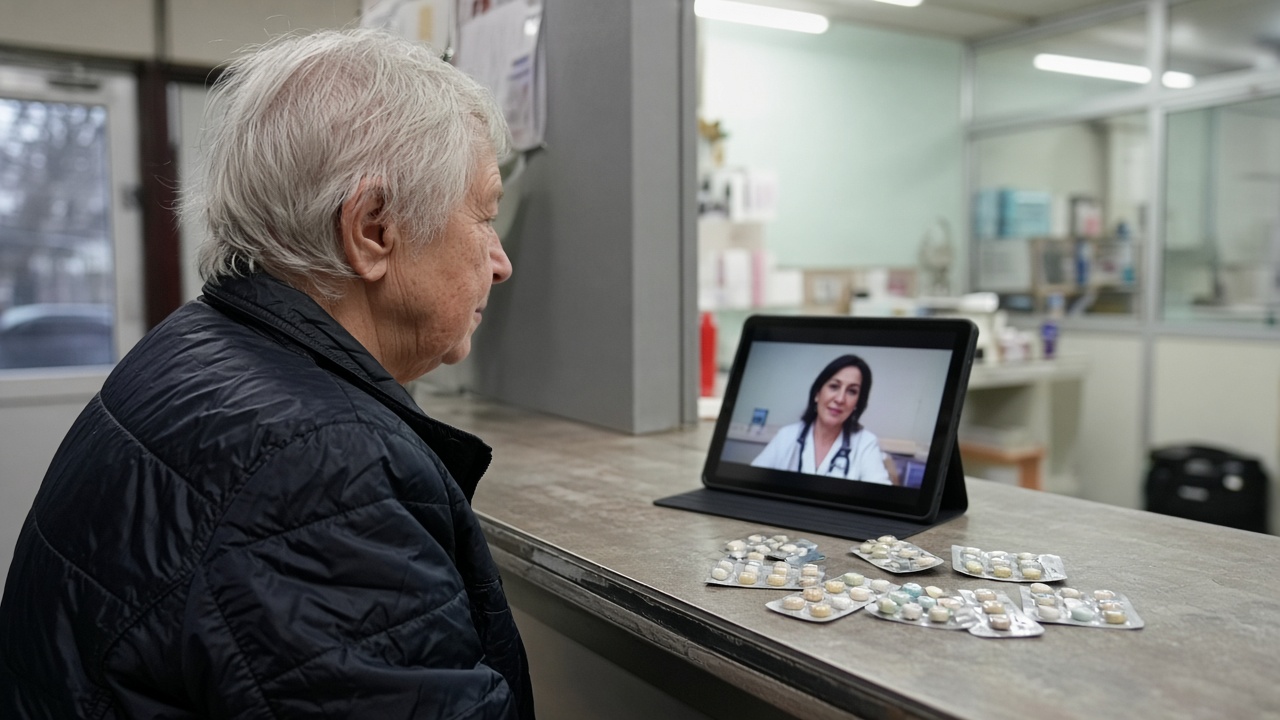
Taiwan’s National Health Insurance Administration said Thursday it will pilot typhoon-season telehealth rules that let chronic-care patients refill stable medications through insured video visits when a sea or land typhoon warning closes neighborhood clinics. The change targets hypertension, diabetes, and lipid prescriptions that already appear in a patient’s NHI medication cloud— not new diagnoses or controlled substances that still require in-person review.
What the pilot allows
When CWA posts a typhoon warning covering a patient’s registered clinic district, physicians may issue 14-day extensions for listed chronic drugs after a video consult documented in the hospital information system. Patients still pick up pills at contracted pharmacies; the NHI will not reimburse home delivery unless a county declares a transport suspension. Pharmacists must confirm identity with the NHI card chip and photograph the dispensed lot number, a step added after 2024 audits found duplicate refills during flood closures in Kaohsiung.
Officials emphasized absolute limits: any chest pain, stroke symptoms, or uncontrolled glucose readings trigger a referral to the nearest open emergency department, not a telehealth refill. The pilot does not cover psychiatric benzodiazepines or opioid patches, categories the ministry says need face-to-face assessment even when wind shutters are down.
Who is left out
Rural patients without broadband remain the gap. The NHIA counted 41,000 NHI registrants in mountain townships where fixed-line speeds fall below 10 Mbps during storms. County health bureaus may authorize audio-only consults on those routes, but only when a nurse at a township health station witnesses the call—a workaround Orchid Island leaders said still fails when ferry service stops entirely.
Foreign residents on ARC cards are included if their clinic participates in the telehealth billing code rolled out in March. Migrant fishers without a regular family physician are not; labor groups asked the agency to pair refills with port clinic hours, a request pending until after Golden Week.
Evidence the agency cites
Internal modeling from 2023’s Typhoon Haikui closures showed a 19 percent jump in emergency visits tied to missed antihypertensive doses among seniors. Cardiology society guidelines support short extensions when blood pressure logs uploaded through the NHI app stay below individualized targets— not when readings are missing. The pilot adds a hard stop: more than one extension without an in-person visit within 60 days flags the chart for audit.
What readers should not do
Do not stockpile months of pills because a storm might arrive; pharmacies can refuse early fills, and excess medication skews home inventories during heat alerts. Do not substitute herbal products for prescribed statins because a clinic line is busy; the NHIA said it will not reimburse adverse-event care linked to unsupervised swaps. Treat telehealth refills as a bridge when warnings are active, not a permanent replacement for quarterly lab work that monitors kidney function on common diabetes drugs.
County emergency operations centers will publish which clinics stay on video duty when warnings lift but roads remain blocked. For households, the practical checklist mirrors typhoon prep: charge phones, photograph current pill labels, and confirm which pharmacy near a shelter stays open overnight.