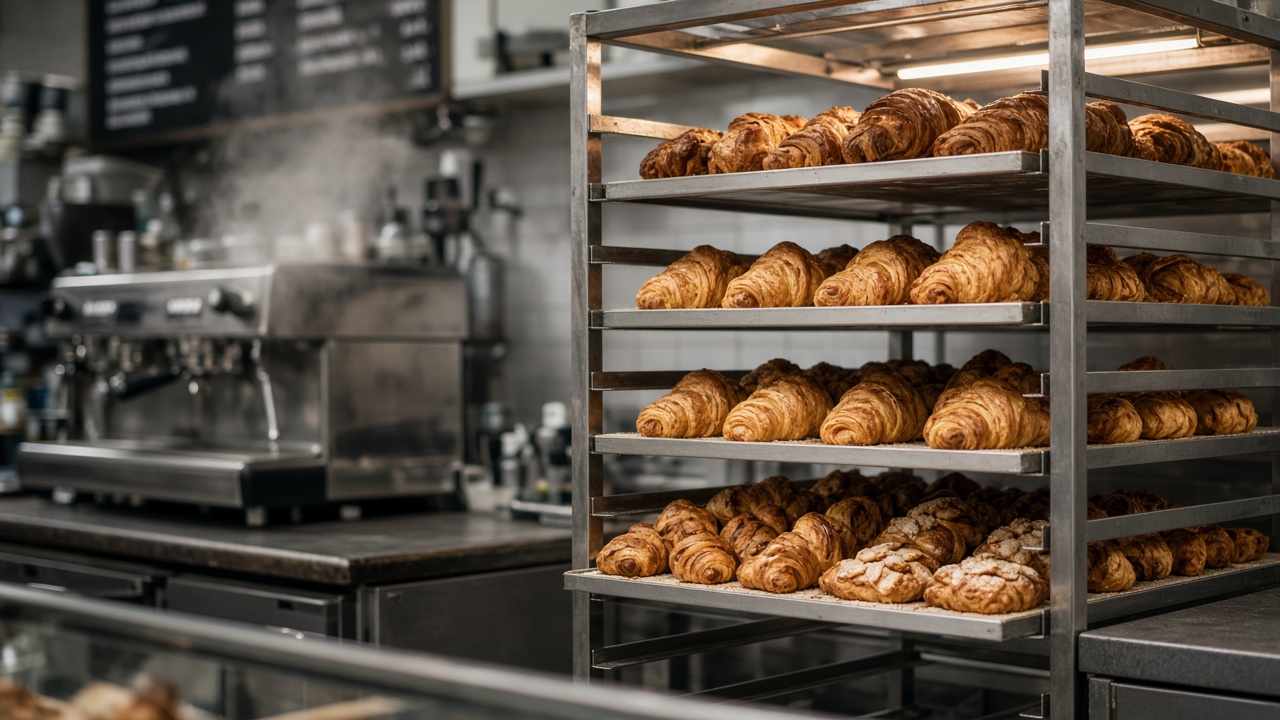
Franchise partners running dozens of Pret A Manger shops outside London have asked headquarters to reopen food-cost allowances on croissants and laminated pastries, saying margin tables agreed in 2024 no longer cover butter surcharges and bakery energy bills.
What shop-floor managers heard
In a letter sent through the Franchise Council last week and reviewed by InfoHandle, operators from the Midlands and south coast said parent-calculated gross profit on all-butter croissants had slipped below 18% after supplier invoices rose for the third quarter running. One regional partner running eight transport-hub sites reported that waste bins filled faster when teams discarded batches that failed lamination tests, yet head office pricing on meal deals still assumed 2023 ingredient costs.
Pret’s company-owned shops in the capital have labour pools and footfall that mask ingredient pressure. Franchisees staffing suburban rail stations and motorway services do not have that cushion. Team members on WhatsApp groups shared rota changes that cut overnight bakery starts, shifting more prep to commissary deliveries that arrive with fuel surcharges embedded in the line item.
Where the leverage sits
Franchise contracts give Pret control of menu specs, branding, and digital ordering, while partners carry rent, utilities, and local wages. When croissant margins compress, the fight is over who absorbs the delta: the partner’s P&L or the parent’s national procurement pot. Partners want a temporary rebate per case shipped from Pret’s national bakery network; headquarters has offered extended payment terms on coffee machines instead, according to two people involved in the talks.
Tom Adeyemi’s lens is the quiet leverage of skilled bakers. Several shops raised starting pay for pastry chefs by £0.80 an hour to match Costa and Greggs poaching staff. That is not a strike, but it is the kind of labour tightness that forces franchise boards to escalate or accept higher turnover and slower queues at the morning peak.
Parent company arithmetic
Pret’s September 2024 update put global sales at £569 million for the first half, with franchising near a third of revenue and aggressive UK openings outside London. The growth story depends on partners funding fit-outs that can exceed £500,000 for a flagship station unit. If croissant economics wobble, new applicants with the mandated £7 million net worth may demand sharper margin guarantees before signing.
JAB-backed Pret has invested in digital subscriptions and barista training, costs partners share through marketing levies. Franchisees argue those levies should flex when food inflation outruns menu price rises. Parent executives counter that national campaigns drove the 10% sales lift and that local price increases on pastries would break the £3.99 bundle psychology that competes with meal-deal culture at supermarkets.
Investors versus team members
Investors watching private valuations care about franchisee churn. Losing a partner in Bournemouth or Guildford delays the “double the business” plan Pret announced when it named Dallas Holdings and K&Z Group as UK operators. Reopening margin tables sets a precedent for other categories—avocado lines, hot wraps, and the soup rotation that absorbs offcuts.
For team members, the immediate issue is hours. Overnight bakery shifts pay premiums; cutting them saves cash but increases delivery dependence. Drivers’ union reps at one service station cluster said loading-bay queues now overlap with the breakfast rush, pushing espresso wait times past eight minutes on bad days.
What changes this quarter
Pret’s operations team has scheduled a franchise advisory call for early October. Partners want a published index linking croissant rebates to wholesale butter quotes on the London Metal Exchange’s agricultural proxies and AHDB dairy averages. Headquarters is more likely to offer targeted support on energy audits and waste tracking, betting that butter prices ease after the holiday baking season.
If neither side moves, the leverage shifts to customers who notice smaller pastries or higher combo prices. Franchisees say they would rather shrink portion weight by five grams than break the advertised price point—a tension headquarters has historically blocked. This quarter’s argument is whether 2026 shop economics still match the croissant photo on the franchise prospectus.
Regional openings still on the board
Despite the margin spat, Pret continues to transfer shops to partners in Scotland and Ireland under agreements announced in its media centre. New openings depend on franchisees believing national procurement still beats independent café sourcing. A prolonged croissant rebate fight would not stop signing ceremonies, but it would slow the pipeline of transport-hub units where rent escalators are tied to passenger growth forecasts still recovering from hybrid work patterns.
Union-adjacent campaigners in Manchester have already asked whether franchise staff should receive the same London weighting allowance baked into company-owned payroll. Pret has not conceded that point; franchisees say they would fund it only if parent rebates restore pastry margin to the low twenties. The quarter ends with spreadsheets, not slogans—and with bakers who know exactly how many turns of butter the laminator needs before the morning rush.