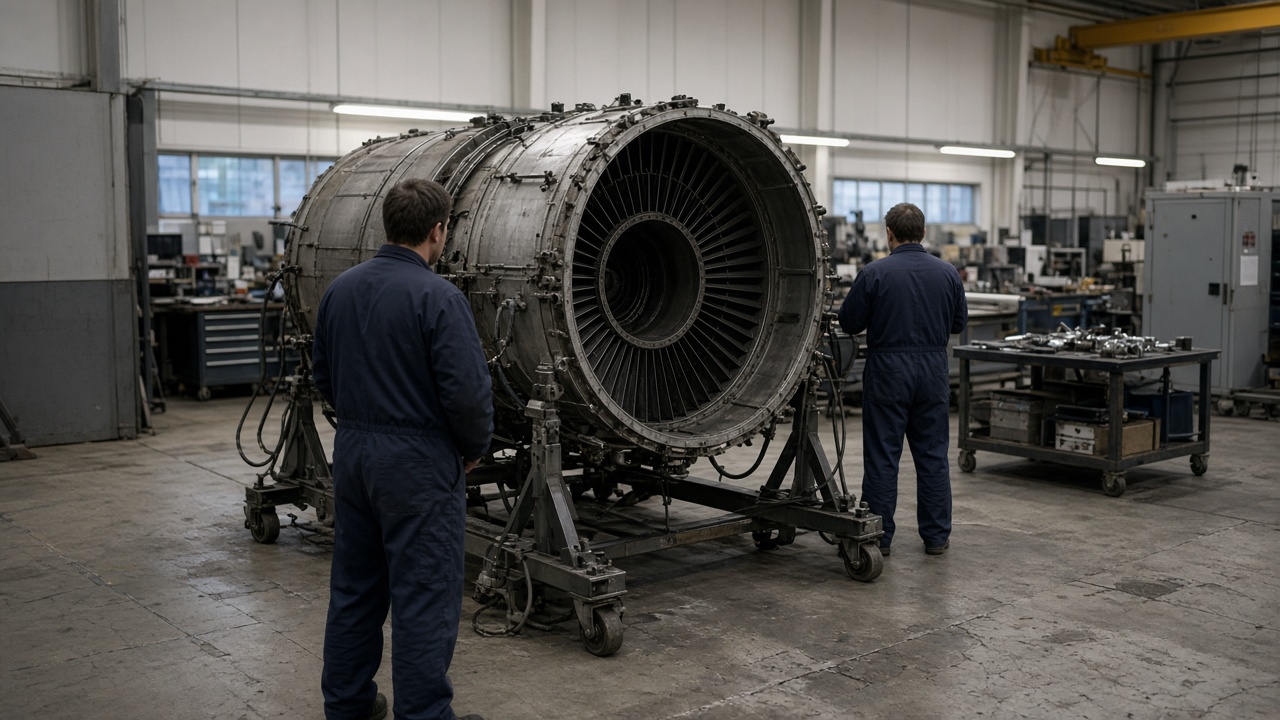
Rolls-Royce shares rose in London on Thursday after management updated investors on a civil aerospace service backlog that remains swollen on Pearl business-jet engines and Trent modules feeding narrowbody-style networks, even as aircraft-on-ground counts fell to single digits.
What the filing emphasised
In a scheduled capital-markets note, the company said large-engine flying hours ran at 115% of 2019 levels in the first half, while shop visits grew 12% year on year in the opening quarter. The narrowbody angle is indirect but real: airlines flying Embraer E2 jets and Airbus A220s with Pearl 15 powerplants account for a rising share of hours-linked service revenue, and regional carriers lease spare modules when mainline fleets hoard Trent spares for long-haul routes.
Chief executive Tufan Erginbilgic has tied the equity story to aftermarket throughput as much as to new Trent deliveries, which slipped to 259 engines last year on supply-chain constraints. Investors treated Thursday’s backlog commentary as confirmation that Derby and Singapore overhaul lines are finally absorbing inductions booked during the reliability crisis.
Backlog versus bottlenecks
Marcus Hale separates two numbers: waiting lists for heavy shop visits and grounded aircraft waiting on spare engines. Rolls-Royce said aircraft-on-ground cases related to its own delays have effectively been eliminated after maintenance output rose 13% in the six months to June, with major refurbishments up 35%. The backlog that remains is contractual—airlines scheduling visits earlier to capture durability upgrades on Trent 1000 blades—not stranded jets at Heathrow or Manchester.
Capacity investments explain the shift. Aviation Week reported more than 1,590 large-engine visits in 2025, with guidance of 1,480–1,550 for 2026 before time-on-wing improvements pull visits down toward 1,300 by 2028. Turkish Technic’s Istanbul centre, due in 2027, and the Beijing Aero Engine Services joint venture are part of the pipeline that lets Rolls-Royce promise shorter queue times to narrowbody operators who share spare pools with British Airways and Virgin Atlantic widebodies.
Why London shareholders care
Rolls-Royce is a FTSE 100 bellwether for global travel without being a pure play on any single airframe. When service backlog converts to revenue, cash flows improve ahead of original-equipment deliveries recovering. Thursday’s bid lifted the stock more than the sector ETF, suggesting short-covering as well as fundamental read-across.
Analysts on the call pressed for colour on Pearl 15 inductions versus Trent XWB work. Finance chiefs declined line-by-line splits but confirmed business aviation flying hours ran ahead of budget, a tailwind for high-margin service contracts on smaller engines that power the point-to-point routes UK regional airports promote.
What breaks the story
A renewed supply shock on turbine blades or a Middle East conflict that cuts flying hours would unwind the rally faster than any OE delivery miss. Hale’s falsification watch is flying-hour guidance: if August traffic data softens while backlog hours stay high, the market will question whether airlines are hoarding induction slots they will cancel later.
Competition from independent MRO shops in the Gulf could also cap pricing on narrowbody modules, though Rolls-Royce’s total-care contracts still lock in most Trent and Pearl work.
Next quarter in Britain
Derby hiring boards still list turbine technicians, and the UK government’s aerospace supply-chain grants continue to flow toward skills programmes tied to the company’s campus. For investors, Thursday’s message was that the painful years of grounding headlines have given way to a different problem—busy hangars—which is the problem Rolls-Royce’s turnaround was built to have.
Until shop-visit counts fall in the published tables without flying hours dropping, London will treat the service backlog as earnings visibility rather than operational failure—a nuance narrowbody lessees say they finally see reflected in spare-engine availability at regional hubs.
Debt and dividends on the horizon
Fixed-income desks noted that improved aftermarket cash timing could accelerate deleveraging ahead of any dividend restoration vote. That linkage matters for UK income funds still underweight Rolls-Royce after the pandemic dilution years. None of that appeared in Thursday’s short update, but the share price move showed equity investors are already counting faster induction turnover in their models.