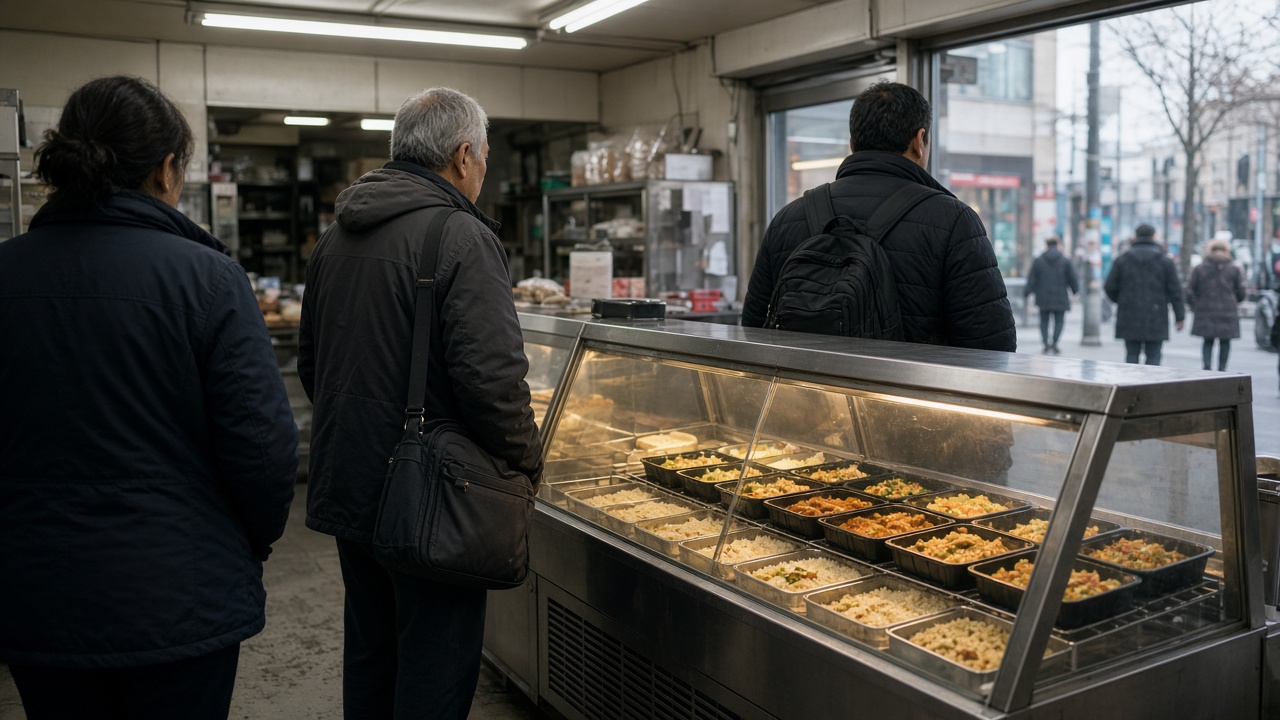
Tokyo convenience stores are retiming hot-case refills as hybrid office schedules concentrate lunch purchases into a single hour. Area managers for Seven-Eleven Japan and Lawson told InfoHandle that stores within a ten-minute walk of Marunouchi, Shibuya, and Otemachi towers see register peaks near 11:30 a.m. on Tuesdays and Thursdays—the days employers most often mandate desk time.
The new lunch curve
Before the pandemic, bento sales spread from 11:00 a.m. through 1:30 p.m., with office ladies and construction crews overlapping. Hybrid policies split teams into “anchor days,” and internal POS data cited by one Seven-Eleven franchisee show a 22 percent jump in transactions between 11:20 and 11:50 on anchor days, with a matching dip at 12:30 when earlier eaters already returned to desks.
Workers describe the pattern as a compressed version of pre-COVID rush without the long post-one-o’clock tail. A payroll coordinator in Otemachi said her team books a standing calendar block to walk to Lawson together, buying chilled pasta salads and fried chicken lunch boxes before meeting rooms fill. The social ritual replaced sit-down set lunches that hybrid weeks made too sporadic to expense.
Store operations
Franchise manuals already call for a third hot-case fill before noon; several Tokyo districts now authorize a fourth batch at 11:15 with smaller counts of niche items that stale quickly. Microwave queues are the bottleneck—stores near Shinjuku Station added a second unit this summer, while a FamilyMart trial in Hamamatsucho routes reheats through a staffed kiosk to stop people from opening lids early.
Labor matters: part-time shifts were tuned for evening commuters, not midday surges. One franchisee raised noon wages by fifty yen for September to keep fryers staffed when onigiri warmers run flat out. METI’s retail statistics still show convenience meals growing faster than supermarket deli counters, but the growth is increasingly time-boxed.
Menu and pricing
Chains promote high-protein boxes and smaller rice portions aimed at desk eaters who want to avoid afternoon slump. Seven-Eleven’s “Office Day Combo” coffee plus bento bundle, launched quietly in August, sells best within two blocks of JR stations that serve commuter suburbs with long train rides on office days.
Prices moved with July ingredient costs; a standard fried chicken bento now runs near 550 yen in central Tokyo, up from 498 yen last year. Hybrid workers say the combo still beats cafeteria contracts when employers no longer subsidize daily meals.
What it means at home
Households that kept refrigerators stocked during remote-heavy years may buy fewer dinners on office days but spend more per convenience visit when everyone is out. For readers planning lunch, the practical note is timing: arrive before 11:35 or after 12:45 if you want a microwave without a line, and expect favorite limited boxes to sell out on mandated office Wednesdays—not Fridays, when teams often stay home.