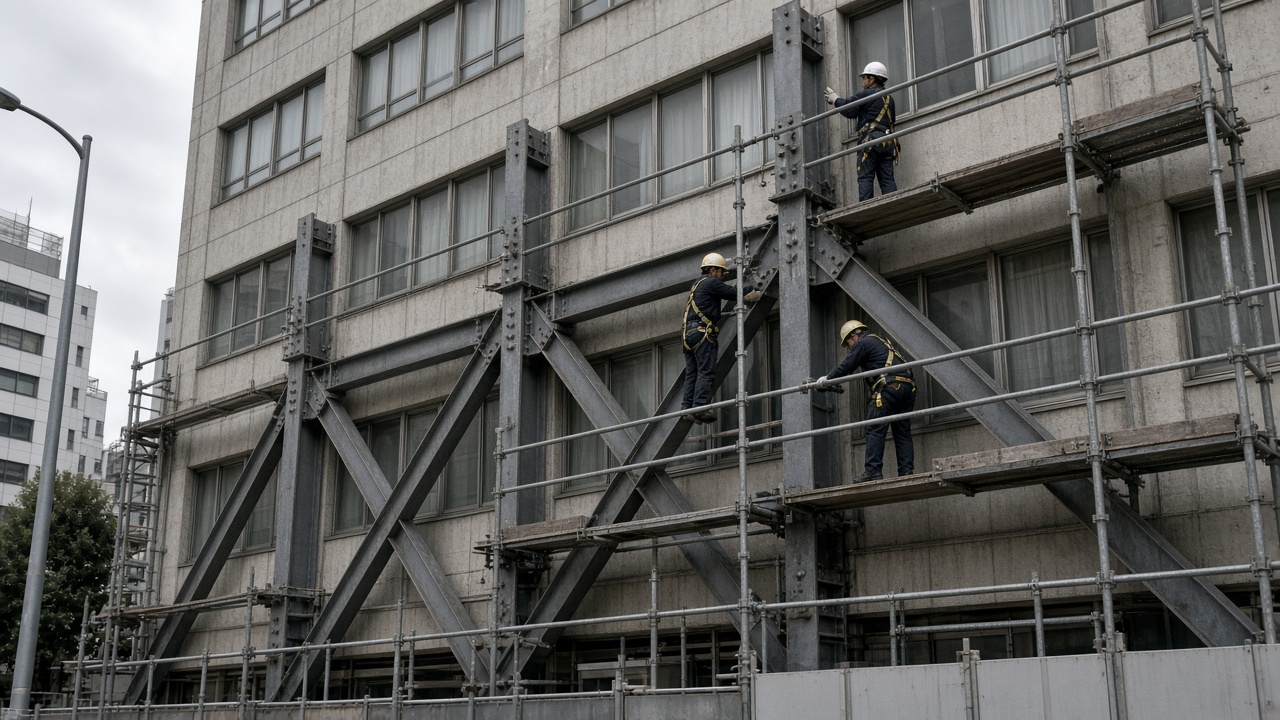
Japan’s TOPIX-17 construction and materials subindex extended gains into September, led by general contractors and retrofit specialists as building owners rushed paperwork for Ministry of Land, Infrastructure, Transport and Tourism subsidies before the fiscal 2026 application window closes in late January 2027. Shares such as Kajima, Shimizu, and Taisei outperformed the headline TOPIX over six months, while niche seismic hardware names drew retail flows on social trading boards.
Who led and why
The sector benchmark beat the broader TOPIX over one year through summer, according to JPX fact sheets, with super-leaders Kajima and Daiwa House each carrying mid-single-digit weights in the ETF that tracks the index. Portfolio managers said the mechanism is policy, not a sudden construction boom: amended seismic laws force hospitals, hotels, and schools in priority zones to complete diagnosis, and national grants reimburse part of engineering and retrofit costs when municipalities lack their own programs.
Specialty fastener and brace supplier KFC, listed under metals but active in seismic reinforcement work, saw turnover spike on message boards citing school summer shutdown projects. Pure-play general contractors booked higher inquiry volumes rather than immediate margin spikes, because subsidy-driven jobs often arrive with fixed-price competition.
Subsidy mechanics
MLIT’s “urgent seismic promotion” desk accepts applications from April 24, 2026, through January 29, 2027, for owners of buildings on mandatory diagnosis lists, including high-rises in long-period earthquake zones. Work cannot start before approval; missing that sequencing voids reimbursement. For municipalities running parallel housing programs, homeowners may still tap local grants—Inagi City, for example, pays half of wooden-house retrofit costs up to ¥1 million when applications land before December 2026 deadlines.
Investors treated the calendar as a backlog clock: every month of open intake implies more engineering fees in fiscal 2026, even if construction revenue lands in 2027.
What the street already priced
Analyst models heading into autumn already assumed mid-single-digit revenue growth for top-five contractors on public infrastructure and disaster preparedness budgets. The subsidy headline therefore extended a rerating rather than inventing one. Trading desks said foreign ETFs holding the construction basket saw inflows after July earnings calls mentioned seismic backlogs.
Materials names outside pure construction—glass, ceramics, steel products—also sit inside the same TOPIX-17 bucket, so index rallies overstate “retrofit purity.” Sumco and NGK weightings can move the ETF when semiconductor capex narratives collide with quake retrofit themes.
Risks that break the story
If municipalities exhaust local matching funds early, national grants queue behind paperwork and contractors face idle crews. Labor shortages in the Kanto retrofit market could inflate wages faster than subsidy caps, squeezing margins on fixed bids. A sharp yen move would reprice imported steel anchors, hurting hardware suppliers even when order books look full.
Policy reversal is unlikely before January, but slower-than-expected diagnosis submissions would falsify the bullish case by Friday trading in October. Watch MLIT weekly statistics on accepted applications rather than headline index levels alone.
How to read the tape
Outperformance versus TOPIX since spring aligns with subsidy timing, not residential starts, which remain uneven outside urban condo cores. Investors seeking direct exposure should parse company disclosures for seismic engineering mix; index ETFs dilute the story with unrelated materials giants.
For Japan’s equity desk, the rally is a fiscal countdown: subsidies open, forms filed, cranes booked—until the January gate shuts or budgets run dry.
Regional pipelines
Shizuoka City’s building safety desk accepted retrofit grant applications from April 6 through January 29, 2027, mirroring the national window and giving coastal owners a concrete deadline before the next typhoon season. Osaka and Fukuoka municipalities reported similar intake volumes in August, according to local press summaries cited by contractors on earnings calls.
Engineering firms hired retired inspectors to clear diagnosis backlogs; wage inflation for certified seismic evaluators is becoming its own input cost for investors modeling margin expansion.
Short sellers have largely stayed away, citing sticky government funding, but they note that any delay in subsidy disbursement after January would strand working capital on half-finished brace installs.