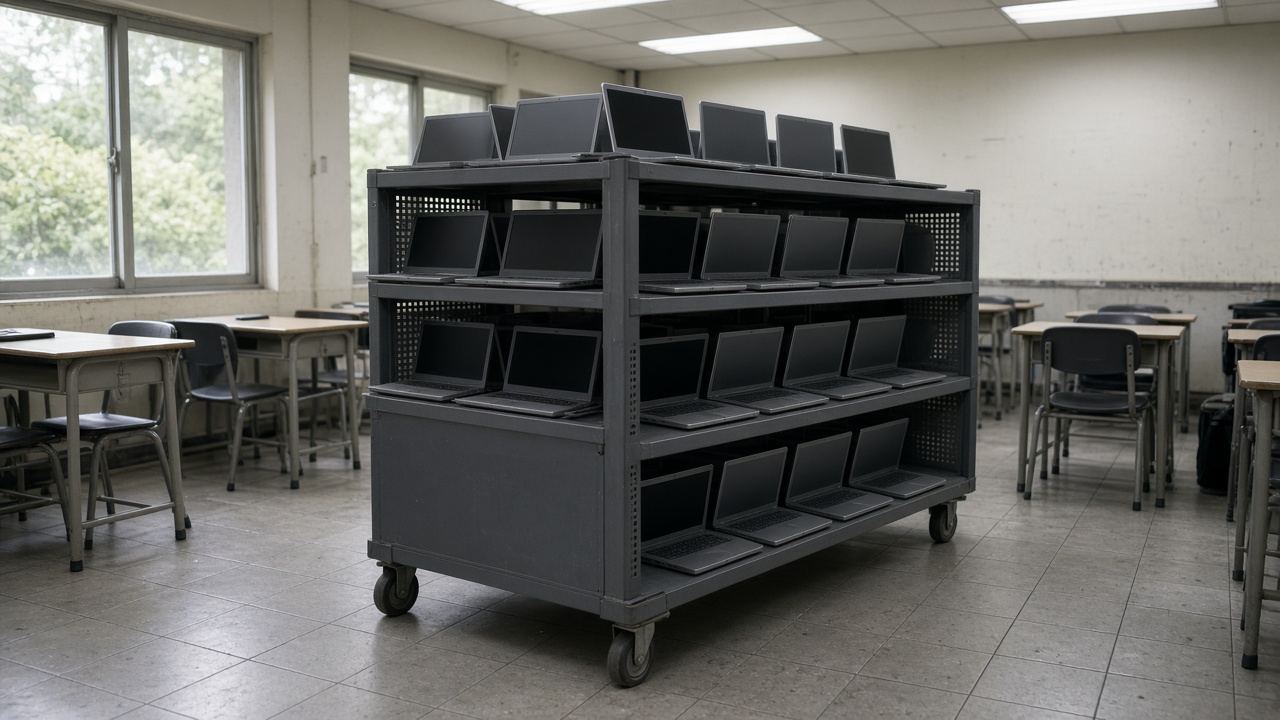
Acer’s Taiwan team launched a refreshed commercial laptop line Thursday tuned for campus replacement cycles that accelerate every autumn, pairing new Intel and AMD configurations with depot service SLAs and firmware images that align with Ministry of Education procurement checklists for public schools and technical colleges.
What changed in the hardware stack
The 2026 campus refresh centers on 14-inch and 15.6-inch chassis with reinforced hinges and spill-resistant keyboards—specs procurement officers requested after pandemic-era take-home programs increased damage rates. Acer said base models ship with PCIe Gen4 SSDs, Wi-Fi 7 radios where district backbones support it, and optional LTE modules for rural schools that still lack fiber drops to every classroom building.
Unlike consumer Swift lines sold in Taipei department stores, the commercial SKUs boot managed images that disable consumer bloatware and expose TPM 2.0 policies education IT staff use for exam-mode lockdowns. Acer’s Taoyuan service center will keep motherboard-level spare pools for three years on Taiwan-bought units, a longer depot commitment than the company offers on gray-import retail models.
Procurement calendar pressure
County education bureaus run staggered tenders: urban districts near Taipei often replace labs after Mid-Autumn break, while southern counties align budgets with December council approvals. Acer sales directors said they pre-certified two configuration bundles with common tender wording—one for junior-high computer labs, one for senior-high multimedia programs—so purchasing staff spend less time rewriting technical appendices.
University system offices are parallel-tracked. Several national universities issued RFPs this month for 20,000-seat refreshes tied to Windows 11 security baselines; Acer competes with Asus, HP, and Lenovo units assembled in Taiwan or Vietnam. Price remains decisive, but warranty pickup times matter after last year’s typhoon season flooded ground-floor storerooms in Kaohsiung and Tainan, destroying pallets of aging devices.
Software and compliance hooks
Education ministry guidance now asks schools to document how classroom devices handle student data when cloud suites sync abroad. Acer’s Taiwan legal brief includes data-flow diagrams for Microsoft 365 A3 tenants hosted in Singapore versus local caching—paperwork auditors requested during spot checks in Hsinchu science-high schools.
For AI-assisted coursework policies rolling out slowly, Acer preinstalls only district-approved agents; schools that banned generative tools can flash a “exam secure” image from USB without returning laptops to Taoyuan. That flexibility matters for night-school programs where students share machines between work shifts and classroom hours.
Channel and pricing
Taiwan system integrators—Systex, Acer’s own channel arms, and regional education specialists—receive margin protection if they bundle charging carts and asset-tag printers. Acer declined to publish street pricing; distributors said entry configs land near NT$18,000–22,000 depending on DRAM and whether LTE is included, competitive with last year’s tenders but up on memory costs.
Second-hand markets in Taipei’s Guanghua Digital Plaza still move ex-lease corporate ThinkPads, but public schools increasingly face rules requiring domestic warranty entities, pushing buyers toward locally warranted commercial lines even when consumer deals look cheaper on paper.
Sustainability and disposal
Campus replacements generate e-waste volumes Taiwan’s Environmental Protection Administration tracks. Acer’s program includes take-back credits when counties ship retired units to certified recyclers, and batteries are labeled for the EPA’s separate collection streams. Rural schools said logistics remain the bottleneck—mountain townships pay freight surcharges unless integrators consolidate pallets in Taichung hubs.
What happens next quarter
Acer plans roadshows in Taichung and Tainan for IT administrators to test hinge cycles and keyboard drain tests. If tender win rates climb, the company may localize one mid-tier motherboard in Taiwan partner plants, though executives cautioned that CPU packaging still flows through global supply chains tied to Hsinchu fabs.
For students, the visible change is mundane: faster boot times, fewer cracked hinges, and support tickets routed to Mandarin-speaking depot techs instead of offshore chatbots. For administrators, the bet is that standardized images and longer warranties shrink summer deployment chaos before the next midterm exam season.
Support load on county help desks
Chiayi and Nantou education IT hotlines said call volume spikes when new fleets arrive without printed quick-start guides in Traditional Chinese. Acer bundled QR codes linking to video walkthroughs for exam-mode toggles, a small detail that reduced repeat tickets during last year’s pilot in Hsinchu County. County buyers also asked for spare-keyboard kits after cafeteria spills; Acer added optional rubber membranes to the education price list without changing the base tender SKU.