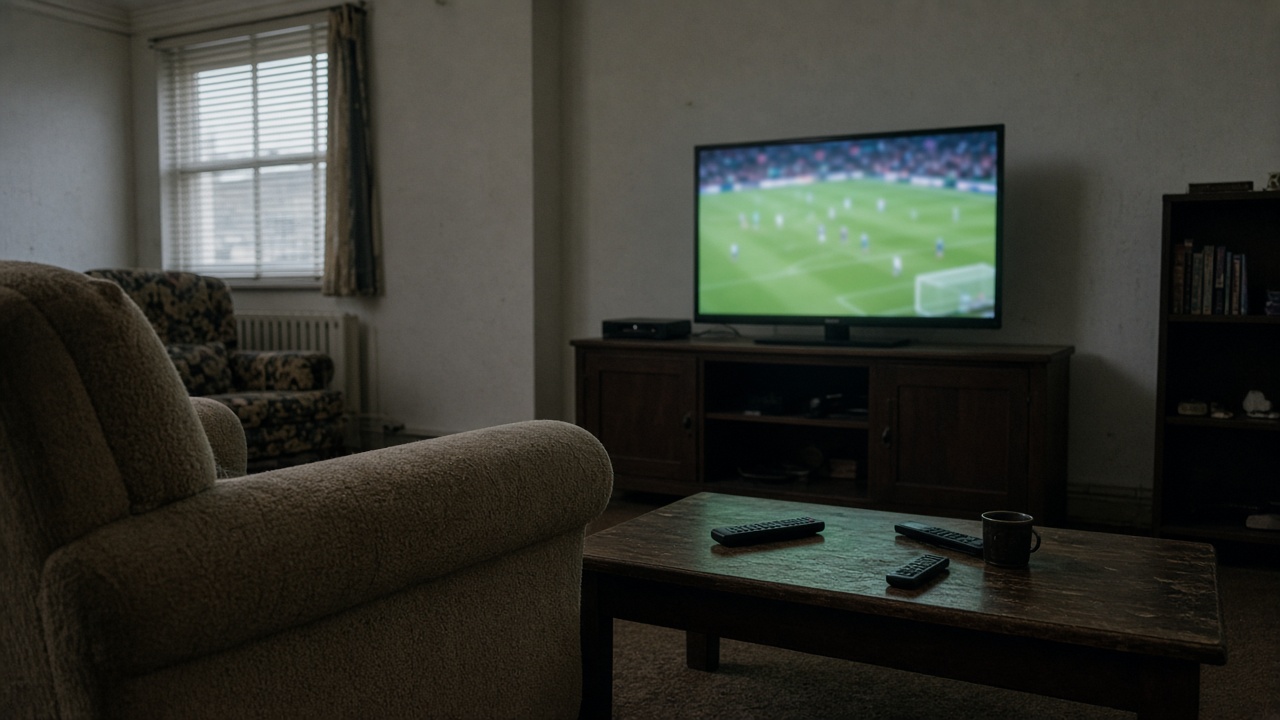
BBC engineers told partners this week that iPlayer's ultra-high-definition trial will throttle concurrent 4K streams during selected UEFA Champions League knockout nights, prioritising stable HD playback for the wider audience over headline bitrate for early adopters. The move affects midweek fixtures the corporation still holds under its renewed European football package, not every iPlayer title, but it lands as broadcasters argue with ISPs about who pays for peak-event capacity.
How the trial worked until now
iPlayer began testing HEVC-based UHD on compatible smart TVs and streaming sticks last season, limited to catalogue highlights and some live rugby. Participation required users to opt in through account settings and own displays certified for BBC's HDR10 implementation. Bitrates topped out below commercial sports streamers but beat standard iPlayer HD on fast fibre lines.
Internal slides shared with manufacturers described the trial as a learning exercise ahead of a wider rollout tied to Freeview Play devices. Champions League nights were always flagged as stress tests because simultaneous live viewers spike higher than on-demand drama.
Why knockouts trigger limits
When two British clubs reach the same midweek round—as happened frequently last spring—iPlayer's content delivery network sees synchronized minute-by-minute ramps at kickoff and halftime. UHD streams consume roughly three to four times the egress of 1080p; engineers calculated that unconstrained 4K during a Manchester derby replay window could push edge caches into rebuffering for standard viewers on congested home Wi-Fi.
The new policy caps UHD trial slots per IP address during published Champions League windows and may downgrade participants to high-bitrate HD if monitoring detects packet loss. A BBC spokesperson said the limit preserves the public service mandate: everyone should get watchable football, not only households with gigabit lines and new TVs.
Industry context
Ofcom's periodic reviews of public service broadcasting ask whether iPlayer's technical upgrades reach viewers beyond London and Manchester tech belts. Commercial rivals Sky and TNT Sports sell UHD as a premium tier with dedicated CDN contracts; the BBC funds streaming from the licence fee without a separate sports subscription. That economics gap shows up on knockout nights when the corporation cannot buy extra burst capacity as easily as pay-TV operators.
TV manufacturers lobbying for default UHD icons on iPlayer home screens may see fewer marketing opportunities if sports remain HD-first. The BBC said documentary and nature catalogue trials continue without the same caps because viewership spreads across time zones.
What viewers will notice
Trial users who open a live Champions League stream may see a banner explaining temporary UHD unavailability. Recordings started in HD remain HD; the app will not silently upsample. Households sharing one account on multiple TVs still count against the concurrent cap—relevant for students returning to shared flats this month.
Audio description and signed streams are unaffected; accessibility teams insisted those paths stay on separate encodes that do not compete for UHD keys. Radio 5 Live and BBC Sounds match commentary continues without bitrate changes.
What happens next
Engineers will publish anonymized performance data after the autumn knockout phase, comparing rebuffer rates with and without UHD caps. If fibre uptake and home router quality improve, limits could ease for spring fixtures. Until then, Champions League nights on iPlayer remain a test of whether the BBC can offer premium pixels without breaking the free-to-access promise for millions watching on older sets—an industry question every public broadcaster streaming live sport now faces.