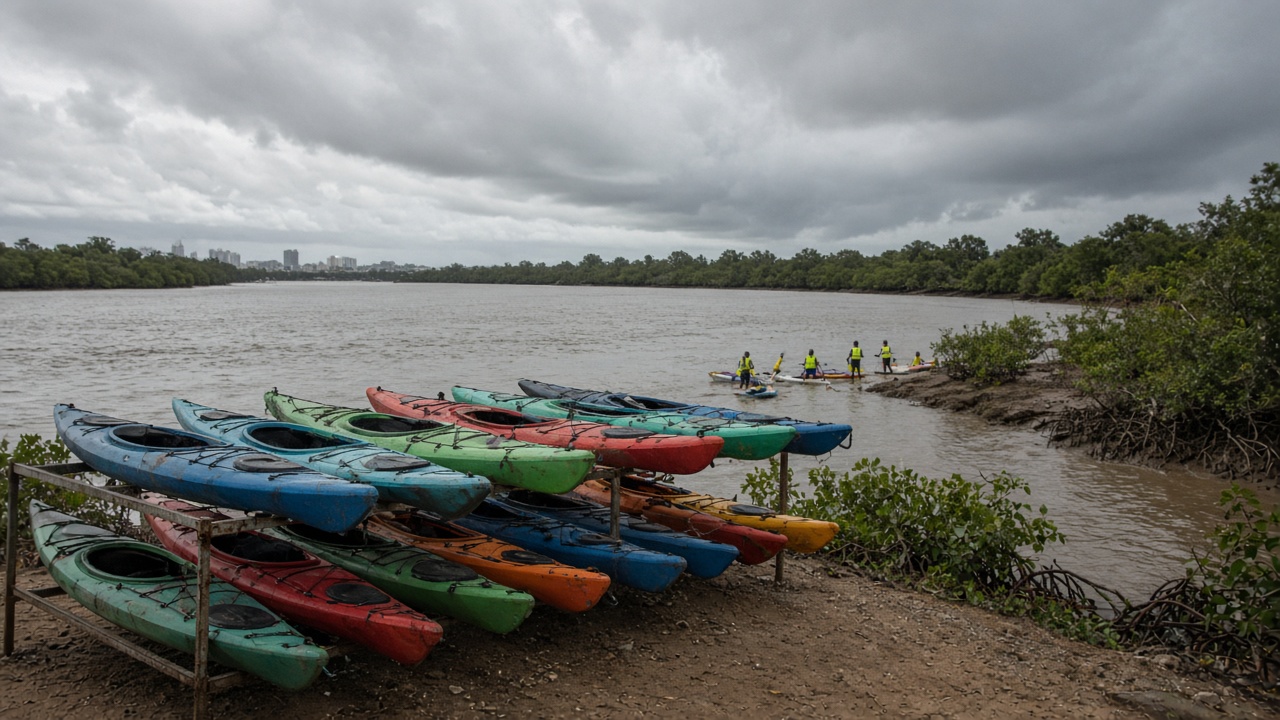
Brisbane river kayak clubs will require tide-and-storm acknowledgment widgets in online registrations before the October-to-March paddle season, embedding Bureau of Meteorology feeds for tidal phase, thunderstorm warnings, and river height at key gauges. Organizers said the change follows incidents last summer when social paddlers misread an outgoing tide under building storm clouds near the Gateway Bridge reach.
The unglamorous work of a household sport
Club volunteers—not council rangers—maintain the widgets. Membership for a family of four runs about $180–$240 a year plus $40 park launch fees at some sites; the software add-on costs clubs roughly $600 annually across shared Slack and registration portals. Parents said the extra click at signup beats the WhatsApp scramble when someone asks whether Tuesday night paddles are on while a cell marches across the radar.
Widgets pull BOM marine and thunderstorm text products; they do not replace Maritime Safety Queensland advice for commercial traffic. Recreational kayakers still self-assess capsize risk when gusts exceed club-set limits—typically 25 knots for beginner groups on the inner river.
How long and what it costs in dollars
Tide tables alone miss storm surge and upstream rain pulses. The Brisbane River at City gauge can rise quickly when Wivenhoe releases coincide with a high tide downstream; paddlers on an outgoing tide may face accelerating current toward the bay just as wind chop builds against them. Last season, a social group took 90 minutes to regroup after scattering toward Bulimba Creek mouth when a warning issued mid-paddle—no injuries, but a capsize and a tow.
Insurance for affiliated clubs includes public liability; individuals still carry the cost of replaced phones and paddles. Organizers said the widget is a liability paper trail: registrants tick that they saw the tide phase and any active warning at signup time. It is not a guarantee of safe water.
Who is doing the work
Volunteer safety officers at two clubs—one based near West End, another at New Farm—configured the alerts with a local web contractor who already maintained race signup forms. Brisbane City Council’s River Access Strategy encourages clubs to self-manage launch windows; council does not operate a kayak-specific alert system. Queensland Fire and Emergency Services flood messaging targets property, not paddlecraft, though severe thunderstorm warnings overlap.
Beginner courses now include a 20-minute module on reading tide arrows on the widget and interpreting “minor flood” river levels versus paddle cancellation thresholds clubs set internally. Experienced sea kayakers wanted harder wind cutoffs; social groups pushed for simpler red-amber-green displays. The compromise shows raw BOM text with a plain-language banner when thunderstorm warnings touch the metropolitan area.
Storm season registrations
Early-bird registration opens in late September; clubs cap beginner intake when volunteer coach hours are fixed. Families booking school-holiday intro sessions must complete the widget twice—once at signup, again 24 hours before the lesson when the system re-queries BOM. No-shows drop when parents see a red thunderstorm banner the night before; coaches spend less time on refund politics.
Paddlers who ignore widgets and launch anyway remain outside club cover. Maritime patrols occasionally warn groups near the Story Bridge when commercial ferries narrow the channel; tide alerts do not stop ferries, but they help clubs schedule crossings at slack phases.
Practical checklist
Charge a VHF-capable phone in a dry bag, wear high-visibility vests on overcast afternoons, and tell someone ashore your put-in and take-out. Check the widget, then look at the sky. Storm season on the Brisbane River is manageable for trained clubs; the household work is calendars, fees, and volunteers updating software so tide tables and warnings meet parents at registration—not halfway down an outgoing current.
After the first month
Clubs will survey coaches on false positives—warnings that cancelled paddles when storms tracked inland—and tune wind thresholds if beginners stop enrolling. Brisbane’s humidity can make afternoon build-ups look worse on radar than they feel on the water; experienced volunteers still want the raw BOM feed visible rather than a single green light that hides nuance.