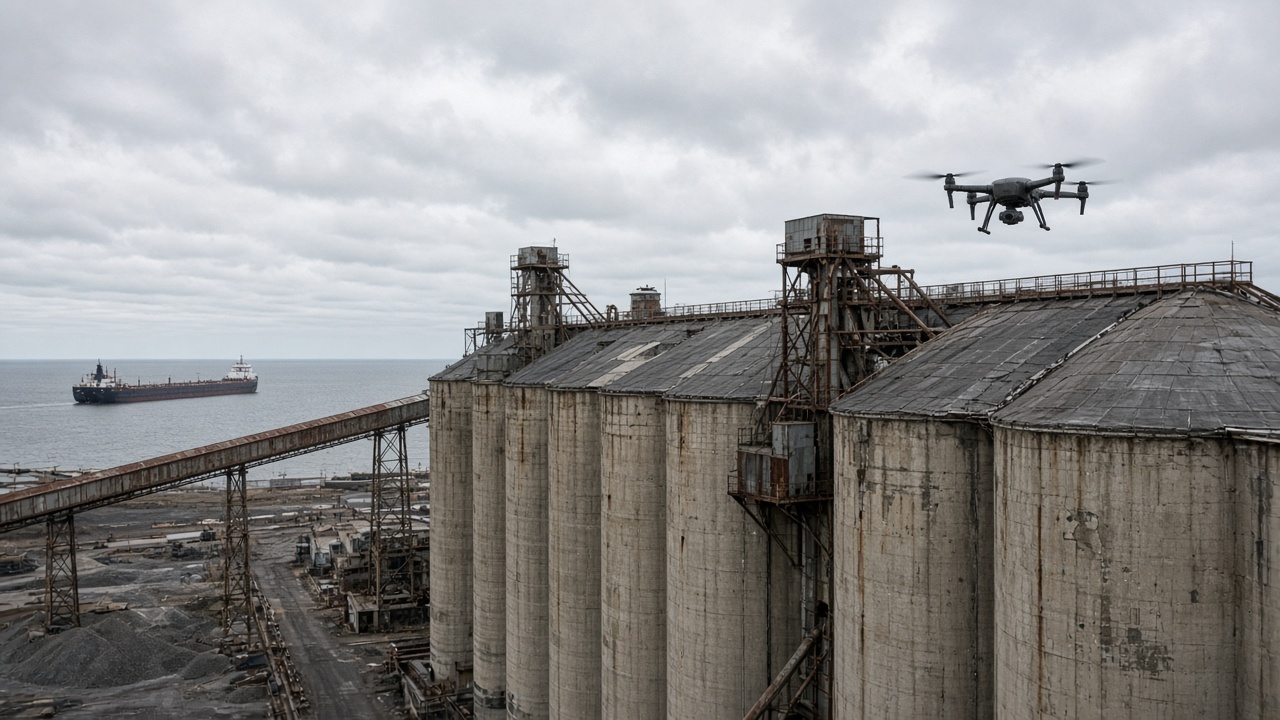
ElevateGrain, a Buffalo drone inspection startup, closed a $14 million Series A to expand roof surveys across Great Lakes grain elevators, selling insurers millimeter-level moisture maps that co-op managers said ladder crews could not safely produce on corrugated bins, according to financing documents and elevator pilot reports reviewed by InfoHandle.
Round structure and dilution
The round led by a Midwest ag-tech fund included a strategic check from a regional grain cooperative that also signed a three-year fly schedule across twelve elevators. Founders exchanged roughly twenty-two percent of the company on a post-money basis, including an expanded pool for FAA Part 107 pilots who double as roof repair estimators.
Earlier seed SAFEs from Buffalo angel groups converted at the Series A cap after a 2025 bridge tied to harbor wind insurance audits.
Business in one sentence
ElevateGrain flies fixed-wing and multirotor drones with thermal and lidar payloads, then sells subscription leak scores to cooperatives and underwriters who price roof capex reserves.
What the round funds
Capital goes to hardened drones rated for lakeside gusts, automated flight planning that respects bin radar interference, and a data room where adjusters download PDFs formatted for NGFA loss-control visits—not vanity 3D meshes.
Money story versus PR valuation
Press releases avoided “aerial AI platform” language; investors priced on recurring elevator contracts and insurance referral fees, not flight-hour gig economics. That discipline matters because 2025 harbor winds grounded drones eleven days in October—exactly when leak season peaks.
Who owns what
Co-ops own bin structures; ElevateGrain owns flight telemetry and benchmark datasets aggregated across customers with anonymized geotags. Two board seats went to the strategic cooperative, which pushed for local pilot hiring from Buffalo vocational programs.
If the next round does not exist
Founders said breakeven is eighty subscribed elevators across Ohio and New York—a narrow TAM that makes coastal venture firms hesitate. The fallback is insurance forensic work after roof collapses, higher margin but episodic cash.
Regulatory hooks
FAA waivers for flights near active rail spurs took six months; Series A funds a regulatory liaison shared with other harbor startups. OSHA ladder standards still push co-ops toward drones after a 2024 near-miss on a Buffalo River terminal.
Risks on the roof
Thermal false positives from sun-heated steel can flag dry seams as wet; ElevateGrain added ground-truth tap tests in pilot SOWs after an Erie County co-op challenged a payout recommendation.
Competitive landscape
National drone shops pitch one-off flights; ElevateGrain bets on elevator-specific benchmarks and cooperative board reporting rhythms—a slower sale but stickier renewals when boards rotate every spring.
What investors still cannot model
Commodity price swings change capex appetites for roof rehab independent of leak severity. The Series A buys two harbor seasons and ice-rated batteries—not a guarantee that every lakeside elevator will outsource surveys.
Harbor logistics
Drone batteries charge from shore power tied to elevator offices; ElevateGrain funds mobile generators for terminals without upgraded panels—a capex line item seed investors underestimated when pitching “software margins.”
Co-op board politics
Grain boards rotate farmer directors each spring; ElevateGrain trains new treasurers on reading heat maps so renewals survive leadership churn. Lost renewals in year three would sting more than missing a single harvest flight window.
Insurance referral fees
Underwriters pay referral fees when ElevateGrain flags roofs crossing deductible thresholds; founders disclosed the fees in board decks to avoid surprise revenue recognition fights if auditors treat them as broker commissions.
Pilot co-ops demanded side-by-side walks with human inspectors before trusting heat maps alone; ElevateGrain pays union rope-access crews to validate five percent of flights—a quality cost baked into gross margin targets.
Series A proceeds also fund ice-rated propellers tested on Lake Erie gusts in January, when insurers renew policies and boards ask for fresh roof scores.
ElevateGrain’s cap table now includes a harbor engineering adviser who reviews bin lightning protection before flights—safety paperwork that won a skeptical cooperative board vote in August.
Founders told investors the next diligence hurdle is proving drones can fly within fifty feet of active conveyor belts without shutting grain unload—a waiver negotiation with terminal operators that could unlock Buffalo River volume bonuses.