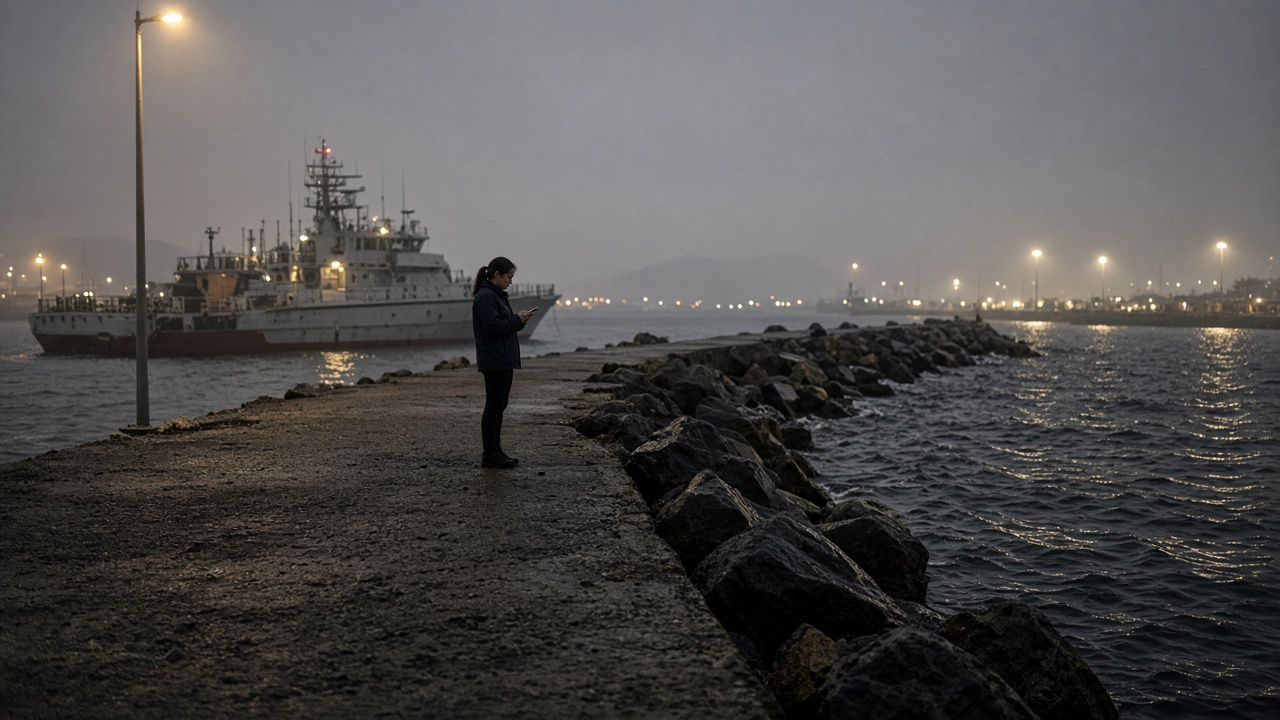
Spouses of Taiwan Coast Guard personnel are coordinating leave windows in moderated LINE chat groups as Mid-Autumn patrols stack on top of typhoon-season call-ups, filling a gap official rotation bulletins leave when ships swap crews on short notice.
How the chats work
Three invitation-only groups—organized by port city, not the agency—cover Keelung, Taichung, and Kaohsiung families. Volunteers verify membership with redacted service ID cards before admitting newcomers. Messages stick to scheduling: who can host a school pickup when a cutter stays at sea an extra forty-eight hours, which apartment can store refrigerated mooncakes if a sailor’s leave slips a day. Political debate and live operation details are banned; moderators mute accounts that post trackable ship locations.
One Kaohsiung organizer, married to a bosun on offshore patrol, said roughly 180 spouses participate. They share photos of agency-published holiday leave tables, then annotate reality—training days that do not appear on public PDFs, medevac drills that pull engineers back early. Ocean Affairs Council staff told InfoHandle they do not run the groups but have begun forwarding consolidated questions to human-resources liaisons after Mid-Autumn complaints spiked last year.
Why official channels lag
Coast Guard Administration schedules must stay flexible when smuggling interdictions or search-and-rescue sorties extend deployments. Spouses understand operational tempo; they want earlier probabilistic notice, not promises ships cannot keep. A Taichung mother of two said the chat cut last-minute babysitter fees by half because neighbors with overlapping leave now swap school runs instead of hiring strangers.
Council gender-equality advisers noted military-family support programs focus on Army and Air Force housing; maritime families often rent civilian apartments far from bases. Chat groups substitute for a physical spouses’ club when partners work rotating four-on, four-off patterns that rarely align with school calendars.
Limits and privacy
These networks are not grievance forums and cannot change pay scales. Coast Guard public affairs reminded families that operational security still prohibits sharing deployment orders with timestamps. Moderators delete screenshots when sailors request it. For Mid-Autumn, the practical win is simpler: someone ashore knows which parent can light a grill when the patrol boat horizon is still empty—and which neighbor will answer the door when children ask why Dad’s uniform is still in the closet.
Agency response and next steps
Ocean Affairs Council welfare officers attended one Keelung listening session by video, taking notes on childcare gaps but offering no immediate policy changes. Coast Guard Administration said it is piloting SMS leave confirmations tied to crew rosters, a system spouses want pushed earlier in the planning cycle rather than after ships sail. Union representatives for enlisted ranks welcomed the chats as informal mutual aid, not a replacement for bargaining on overtime pay during holiday surges.
Researchers studying military family resilience at a Taipei university asked moderators for anonymized summaries; the groups declined, citing privacy. For now, coordination stays peer-to-peer, one mooncake delivery list at a time.