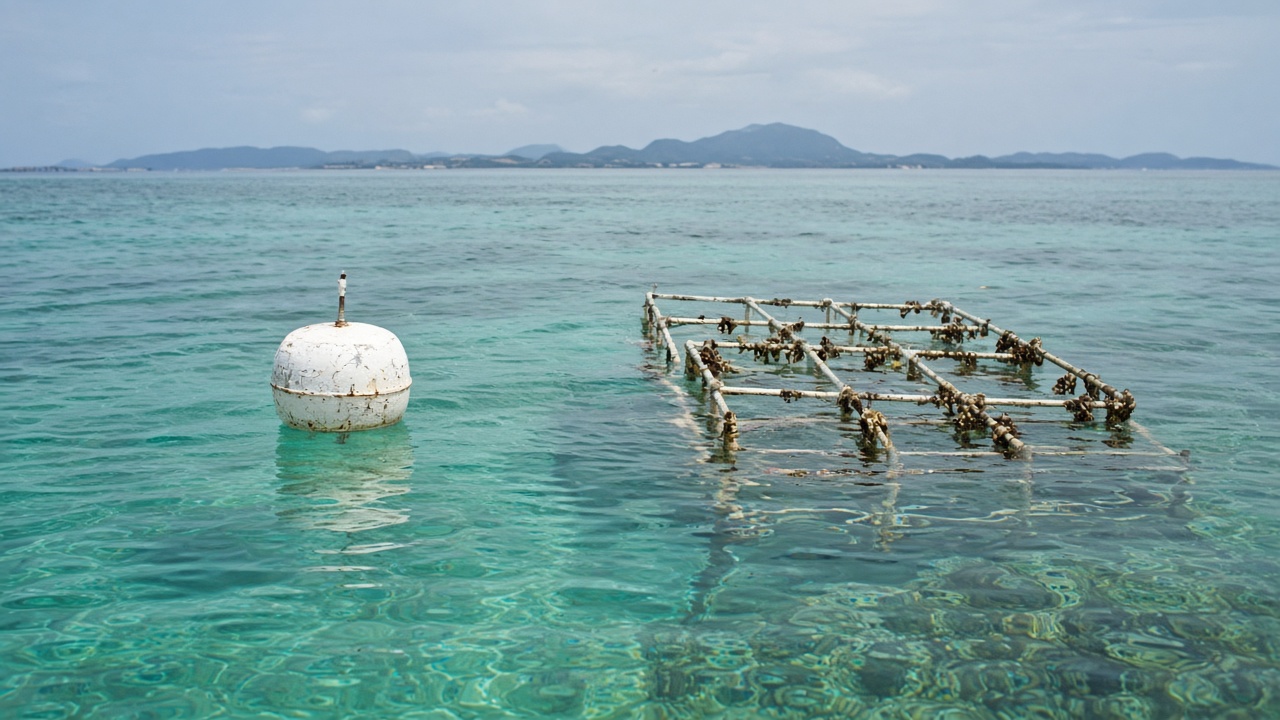
CoralScope Okinawa, a Naha-based startup, won a Fisheries Agency tender to install twelve sensor buoys around government-supported coral nurseries off the Kerama Islands, beating two larger systems integrators with a bid that emphasized local dive-staff maintenance and four-hour response windows during typhoon season. Deployments start in October before juvenile frames enter their second growth year.
What the tender covers
The agency budgeted roughly 148 million yen over three years for buoy hardware, satellite backhaul, and quarterly calibration dives. Buoys must log temperature, salinity, turbidity, and light penetration at ten-minute intervals, streaming summaries to Okinawa Prefecture fisheries servers used for nursery permit reviews. CoralScope’s design reuses hulls from a pilot with Okinawa Institute of Science and Technology researchers, modified with anti-fouling skirts after algae clogged intakes last summer.
Nurseries hold staghorn and acropora fragments on rope tables in sheltered bays; managers need alerts when heat spikes or runoff clouds follow heavy rains on Tokashiki. Previous monitoring relied on monthly dive logs; buoys aim to catch bleaching stress days earlier.
Why a startup won
Evaluators scored local employment and spare-parts warehousing in Naha port higher than headline sensor precision. CoralScope pledged to hire three certified dive guides already working tourism seasons, reducing boat charters compared with integrators that fly technicians from Honshu. The company’s venture backers include a reef-restoration NGO and a small Okinawa bank fund—capital enough for the tender but not for nationwide rollout without follow-on grants.
Competitors protested none publicly; agency staff said CoralScope met technical minimums on accuracy and encryption, then won on operations. Larger firms may subcontract if CoralScope misses SLAs, a standard escape hatch in government IT contracts adapted here for marine work.
Field logistics
Installation windows follow new moon weeks when swells ease. Buoys anchor in ten-meter depths beside nursery frames, with acoustic modems relaying to a shore gateway on Zamami. Typhoon protocols require pulling surface floats when JMA signals approach category-storm tracks within 150 kilometers—a labor spike CoralScope priced into its maintenance line item.
Kerama Islands National Park rules limit engine idle time near reefs; CoralScope’s dive boats will use electric auxiliaries park rangers requested during scoping meetings. Data feeds will not be public live streams; researchers apply through prefecture portals to avoid snorkeler crowds chasing heat maps.
Risks and milestones
Startup risk is continuity if the next funding round slips. CoralScope closed a seed extension in July but has not announced Series A; executives told InfoHandle treasury covers payroll through March 2027 if the tender invoices on schedule. Sensor supply chains still depend on Taiwanese conductivity chips; backups exist in inventory after 2025 shipping delays.
First acceptance tests require thirty consecutive days of clean readings within agency tolerance bands. Failure triggers integrator substitution clauses; CoralScope hired a former JAMSTEC technician as quality lead to avoid that outcome.
What success means locally
Fisheries cooperatives hope buoy data justify expanding nursery permits when cruise tourism rebounds. Hotels on Zamami contributed matching funds for a visitor center screen showing anonymized trends—not raw coordinates—to educate guests without revealing fragile sites. If bleaching alerts work, prefecture officials may replicate the package near Onna Village nurseries next fiscal year.
For divers, the tangible change is more paid maintenance days and fewer emergency night runs when someone notices white coral by eye alone. For taxpayers, the bet is whether a startup can keep government marine IoT running when salt and typhoons destroy gear designed in Tokyo labs.
Transparency
Tender documents will publish on the agency site after contract signing next week, including penalty schedules for missed calibrations. CoralScope must open-source its data schema so universities can ingest CSV exports without proprietary viewers—a condition OIST researchers advocated during public comment.
Community oversight
Zamami town council will host a quarterly public briefing where CoralScope explains buoy outages in plain language, a transparency step tourism operators requested after hidden data feeds fueled rumors about secret construction near reefs. Fisheries cooperatives retain the right to pause alerts that might draw unauthorized dive traffic during spawning weeks.