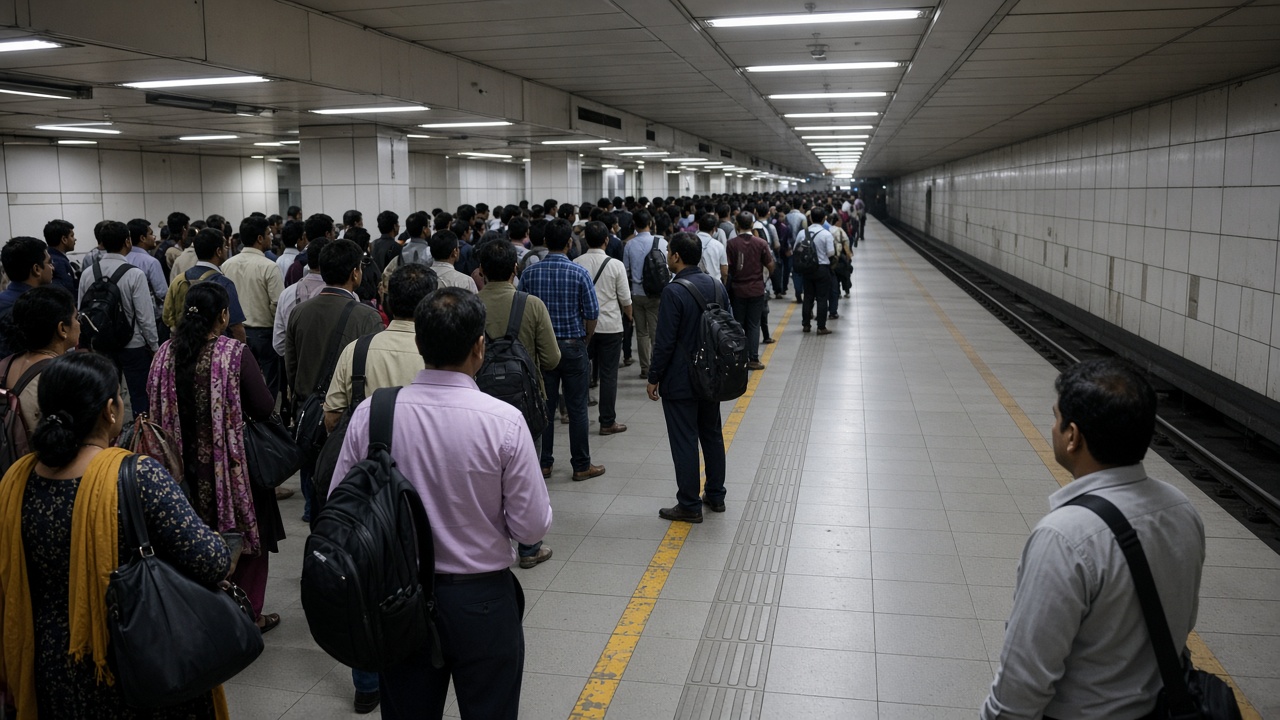
Delhi Metro commuters are subscribing to platform crowding alerts through the DMRC app and SMS opt-ins this week, trying to dodge shoulder-to-shoulder waits before Navratri evenings funnel passengers toward pandal stops on the Yellow and Blue lines.
How the alerts work
DMRC’s data team aggregates automatic train supervision counts with platform CCTV density estimates—no facial recognition, officials stress—and pushes tiered messages: green for normal, amber when waits exceed six minutes, red when station controllers throttle entry. Riders choose stations (Rajiv Chowk, Kalkaji Mandir, Janpath) and time windows; alerts arrive 15 minutes before predicted peaks when algorithms see festival-hour patterns from prior years.
The service is free but requires a linked smart card or UPI-backed metro account so messages map to real trips, not spam numbers. Commuters who tested beta messages last weekend said amber pings nudged them to walk one stop upstream to Jor Bagh, shaving ten minutes off platform time.
Why Navratri strains the network
Office-hour metros already run full; Navratri adds outbound leisure trips with garba outfits and dandiya sticks that snag door sensors. DMRC will deploy extra customer agents at Kalkaji to keep queues from spilling onto road carriageways—a safety issue after last year’s minor stampede scare on stairs. Pandals near metro mouths coordinate with police on one-way foot traffic, but train frequency, not policing, sets the ceiling.
Families splitting costs said alerts help them decide when grandma should ride versus when adult children drive—a rupee-and-comfort calculation where auto fares spike once red alerts hit neighbourhood WhatsApp groups.
Costs in rupees and time
Commuters who priced alternatives said a red alert often means an extra ₹80–120 for a shared auto from a less crowded station, still cheaper than cancelling garba tickets bought weeks ago. Families budgeting Navratri outfits factor that surge into the same envelope as metro recharge top-ups.
Office managers in Connaught Place reported more “festival flex hour” requests—employees leaving early to beat amber windows—showing alerts ripple beyond platforms into payroll conversations.
Limits riders accept
Crowding models miss sudden train withdrawals for signal faults; disclaimers say so in the signup flow. Privacy advocates asked whether aggregate data could leak travel patterns; DMRC published a note limiting retention to 48 hours for festival analytics.
Station vendors said amber alerts subtly shift chai sales—fewer cups when commuters delay arrival, more when crowds finally land thirsty. DMRC asked kiosk licensees not to block narrow exits with extra crates during red windows, a recurring friction when festival snacks stack near escalators.
Women’s safety helplines promoted the alert service alongside “which coach feels less packed” tips, reminding riders that crowding data is not a guarantee of empty women-only cars; those sections fill fast when pandals run late.
Until the ten nights pass, the practical habit is simple: enable alerts, keep a charged phone, and treat red messages like weather warnings—delay departure or pack patience if the pandal means more than the platform crush.