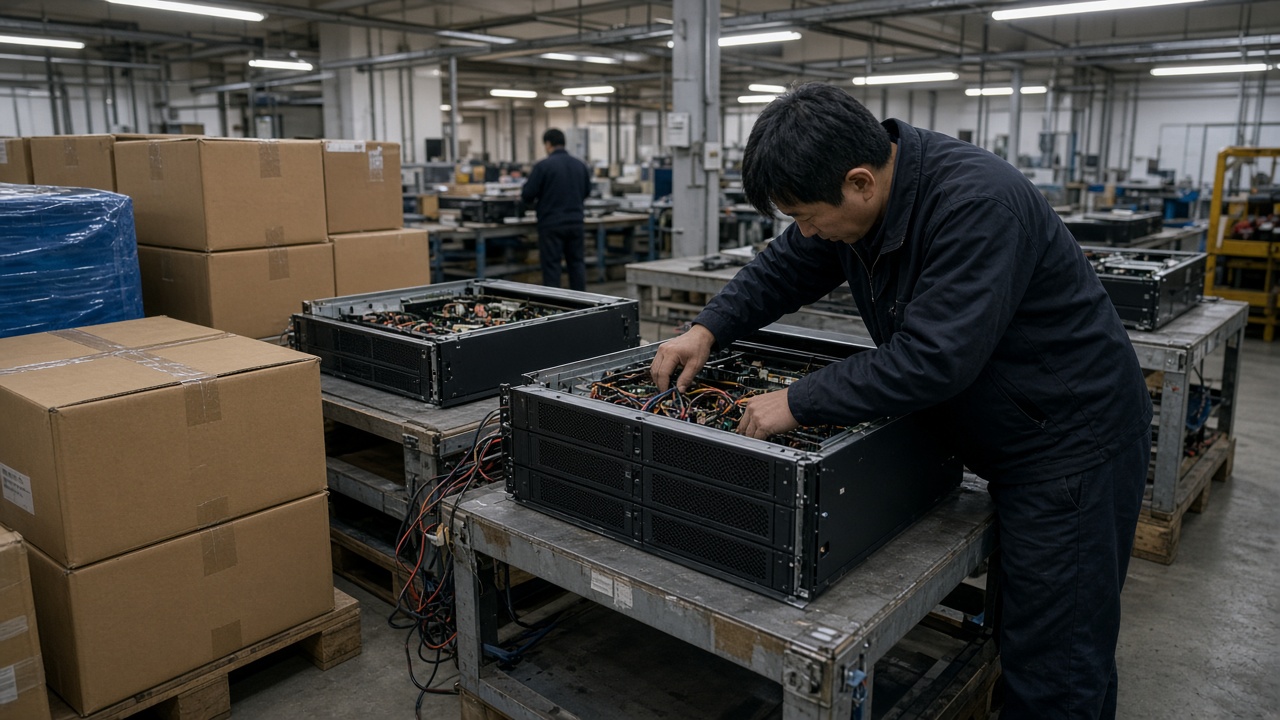
Delta Electronics Inc. shares outpaced the TAIEX weighted index on Friday after supply-chain checks pointed to firmer orders for high-efficiency power shelves, busbars, and cooling-aware PDU modules used in AI server racks assembled in Taiwan and Southeast Asia, traders and two component distributors told InfoHandle. Delta has not issued a standalone revenue alert; the move is a read-through from server builders clearing backlogs ahead of fourth-quarter datacenter installs.
Who led and by how much
2308.TW closed up roughly 2.8 percent on volume above its twenty-day average, according to Taiwan Stock Exchange data. Peer power-supply names ticked higher in sympathy, but Delta's beta to AI rack narratives is larger because it ships both individual PSUs and integrated power shelves to hyperscale-qualified integrators.
Block trades in the final hour included at least one lot described by brokers as a long-only regional fund adding exposure after a U.S. hyperscaler maintenance guide circulated referencing Delta SKUs for 54-volt distribution—details Delta's IR team declined to confirm on the record.
Mechanism behind the orders
AI GPU trays draw sustained loads above traditional two-socket servers, forcing rack designers to add redundant power paths and thicker busbars. Delta's Thailand and Taiwan plants have been reallocating SMT lines from legacy telecom power bricks to 3-kilowatt-class modules with higher platinum efficiency ratings demanded by Open Compute-style specs.
Distributors said lead times on some shelf configurations shortened from fourteen weeks to nine after Delta added a weekend shift in Pingzhen. That is not universal—liquid-cooled manifolds sold with the same rack remain constrained—but the power subset is what Taipei funds traded today.
What the street already had in the number
Consensus models already baked in double-digit growth for Delta's power and thermal segment this year after AI capex guides from U.S. cloud vendors. Today's pop suggests either orders arrived earlier than the September quarter midpoint or margin mix improved because shelf sales carry more engineering content than commodity bricks.
Foreign institutional investors were net buyers for a third session, according to preliminary TWSE flow tables, a modest confirmation that the AI power story still attracts offshore money despite NT dollar volatility.
What would falsify the trade by Friday
A sudden export-license delay on GPU modules would stall rack integration even if power parts sit in warehouse aisles—watch Hon Hai and Quanta production memos, not just Delta. Conversely, a surprise U.S. tariff proposal on Taiwanese power electronics would hit multiples faster than volumes.
Delta's next formal update comes with monthly revenue disclosure in early October; if AI shelf shipments do not show up there, today's sympathy bid could unwind quickly.
Supplier ripples
Connector and capacitor vendors tied to Delta's bill of materials reported inquiry spikes, though none disclosed Delta-specific revenue. Logistics firms at Taoyuan air cargo said pallet weights on power-shelf SKUs rose, a dull but real indicator of denser racks heading to Singapore and Tokyo integration floors.
Investor takeaway
Nina Okonkwo's desk treats Delta as a volume-and-mix story inside the AI build-out, not a GPU lottery ticket. Friday's gain fits a pattern: when server assemblers accelerate, power and cooling suppliers move first because their parts do not need the last export sign-off on accelerators. Whether the move sticks depends on October revenue prints—and on whether AI rack demand survives another week of FX and geopolitical headlines without a capex pause.
Options markets priced implied volatility on Delta modestly higher into month-end, suggesting hedgers expect headline risk but not a collapse in orders. Thermal management peers traded in line with the sector beta, which supports the idea that today's session was power-shelf specific rather than a broad TAIEX risk-on bet.
Management has emphasized automation investments in Pingzhen that let the same headcount build more complex shelves—a margin lever if commodity PSU prices soften. Traders who faded the last AI-supply pop in June may stay sidelined until October revenue confirms the shelf mix shift.
Retail investors on local bulletin boards debated whether today's move was a catch-up trade after Delta lagged the TAIEX for two weeks; volume data suggest institutions, not day traders, drove the close.