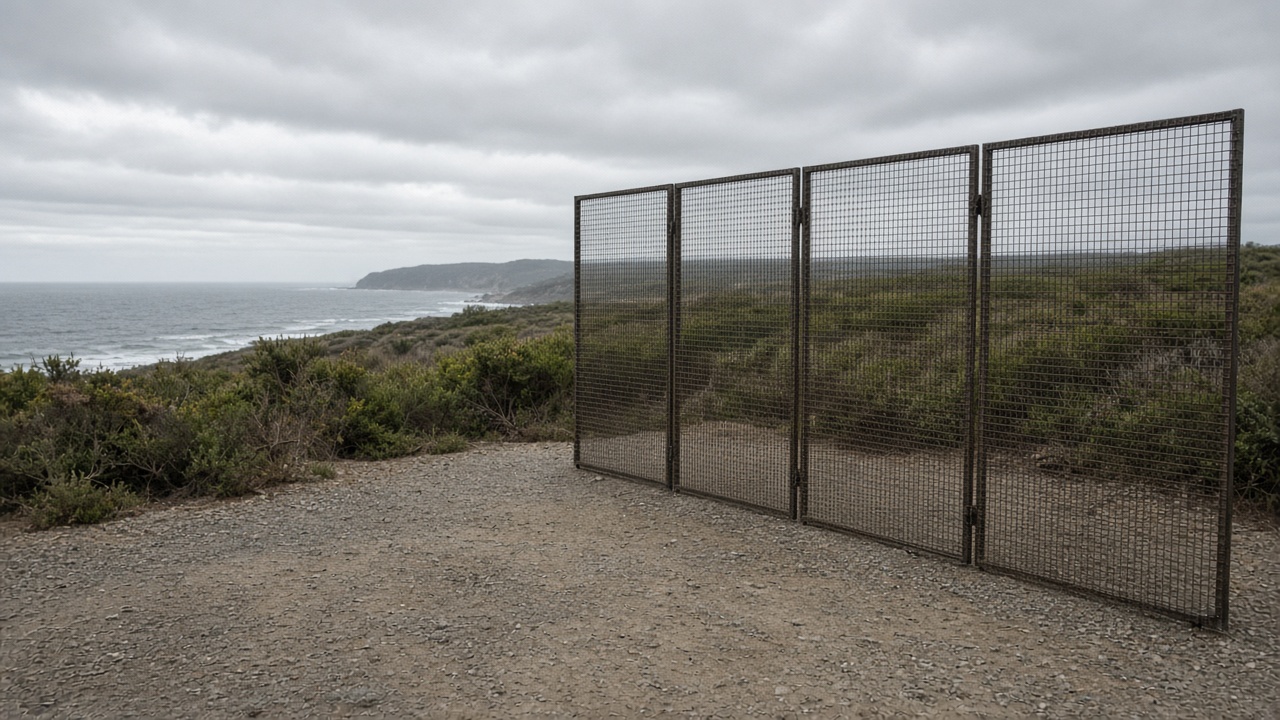
Councils along the Great Ocean Road will test modular ember screens at three coastal heath trailheads before the spring fire window, aiming to reduce spot-fire starts when wind-driven embers lodge in dry brush near car parks. The pilots sit between CFA preparedness messaging and land managers’ concern that visitor traffic along the B100 corridor keeps ignition paths active even when total fire bans are posted.
Where on the map
Sites include a Kennett River lookout approach, a Split Point heath buffer near Aireys Inlet, and a Colac Otway shire node above Apollo Bay’s eastern escarpment. Each location mixes low coastal heath—tea-tree and coast beard-heath—with tourist pull-offs where discarded cigarettes and hot exhaust grass contact still show up in incident logs. Screens are not permanent fences; they are hinged mesh panels crews can deploy when the Fire Danger Rating crosses thresholds the shires set with local brigades.
Ember screens work by blocking radiant heat and reducing wind-blown brand entry into fine fuels near assets. They do not stop a crown fire; they buy minutes for crews to defend trail infrastructure and evacuation assembly points. CFA district officers said the pilots complement existing slashing and planned burns on crown land managed by Parks Victoria, not replace them.
Who regulates what
Parks Victoria holds lease and fire management plans for much of the heath; councils own car parks and signage. The pilot MOU splits maintenance: shire works crews hinge panels during elevated warnings; parks staff clear debris behind screens after events. EPA Victoria rules on smoke from planned burns still govern larger hazard reduction; ember screens address a narrower edge—ignition at the tourist interface.
Air quality this week along the coast reflected typical spring background, not burn smoke. Bureau of Meteorology coastal wind forecasts drive deployment calls; when northerly winds align with high ratings, screens stay up overnight at two sites where overnight campers linger illegally despite dusk closures.
What is in the air and the scrub
Coastal heath dries faster than wet sclerophyll inland. Ocean salt spray slows some growth but does not prevent cured fine fuels by late September. Monitoring plots near the Kennett site recorded fuel moisture below brigade thresholds on two September afternoons after warm spells—conditions where ember landing can torch knee-high scrub in minutes. Screens aim to keep embers out of the first meter of fuel adjacent to wooden signage and rubbish bins, historical ignition points in audit reports.
Tourism operators support the trial if deployment does not block ocean views on low-risk days. The Great Ocean Road Regional Tourism Board asked for clear public messaging: screens mean heightened awareness, not road closure. VicEmergency remains the authoritative channel for leave-now warnings; council social posts will link there rather than invent parallel alert language.
Limits and next steps
Pilot funding is modest— federal disaster resilience grants matched by shire capital lines. If panels survive corrosion tests through one summer, the model may expand to other heath nodes near Lorne and Anglesea. Failure modes include tourists treating screens as climbing gyms or leaving gaps unlatched; rangers will patrol during peak weekends.
Climate projections for southwest Victoria show longer dry spells between heavy rains; heath carries fire risk even when the Otways’ taller forests look green. Ember screens are a tactical tool at mapped places, not a answer to landscape-scale fuel management. For residents and travelers, the practical takeaway mirrors every season: check ratings before parking at a heath lookout, carry a charged phone with VicEmergency installed, and treat council screens as a sign that local brigades expect ember weather—not as reassurance that fire cannot arrive.
Measuring the pilot
Shire staff will log deployment hours, maintenance costs, and any spot-fire holds within ten meters of screened nodes. If the panels correlate with fewer bin-edge ignitions on high-risk afternoons, the project may qualify for a second grant round covering corrosion-resistant hinges suited to salt spray. If not, the mesh folds back into storage and the heath returns to slashing-only prep—another data point in a coastline learning to live with longer fire seasons.