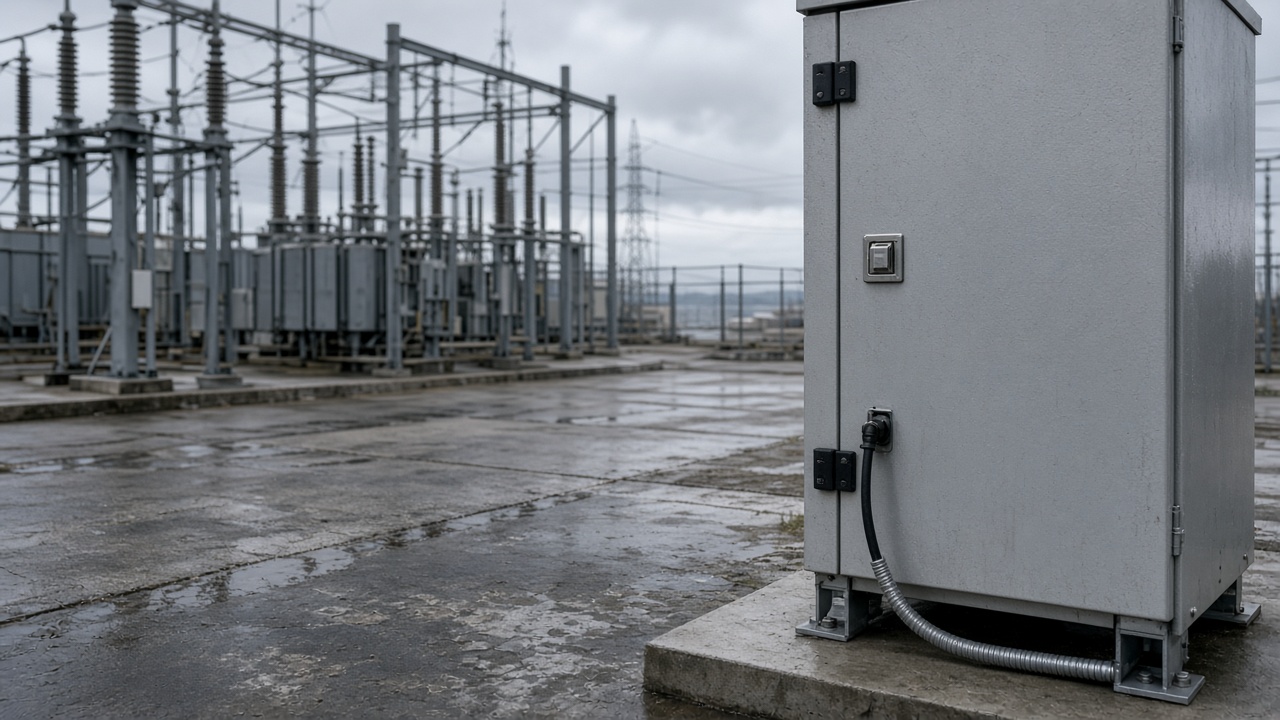
Hitachi Energy’s Japan grid automation unit told two utilities Thursday to re-verify firmware images on microwave modems serving a cross-border HVDC telemetry link after a four-hour monitoring gap Tuesday that coincided with scheduled line switching ahead of typhoon season. The company said it has no evidence of malicious code injection; the recheck targets a corrupted flash signature on a single lot shipped in 2023 to a coastal substation feeding undersea fiber toward Korea’s Jeju balancing zone.
What failed
According to a notice reviewed by InfoHandle, remote terminal units kept passing protection signals locally but stopped uploading phasor data to the OCCTO-wide visualization layer between 02:10 and 06:40 Japan time. Operators fell back to voice bridges with Korea Electric Power Corporation schedulers—a manual process OCCTO documents for communication loss exceeding thirty minutes.
Field crews replaced the modem with a cold spare; the failed unit boot-looped after an automatic update attempt. Hitachi Energy’s lab reproduced the issue only when image verification was skipped during a rushed swap after lightning struck a nearby arrester last month.
Cross-border stakes
The link is not a household power import cable; it carries telemetry and dispatch coordination for frequency support during Silver Week demand swings. METI’s electricity policy pages describe such ties as resilience tools, not primary supply. Still, a blind spot during switching windows is when operators most need synchronized data—exactly when Tuesday’s gap occurred.
KEPCO and the Japanese utility involved declined to name the substation, citing critical infrastructure rules, but confirmed no load was shed. Traders said day-ahead prices did not move; the event stayed inside control rooms.
Firmware recheck scope
Hitachi Energy published fresh SHA-256 hashes for three modem SKUs used on coastal links and asked customers to compare against golden images stored offline—not just version strings on device labels. Utilities must log results in maintenance tickets before the next typhoon landfall forecast inside seventy-two hours.
Other vendors’ modems on the same towers are unaffected, the notice said. The issue is specific to a batch where a supply-chain mirror served an incomplete image during pandemic-era shipping diversions—a detail Hitachi Energy added after utilities asked whether ransomware was involved.
Regulatory view
OCCTO’s English site lists communication redundancy standards; this incident will appear in October’s reliability summary unless utilities waive anonymity. METI has not opened a formal investigation, but cyber-security reviewers at the Cabinet Secretariat asked for supply-chain attestations on grid firmware after similar checks in North America this summer.
Domestic utilities unrelated to the cross-border link said they are auditing spare modems anyway because Hitachi Energy’s notice listed visual inspection cues—scratched seal stickers, mismatched serial plates—that field techs can check without shutting down lines. That precaution adds labor during typhoon prep weeks when crews already trim vegetation near rights-of-way.
Known unknowns
It is unclear how many modems from the lot remain in spares closets versus active service. Hitachi Energy has not said whether it will physically recall devices or rely on hash audits. Whether Tuesday’s gap masked any manual switching error is still under joint review; both operators said protection relays operated as designed.
Operator playbook updates
OCCTO circulated a one-page addendum reminding shift leads to test microwave paths after arrester replacements, not only fiber spans. Korean counterparts shared a redacted timeline showing when they first noticed missing phasor traces—thirteen minutes before Japanese crews escalated—highlighting clock-sync quirks that can delay joint alarms.
Maintenance contractors said spare modems from the affected lot are now quarantined in labeled bins; installing one requires a supervisor signature and an offline hash check photographed for the utility’s asset database. That bureaucracy slows storm recovery by hours, which regulators accept as cheaper than another blind telemetry window.
Insurance underwriters covering utility cyber riders asked for copies of the hash audit logs; none reported premium hikes yet, but questionnaires now ask whether microwave firmware is verified after every arrester replacement.
For residents, the practical note is unchanged: brief telemetry loss does not mean lights flicker. The lesson for grid engineers is mundane and urgent—verify firmware images when swapping gear after storms, before the next storm arrives.