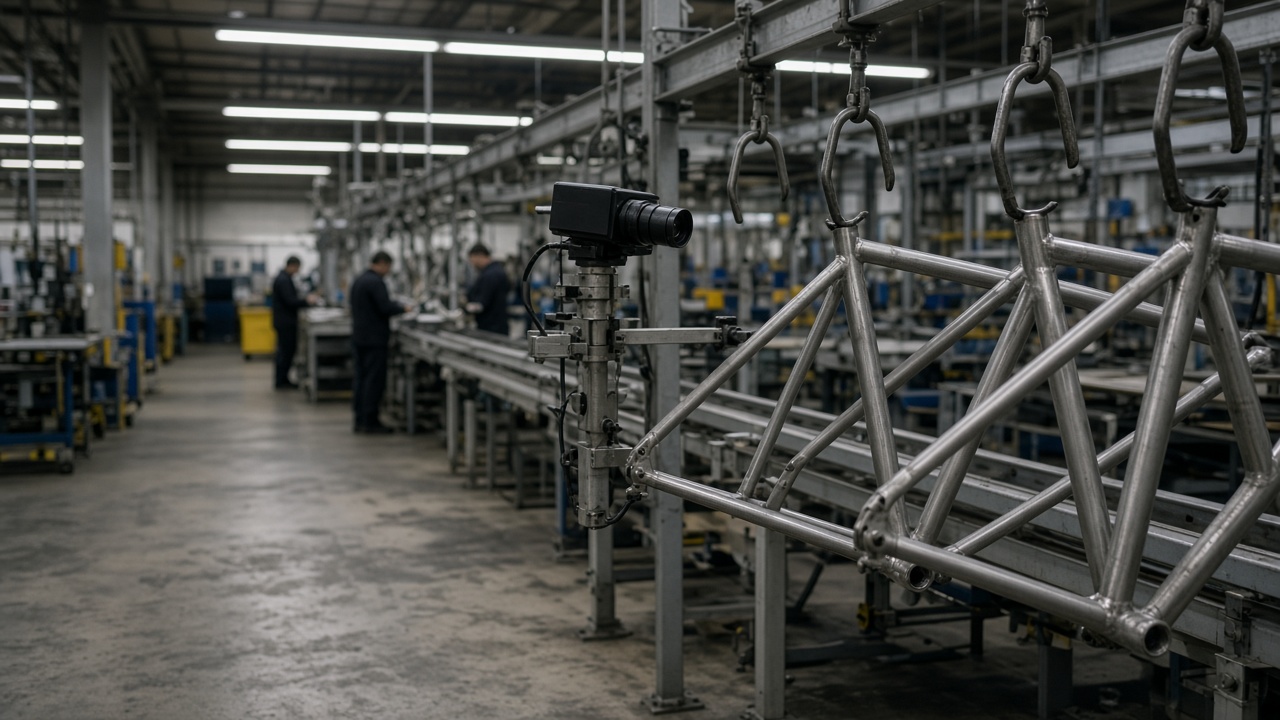
The Industrial Technology Research Institute delivered pick-and-place vision modules to three Taichung bicycle assembly plants this month, upgrading lines that install derailleur hangers and cable guides so cameras catch millimeter-scale misalignment before frames enter powder-coat ovens.
What shipped
Each module pairs a 5-megapixel global-shutter camera with an edge GPU box running ITRI-trained inspection models. Plants mount them after CNC machining and before wet paint, where a bent hanger once meant stripping coatings or scrapping aluminum. The software labels bracket seat faces, ferrule paths, and facing angles, comparing live frames to golden samples stored per SKU.
ITRI’s Mechanical and Mechatronics Systems Research division said latency stays under 80 milliseconds so conveyors need not slow for most road-bike geometries; e-bike downtubes with thicker welds use a secondary exposure profile operators select from a touchscreen.
Why Taichung plants asked for it
Taichung clusters OEM orders for global brands and contract builders serving European sport and leisure markets. Mid-Autumn often brings rush orders ahead of European spring retail resets; quality managers reported higher defect rates when temporary workers cover night shifts. Vision modules do not replace final ride checks, but they reduce rework loops that jam paint booths.
One plant manager said misaligned hangers discovered after coating cost NT$1,200–1,800 per frame in labor and chemicals; catching issues upstream pays back hardware in weeks during peak season. Another plant feeds alert photos into vendor scorecards for forged bracket suppliers, nudging negotiations without public recalls.
Integration friction
Legacy lines mix Mitsubishi and Siemens PLCs; ITRI shipped protocol adapters but plants still had to reroute trigger signals from pneumatic stops. Dust from aluminum filing can fog lenses; maintenance schedules now include nightly lens wipes and compressed-air nozzles ITRI added to the bill of materials.
Union stewards asked whether vision logs could discipline workers; plant HR policies limit access to shift-level statistics unless repeated errors trace to training gaps. ITRI’s contract includes on-site tuning for two months so models adapt when brands switch hanger suppliers.
Policy and funding context
The Ministry of Economic Affairs precision-machinery programs partially subsidized module costs under smart-manufacturing vouchers Taichung city offices promote. Taiwan Bicycle Association members want shared datasets so smaller shops—not only top-tier OEMs—can license models, but competitive concerns slow pooling.
Export customers increasingly request traceability files; vision metadata attached to frame serial numbers satisfies some EU retailer audits without manual gauge logs.
Limits of the models
Carbon frames with matte finishes still need separate polarized lighting kits ITRI lists as optional; the first shipment targets aluminum road and hybrid lines. Paint color changes can fool early models; plants must recapture golden images when brands issue new powder codes.
ITRI cautioned that modules detect mechanical placement, not metallurgical fatigue—downstream tests still matter.
What comes next
Researchers plan fork-crown facing modules for 2027 if this rollout hits agreed false-reject rates below 0.5 percent. Taichung’s economic development bureau will host an open house for suppliers considering similar kits on e-bike battery cage welds.
For riders overseas, the outcome is fewer creaky derailleurs on fresh bikes, even if they never see the camera blink green above a Taichung conveyor.
Supplier audits and rework metrics
Quality teams now export weekly CSV files from the vision gateways into ERP modules that track rework hours per brand contract. When a hanger supplier in Changhua missed tolerances three shifts in a row, planners shifted PO splits without stopping the whole line—a workflow plant managers said used to require manual gauge sampling on every tenth frame.
ITRI engineers host monthly office hours at the Taichung Precision Machinery Innovation Park so smaller component shops can rent camera kits for trial runs before committing capex. Two suppliers testing fork-end facing in October will decide whether to buy or lease based on those trials.
Energy and lighting costs
Added strobes raised electricity draws on lines that already run six days a week during export rushes. Plants timed exposure pulses to milliseconds and dimmed ambient bays where safety rules allow, keeping monthly power bills within the two percent headroom sustainability officers set for 2026.