Honasa Consumer’s Mamaearth brand shipped palletized zinc oxide barrier creams to dermatology clinics in Jaipur and Indore this week, opening a hard-water irritation study that pairs mineral sunscreens with chelating face washes already cleared for Indian e-commerce claims.
What is in the trial kits
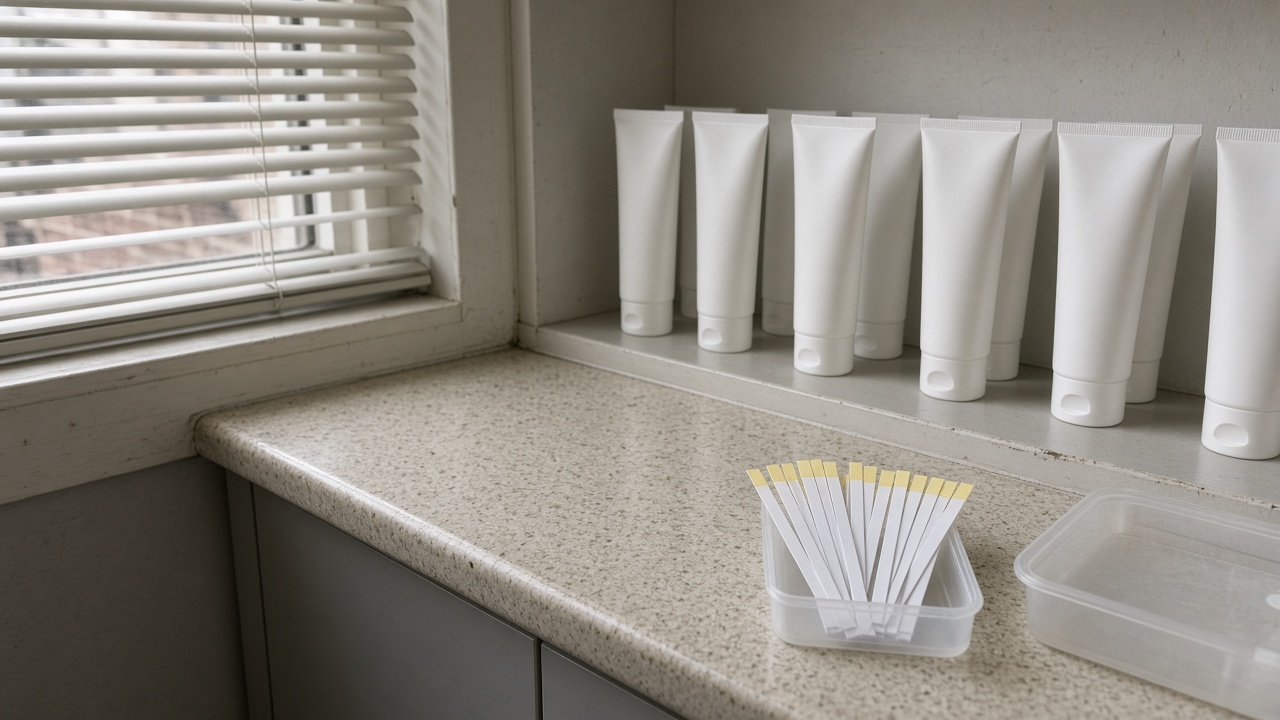
Each clinic received identical cartons: a 20 percent zinc oxide daytime balm, a fragrance-free syndet bar with EDTA, and logbooks for patients to note tap-water hardness readings from home test strips Honasa subsidized. INCI lists on the cartons match filings on the company’s site—zinc oxide as the primary UV filter, no parabens, no listed hydroquinone. Dermatologists involved said the question is not whether zinc oxide works in theory but whether barrier repair lowers transepidermal water loss when borewell calcium spikes after monsoon.
CDSCO classifies these SKUs as cosmetics, not drugs, so endpoints are irritation scores and quality-of-life surveys rather than prescription outcomes. Still, investigators promised to publish aggregate data if recruitment hits 120 adults with clinically dry, fissured cheeks linked to washing habits.
Why hard water now
Jaipur and Indore sit on aquifers where post-monsoon mineral loads climb; patients often blame “sun allergy” when white scale on taps coincides with burning cheeks. Mamaearth’s beauty science team pitched the trial to clinic heads after ASCI asked the brand to soften before-and-after imagery in Instagram ads. A supervised study gives marketers defensible language: “tested with dermatologists in high-TDS cities” without promising cures.
Competing D2C labels sell niacinamide serums for the same complaint; zinc oxide’s appeal is photostability for commuters who refuse greasy chemical filters. Clinic staff screen out active eczema flares requiring steroids, keeping the cohort cosmetic.
What shoppers will notice
Retail shelves are unchanged until data land—no new MRP stickers yet. Mamaearth’s app teased “clinic trial underway” on product pages, linking to a plain-language consent FAQ. Pharmacists near trial sites said customers already ask whether the zinc balm is “the hospital one,” a confusion Honasa trainers told staff to correct: study product is labeled, not prescription.
If interim charts show lower stinging after two weeks, Honasa may widen distribution to Surat and Nagpur, cities with similar hardness maps. Pharmacy chains said they will wait for clinic summaries before endcap displays, wary after ASCI pulled influencer posts that implied medical outcomes from cosmetic rinses.
Honasa trainers also briefed counter staff to explain that zinc oxide leaves a faint cast on deeper skin tones—a complaint trial sites log honestly— and that reapplication every two hours still matters near windows, even when irritation, not sunburn, is the chief worry.
Until then, the honest pitch is narrow: mineral barrier plus gentler cleansing for faces that react to chalky tap water, measured in a doctor’s office rather than a bathroom mirror alone.