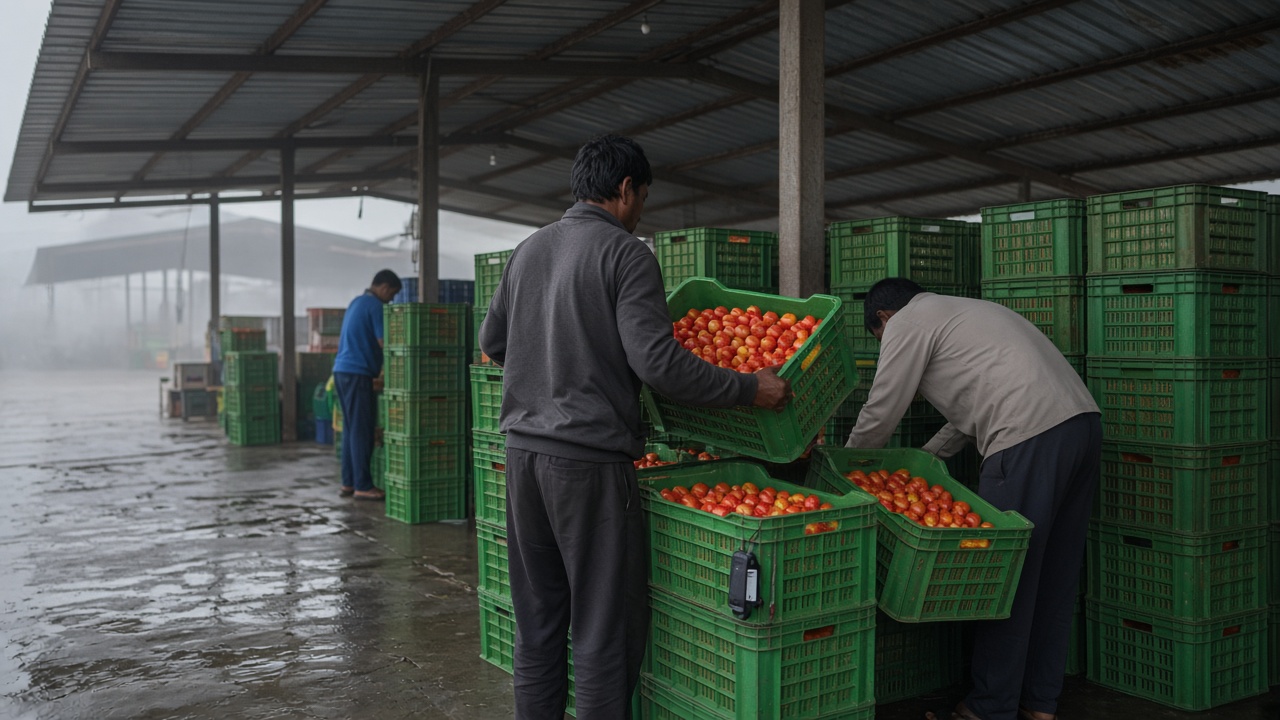
Ninjacart Pvt. Ltd. closed a tranche of its ongoing seed extension tied to deploying reusable temperature tags on mandi crates serving Karnataka tomato cooperatives, according to investors briefed on the milestone and procurement leads at collection centres near Kolar and Chikkaballapur where Bluetooth probes began logging pulp-heat spikes before trucks depart for Bengaluru retailers.
What the hardware does
Tags clip to standard green crates and sample ambient temperature every five minutes during farm-to-collection-centre legs. Gate readers at Ninjacart sheds raise alerts when internal estimates exceed thresholds cooperatives set for September harvests—typically eight to ten degrees Celsius above dawn field temperature for more than forty minutes. Dispatchers can reject loads or downgrade them to nearer outlets before spoilage spreads across mixed pallets.
The seed milestone funds tag moulding, firmware signed for humid mandi environments, and Android dashboards translated into Kannada for foreman screens—details operations managers said were missing in earlier pilot stickers that failed after monsoon soakings.
Why tomatoes and why now
Karnataka’s tomato belt faced volatile mandi prices after uneven monsoon breaks; cooperatives lose negotiating power when receivers cite unseen heat damage on arrival. Ninjacart’s collection network around Bengaluru already moves tonnes of perishables within twelve-hour windows, but temperature visibility stopped at cold rooms, not open crate legs from Bidaraguppe and Hoskote farms.
State horticulture officials tracking post-harvest losses encouraged private tagging pilots as complements to cold-chain subsidies—though tags do not replace refrigerated trucks, they document handoffs when farmers allege middlemen left crates in sun.
Cooperative economics
Member farmers pay a refundable deposit per tag through cooperative societies; Ninjacart owns firmware and cloud analytics. If a load is rejected for heat, logged data splits liability between farmer delay and transporter idle time—a dispute pattern collection-centre leads said consumed hours weekly before probes existed.
Early data from Kolar showed twelve percent fewer grade-downs on tomato lots tagged versus untagged control lanes over three weeks—a figure Ninjacart cautioned is not seasonally adjusted.
Round context
The milestone tranche sits inside a broader seed extension led by agritech-focused investors; Ninjacart did not disclose fresh valuation. Funds earmarked for tags do not expand city count—they deepen instrumentation in Karnataka lanes where tomato volume spikes before national festivals. Corporate development teams said debt lines for fulfilment centres remain separate from this equity slice.
Integration with existing stack
Tags feed the same supply-chain console Ninjacart uses for demand forecasting and farmer pick lists. When heat alerts fire, the system can reroute trucks to closer dark stores, mirroring algorithms built for leafy greens but tuned for ethylene-sensitive tomatoes. APIs remain internal; cooperatives see PDF trip sheets with temperature sparklines at checkout.
Limits and failure modes
Battery life targets three harvest cycles before recharge; foremen reported missed readings when crates were stacked metal-side-in, shielding antennas. Firmware updates due in October promise better edge sampling when tags sit between tomato layers—physics Ninjacart labs test in walk-in chambers at its Bengaluru tech office.
Tags do not measure pulp temperature directly; proxies can misclassify loads cooled quickly with wet sacking. Receivers still cut random crates at destination mandis.
Farmer feedback
Growers in Chikkaballapur said deposits were acceptable if rejections came with shareable logs they can show society meetings. Skeptics worried Ninjacart could use heat data to discount prices automatically; contracts specify human dispatcher approval before price adjustments.
Competitive and policy view
Other agritech players sell IoT for cold rooms; crate-level tagging at mandi scale is rarer because tag loss and abuse erode unit economics. Karnataka horticulture dashboards track macro arrivals; Ninjacart’s probes add shipment-level evidence should state agencies audit post-harvest loss claims after extreme heat weeks.
What investors want next
Proof that tagged lanes improve net realized price for farmers—not just Ninjacart shrink metrics—before the company rolls tags to chilli corridors in Andhra Pradesh. The seed milestone buys six months of Karnataka tomato season data; if spoilage alerts hold, follow-on capital may fund tag manufacturing at volumes cooperatives can afford without Ninjacart subsidies.