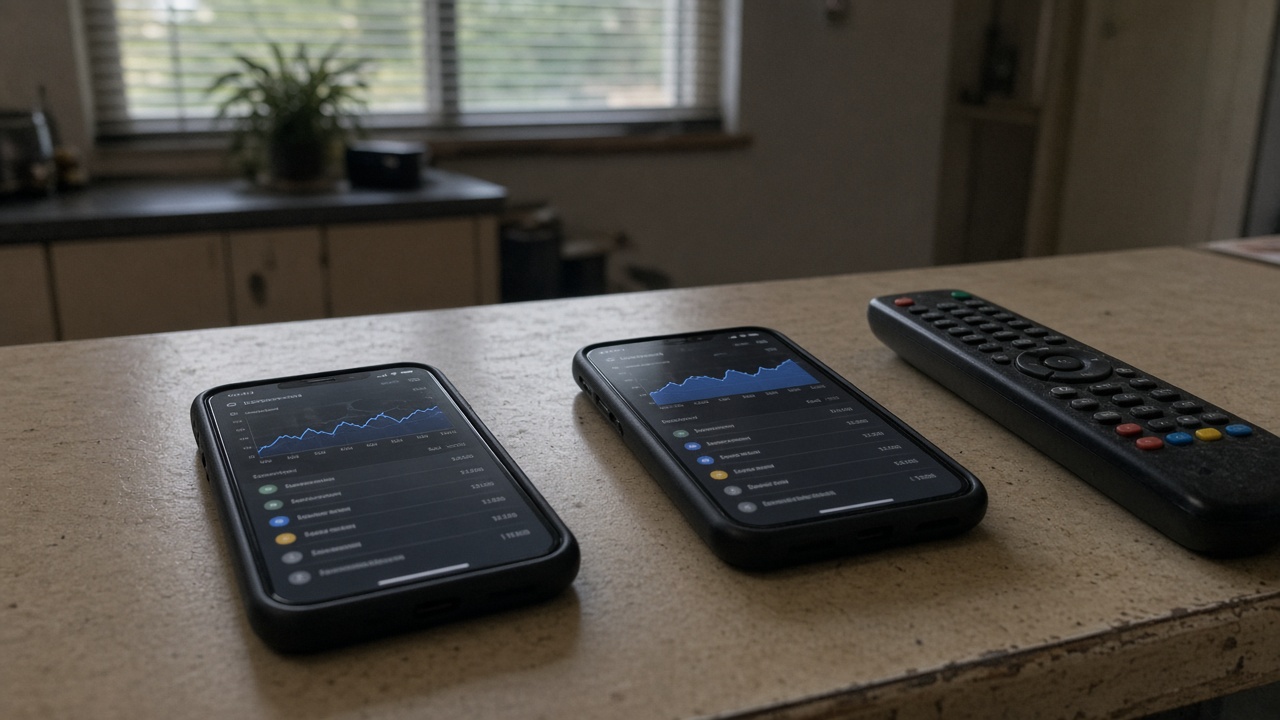
Regional couples are renegotiating streaming budgets as new features in Australian joint-account apps let partners flag recurring entertainment charges—and optionally block paywalled news subscriptions during set evening hours. Financial counsellors in Wagga Wagga and Toowoomba said the tools surfaced arguments that were already simmering: who pays for sport, whose true-crime habit duplicated a service, and whether doomscrolling subscriptions belong in a shared pool at all.
Whose household, what changed
Two mid-tier neobanks rolled out “shared visibility” toggles in August, letting couples mark transactions as joint, personal, or “ask first.” A secondary switch—marketed as a sleep hygiene aid—can decline card charges from categorized news publishers between 9 p.m. and 6 a.m. unless both parties approve. The curfew does not remove access to free ABC or SBS apps; it targets recurring debit agreements tied to major mastheads and niche political newsletters.
For Mia and Sam in Wagga, the curfew became a proxy fight about election-year anxiety. Sam wanted overnight push alerts from a national paper; Mia set the joint debit card to block renewals charged after 9 p.m., which caught a bundled streaming-plus-news promo. They split accounts: a shared pot for Netflix and Stan, personal cards for individual sport passes and Sam’s news bundle. A financial counsellor mediated the spreadsheet, not the marriage—but the app feature triggered the conversation.
What Australian family law actually does
Family law does not micromanage streaming logins. Separating finances before separation, however, starts with tracing who paid which subscription from which account—evidence that can matter in property settlements when “small” recurring charges add up over years. Lawyers said curated exports from joint apps are showing up in affidavits as illustrations of spending patterns, not as legally binding curfews. Blocking news charges at night has zero effect on custody or spousal maintenance formulas; it is a household norm tool.
Community legal centres warn that app curfews can be misused as control if one partner holds the primary income and sets all toggles. Counsellors recommend both names on approval flows for any block that affects shared bills. Economic abuse guidelines from state family violence services already flag restricting access to information; a nightly news block could resemble that pattern if imposed unilaterally on a partner’s solo subscription paid from a joint card.
Regional bandwidth and duplicate services
Regional households still hit data caps more often than inner-city fiber users. Couples said splitting services reduced redundant 4K streams when the NBN link dropped to a single usable screen at night. Farmers’ wives’ groups in Queensland reported sharing one Kayo pass while keeping ABC iView free on a tablet—personal versus joint categorization made the savings visible in monthly app summaries for the first time.
Streaming services themselves are not offering household sub-accounts with curfews; the friction is entirely in banking UX layered on top. Some couples moved news subscriptions back to personal cards specifically to keep curfews from touching journalism spend, even when they agreed to limit evening reading for mental health reasons.
What counsellors recommend
Write a simple three-column budget: joint entertainment, personal entertainment, joint utilities. Use app tags to match. If a news curfew helps sleep, set mutual approval rather than a unilateral block. Keep free public broadcast apps outside the fight—they are not on the card ledger. For couples approaching separation, export six months of tagged transactions early; streaming and news debits rarely decide outcomes but clarify who valued which information diet.
The apps’ curfew feature is optional and brand-new, yet it crystallized a broader shift: streaming is no longer one line item called “Netflix.” Regional couples are treating it like groceries—some shared, some personal—with banking software finally catching up to how Australian households actually watch and read after dark.
When the curfew stays off
Some households disable news blocks entirely but keep streaming tags, preferring honest conversation over automated declines. Counsellors endorse that path when both partners agree on sleep boundaries without hiding charges. The apps log whichever pattern you pick—helpful if you later need a paper trail, irrelevant if trust already covers the ledger.