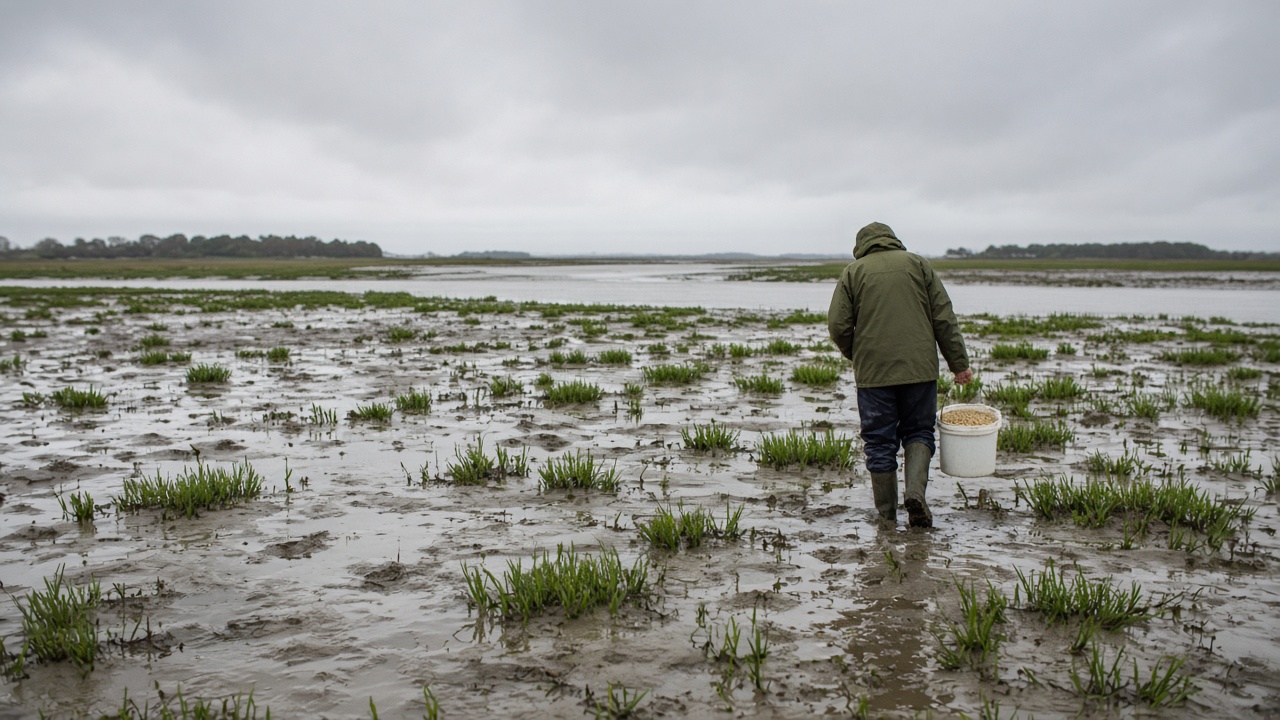
RSPB conservation staff broadcast saltmarsh seed mixes across eroded Essex mudflats this month after February storm surges peeled back pioneer vegetation that stabilises the Thames estuary edge. The work targets sections near Wallasea Island and neighbouring managed realignment sites where cordgrass and sea aster colonies thinned to bare sediment, raising flood-risk concerns for grazing marsh inland.
What the surge took
Coastal monitoring logs recorded multiple high-water events that overtopped low crests on rebuilt sea walls, scouring young saltmarsh where roots had not yet bound silt. Unlike sandy beaches that recover visually each summer, saltmarsh rebuilds inch by inch; lose a season of growth and waders lose feeding grounds while carbon storage metrics dip in habitat accounts Natural England tracks for net-zero planning.
RSPB ecologists walked transects in August to map bare patches larger than ten metres across. They prioritised slopes facing prevailing south-westerly fetch, where reseeding before autumn equinox tides gives shoots time to anchor.
Reseeding method
Crews used boats at high tide to reach outer flats, then hand-broadcast locally sourced seed mixes on falling water. Mixes emphasise common saltmarsh-grass and annual sea-blite—species that colonise quickly but need follow-up grazing management to avoid monoculture. Volunteers from Essex bird clubs filled buckets; staff limited machinery to avoid compacting delicate substrates.
Wallasea Island, created partly with Crossrail spoil, is now a flagship reserve where brent geese and avocets concentrate. Erosion there does not breach sea defences immediately, but it signals how dynamic estuary edges remain even after major engineering.
Regulation and neighbours
Environment Agency coastal teams coordinate with landowners on whether to realign embankments or hold lines. Saltmarsh expansion is policy-friendly for flood resilience—waves dissipate energy over vegetated surfaces—but farming tenants worry about brackish encroachment on grazing marsh. RSPB briefings to parish councils this week stressed that reseeding is habitat repair, not a land grab.
Anglers and bait diggers noticed access paths shifted after surge scouring; reserve staff reopened marked routes only after sediment stabilised enough to avoid sinking machinery.
Climate context
Sea-level rise alone does not explain one winter's damage; storm clustering and upstream fluvial pulses matter. Essex catchments sent freshwater plumes after heavy rain, reducing salinity where seedlings expect brackish conditions. Ecologists will monitor germination rates into October; failure would trigger a spring reattempt with plug planting, a costlier fallback.
Carbon and biodiversity credit markets eye saltmarsh restoration, but RSPB said this operation is funded from conservation grants and member donations rather than speculative offsets.
What visitors will see
Autumn birdwatchers on Wallasea trails may notice tape markers denoting reseeded plots—please keep dogs on leads in those zones. Interpretation boards explain how surge erosion reshapes flats faster than maps update. If shoots establish, winter wader counts should recover by January; if not, the reserve may close short sections during spring high tides to let sediment accrete undisturbed.
The Essex coast will keep taking hits each storm season; this month's seeding is a small, literal response—handfuls of grain on mud meant to hold the line until taller marsh returns.