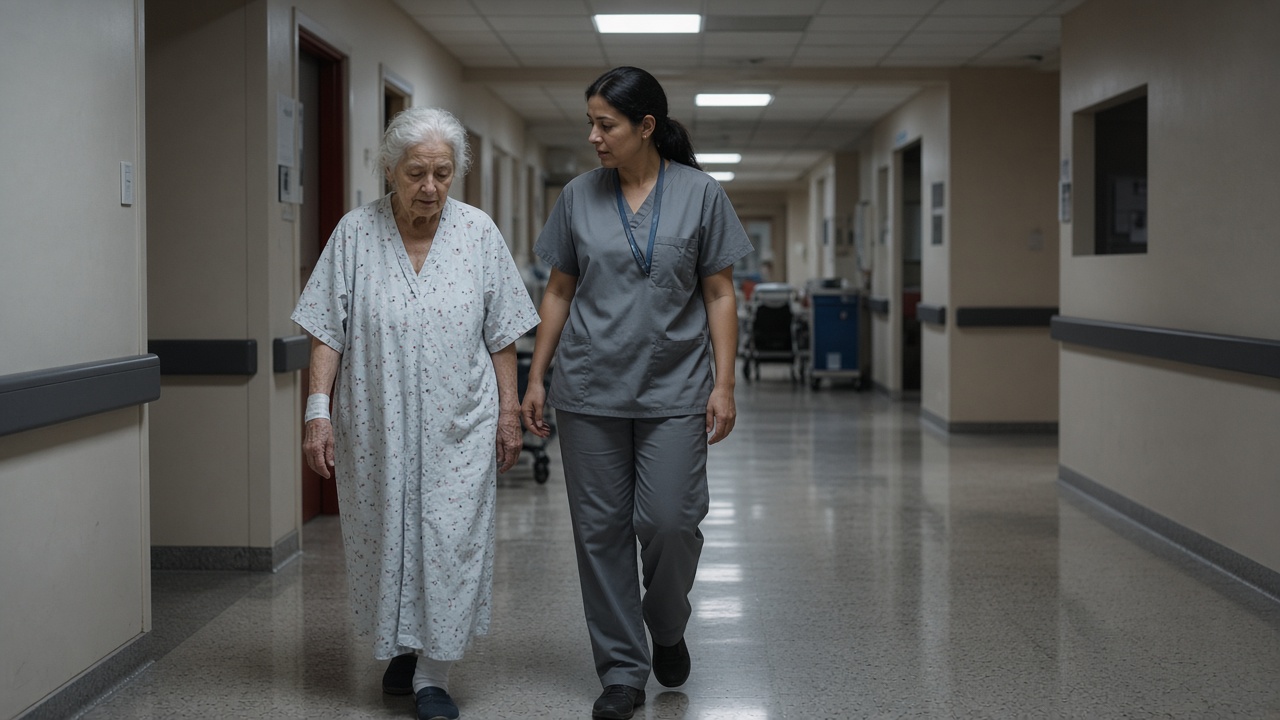
Yonsei Severance Hospital began a ward-level pilot this week that straps lightweight gait-sensing wristbands on selected dementia inpatients, aiming to catch unstable walking patterns before Chuseok family visits push hallway traffic and nighttime bathroom trips to their autumn peak.
What the wristbands measure
The devices—not consumer sleep bands—stream step symmetry, pause length, and sudden vertical drops to a nurse station dashboard inside Severance’s neurobehavior unit. Clinical informatics staff said alerts fire when a patient’s gait variability crosses thresholds tuned on six months of de-identified ward logs, not on population norms from fitness apps. Nurses still confirm every alert at the bedside; the band does not auto-lock bed rails or sedate patients.
Hospital officials told InfoHandle the pilot covers 18 of 24 beds through mid-October, with families notified on admission that anonymized movement metrics feed the trial. Patients who pull at wristwear receive fabric sleeves; consent forms distinguish research use from billing. Severance expects to compare fall counts against the same calendar window last year, when post-Chuseok discharges spiked after relatives noticed bruising at home.
Why Chuseok timing matters
Chuseok clusters evening visit hours and unfamiliar caregivers in corridors built for daytime rounds. Ministry of Health and Welfare dementia dashboards already flag autumn as a high-transfer season when families reassess home care. Severance’s nursing director said extra volunteers will staff lounge areas, but wristbands address the gap between visual checks—roughly every forty minutes overnight—and the seconds a slow fall takes on polished tile.
Health Insurance Review and Assessment Service quality indicators penalize preventable inpatient falls when documentation lapses. Severance documented 11 serious falls on the unit in 2025; none were fatal, but three prolonged stays triggered HIRA reviews. The pilot’s primary endpoint is a 30 percent drop in unassisted falls during the holiday fortnight, a target internal reviewers called ambitious but worth testing before scaling to bundled-payment dementia wards elsewhere in the network.
Limits and what HIRA will watch
Wristbands cannot detect syncope from cardiac events or predict agitation-driven sprints. Severance excluded patients with pacemaker interference flags and those under court-appointed guardians who declined wearable monitoring. Data stays on-premises; vendor cloud sync remains disabled until the hospital ethics board finishes a cybersecurity audit scheduled for November.
If the pilot holds, Severance may propose a registry submission to HIRA listing wristbands as nursing-intensity supports rather than billable devices—a distinction that determines whether national insurance mimics the pilot. For now, families arriving for holiday meals will see more colored bands on wrists and a posted sheet explaining that beeps mean nurses walk faster, not that someone is in trouble.
What families should expect
Social workers added fifteen-minute briefings on how to escort relatives without grabbing the monitored wrist, a common reflex that triggers false positives. Gift fruit baskets still arrive, but balloons and loose scarves are discouraged near sensor straps. Severance said it will publish aggregate fall statistics after Chuseok without naming patients, giving caregivers a clearer picture than anecdotal hallway stories.