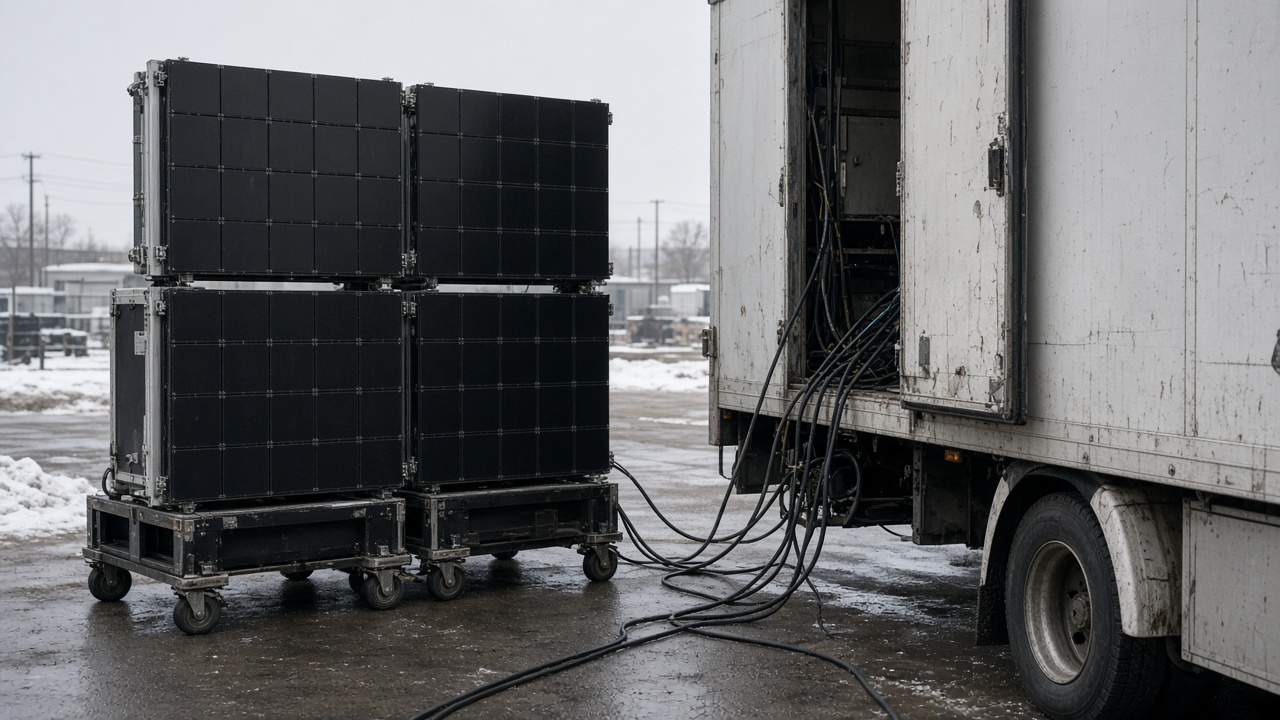
Sharp Corp. demonstrated stackable MicroLED panels sized for mobile broadcast trucks during a closed workshop in Sapporo this week, aiming at Hokkaido television stations that fly crews to ski hills without room for trailer-sized LED walls shipped up from Honshu. The modules target 1,000-nit peak brightness in daylight and quick magnetic tiling so engineers can rebuild a backdrop beside a OB van in under an hour.
What Sharp brought north
Engineers set up a six-tile array roughly 2.4 meters wide beside a rental truck fitted with shock-mounted racks. Unlike consumer MicroLED TVs Sharp sells in limited volumes, the workshop units use aluminum frames with IP54 sealing on connector bays—enough for blowing snow, though not for submerged river crossings. Power draw stayed under 2.4 kilowatts for the demo loop, important when generators must also feed camera chains and microwave uplinks on remote courses.
Sharp’s display division publicly promotes commercial LCD and LED signage globally; the Sapporo session was the first time regional broadcasters saw MicroLED pitched specifically for truck floors rather than fixed stadium installs. Product managers said tiles communicate over a single fiber back to the truck, reducing coax weight compared with older modular LED cabinets HBC used during the 2019 winter games coverage.
Station economics
Hokkaido Broadcasting and TV Hokkaido engineers attended, along with freelancers who rent trucks to national networks for Sapporo Snow Festival live hits. Truck owners said the pain point is freight: hauling a wall from Tokyo costs more than a week of rental fees, so stations often chroma-key virtual sets in studio instead of shooting talent on location with readable sponsor boards.
Sharp quoted a per-tile lease model through a domestic rental house rather than outright purchase, acknowledging capital budgets at local stations tightened after advertising migrated to streaming. A station technical chief said break-even against freight happens near four remote events per winter if tiles stay in Sapporo year-round.
Technical trade-offs
MicroLED avoids the seam visibility of some mini-LED LCD panels in bright snow glare, but calibration still drifts below minus ten Celsius. Sharp showed a briefcase toolkit with heated calibration mats engineers lay on tiles before airtime. Color accuracy for skin tones met EBU tolerances in the demo, though engineers noted single-camera shoots hide imperfections multi-cam productions would catch.
Competitors Sony and Panasonic market outdoor LED for fixed venues; neither emphasized truck form factors at recent trade shows. Sharp hopes early Hokkaido adopters become reference sites before Nagano and Niigata stations order for their own alpine calendars.
Regulatory and safety notes
Ministry of Internal Affairs radio technicians reminded attendees that adding high-brightness panels does not change microwave licensing for live shots, but truck weight limits on mountain roads do. Tiles weigh roughly eighteen kilograms each; a full wall needs reinforced lift gates. Fire codes require quick disconnects; Sharp’s connectors lit green when latched, a small UX detail field crews said they would test on icy fingers.
What happens next
Sharp plans a February pilot on a freelance truck covering a snowboard World Cup qualifier if insurance underwriters sign off on magnetic mounts. No purchase orders are public yet. For viewers, the change would be sharper on-location graphics behind presenters—not a shift in editorial content. For station accountants, the bet is whether avoiding Honshu freight twice a season pays for a new panel category still more expensive per square meter than renting traditional LED walls when those are already staged nearby.
Sharp’s broader MicroLED manufacturing still routes through Sakai City fabs shared with parent Foxconn schedules; any supply hiccup there would hit truck tiles and luxury TVs alike. Sapporo engineers left with loaner spec sheets and a homework assignment: measure their truck inverter headroom before Sharp returns for a mountaineering-road test in October.
Rental-house timeline
The domestic rental partner Sharp named expects first tiles in bonded storage at New Chitose Airport freight forwarders by late November, skipping Honshu port congestion. Freelance truck owners who missed the workshop can book a January demo day; Sharp said attendance lists determine which OB vans get priority calibration slots before ski season peaks.