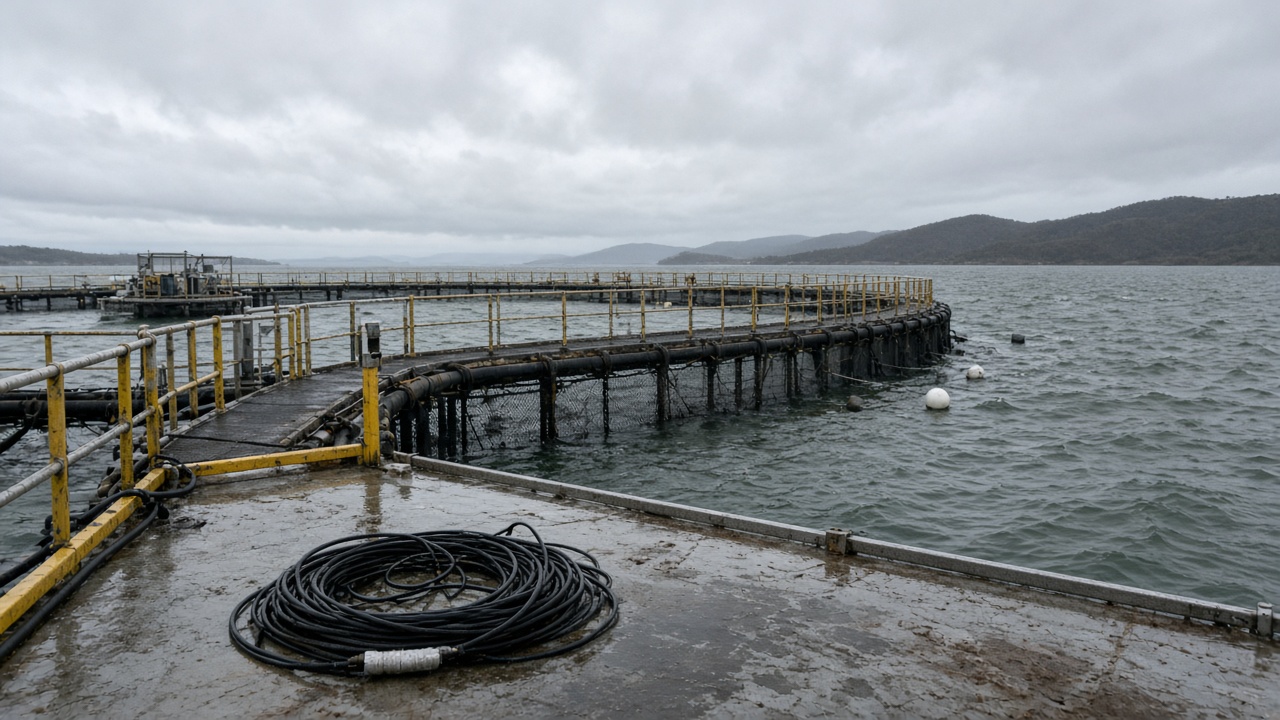
Leaseholders in Tasmania’s Storm Bay ordered shipsets of acoustic lice-monitoring sensors this month to satisfy tightening compliance audits on Atlantic salmon pens, pairing underwater hydrophones with manual counting regimes regulators use before approving thermal delousing or mechanical treatments.
What the sensors do
Vendors pitch the arrays as continuous listeners: hydrophones detect splashes and swimming bursts associated with lice irritation or crowding events, while edge processors classify anomalies against baseline profiles from healthy pens. The orders—collectively worth more than $2 million across three operators—do not replace diver counts; they provide timestamped evidence when sea lice thresholds approach trigger levels set in environmental licences.
Research on Tasmanian commercial cages has long used acoustic telemetry to monitor fish depth and activity during delousing; newer commercial kits borrow algorithms from Norwegian acoustic de-licing trials that showed fewer mobile lice when sound treatments run on schedule. Storm Bay operators said they want corroboration logs before auditors question treatment timing.
Compliance pressure in Storm Bay
Storm Bay sits in a politically sensitive footprint: tourism operators, ferry routes, and competing fish farms share narrow waterways. EPA Tasmania marine farming conditions require documented lice management plans with weekly counts and reporting when averages exceed contractual limits. After a bruising public inquiry season, leaseholders expect spot audits comparing pen-side spreadsheets to independent lab samples.
Acoustic sensors give time-stamped behavioural data when counts spike—useful if operators delay thermal treatments waiting for calmer weather. Critics say sound monitoring does not measure lice directly; proponents argue combined sensor-plus-count models catch stress earlier than fortnightly dives alone.
Welfare and treatment trade-offs
Acoustic de-licing systems elsewhere reduced reliance on harsh bath treatments but expose fish to sustained sound fields. Welfare studies on farmed salmon exposed to targeted frequencies found no gross pathology at commercial doses, yet Tasmanian activists demand Storm Bay-specific trials before wide deployment. Leaseholders promised to publish aggregated welfare indicators to the Marine Farming Planning Review Panel when sensors go live in October.
Thermal delousing remains the fallback when lice loads crest; acoustic telemetry papers show activity spikes during those events. Operators hope earlier acoustic warnings let them schedule treatments in slack tides, reducing crowding injuries documented in earlier University of Tasmania-linked studies.
Supply chain and staffing
Installation crews face short weather windows; cables must be trenched along pen walkways without snagging feed lines. Local electricians trained on marine-grade connectors after mainland suppliers booked out. Skilled divers still perform manual lice grabs for calibration—sensors tune against those samples every fortnight.
Insurance underwriters asked whether sensor failures could void compliance; lawyers clarified devices supplement, not replace, human counts. Leaseholders carry spare hydrophone nodes onshore after last season’s storm shredded two arrays near the Tasman Peninsula.
What auditors will see
When October audits begin, operators must export 30-day acoustic timelines alongside lice count PDFs. Regulators want to know whether sensor alerts preceded treatment authorisations—evidence that decisions were proactive, not reactive after public complaints. If Storm Bay datasets prove durable, other Tasmanian regions may mandate similar kits in licence renewals next year.
For now, the bay’s pens gain ears underwater: listening for stress patterns that spreadsheets miss, while compliance officers gain another file to open when salmon farmers say they acted as soon as lice trended wrong.
Ferry operators asked for access to anonymised alert feeds so passenger vessels can avoid pens undergoing crowding procedures; leaseholders said they will trial shared notifications only after privacy review with EPA Tasmania.
University of Tasmania researchers offered to benchmark Storm Bay acoustic signatures against Macquarie Harbour telemetry datasets, giving operators a local reference when vendors ship factory-tuned models from Norway. Calibration voyages are scheduled for late September when swell drops below two metres.
Retail grocers sourcing Storm Bay salmon want proof that acoustic monitoring precedes chemical treatments; supermarkets asked leaseholders to attach sensor summaries to batch traceability QR flows. Compliance officers said that integration is optional this season but may become mandatory if activists campaign on treatment transparency.
Lease finance teams amortised sensor kits over three production cycles, matching depreciation to EPA licence terms. If lice counts stay below triggers through summer, operators may redeploy spare hydrophones to western Tasmania leases renewing in 2027—spreading the Storm Bay experiment across the state’s most watched waterways.