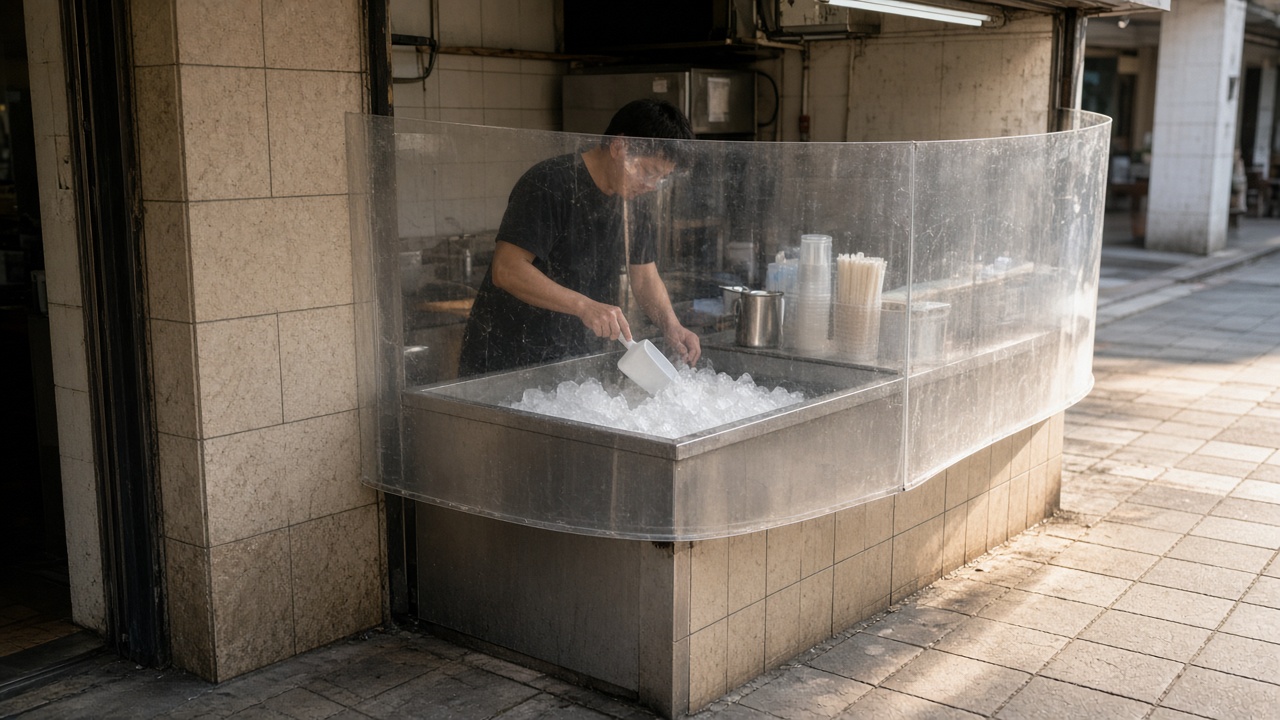
Bubble tea shops across Taipei began rationing ice and capping jumbo cup sizes this week as late-September heat collided with a regional ice-plant maintenance outage, squeezing cold-chain deliveries right before Mid-Autumn weekend foot traffic.
Why ice, not tea leaves, became scarce
Independent ice suppliers that serve night markets and drink stalls scheduled preventive maintenance on ammonia compressors after a southern plant’s failure in August triggered FDA inspections. Two Taipei wholesalers told InfoHandle they cut daily drops to convenience-store-adjacent tea counters by 15 percent until October 2, prioritizing hospitals and school cafeterias under city contingency lists. Afternoon temperatures near 34 degrees Celsius in Da’an and Xinyi spiked demand just as deliveries shrank.
Chains with central kitchens shifted pellet ice from suburban stores toward MRT exits, but single-location brands without freezer banks felt the pinch first. Several posted handwritten signs: large cups unavailable after 3 p.m., extra ice costs NT$5 and may be refused. Staff said the goal is to keep baseline service rather than close early like some shops did during 2023’s heat dome.
What customers are doing
Regulars adapted quickly—ordering less ice (“wei shao bing”) or switching to room-temperature fruit teas that still sell when pearls stay chewy. Students near National Taiwan Normal University shared maps of shops still offering full ice before noon. Beverage association spokespeople urged owners not to buy from unlicensed street vendors selling crushed ice of unknown water source; FDA reminded operators that ice is a food product requiring traceable production permits.
Some shops tested flash-chill machines that cool brewed tea without diluting flavor, a capital expense micro-franchises skip. Taipei City’s commercial division said it received few price-gouging complaints but will inspect scales if reports rise over the holiday.
Outlook past Mid-Autumn
Wholesalers expect normal drop sizes to return once maintenance wraps and night temperatures dip slightly toward October. Until then, rationing is a scheduling problem more than a tea shortage—leaves and tapioca pearls remain stocked. For walkers sweating through humid evenings, the practical advice from shop owners is simple: order earlier, embrace less ice, and tip the staff still hauling bags from vans that arrive hours late.
Supply chain and food safety
Taiwan FDA inspectors visited two ice plants serving Taipei after the outage, confirming water-source logs and metal-detector checks on bagging lines. Shops that improvised by buying crushed ice from unregistered vendors received warning letters, a enforcement push beverage association leaders said was necessary to prevent stomach-illness outbreaks during a crowded holiday. Convenience-store chains with corporate cold rooms lent pallet space to partner tea brands overnight, a stopgap that cannot scale citywide.
Meteorologists forecast another hot spell through September 22 before a weak front arrives; ration signs may stay up even after plants restart because backlogged orders need days to clear. Owners who invested in on-site ice makers last year reported normal service, a reminder that capital equipment still divides big franchises from alley kiosks with a single undercounter freezer.