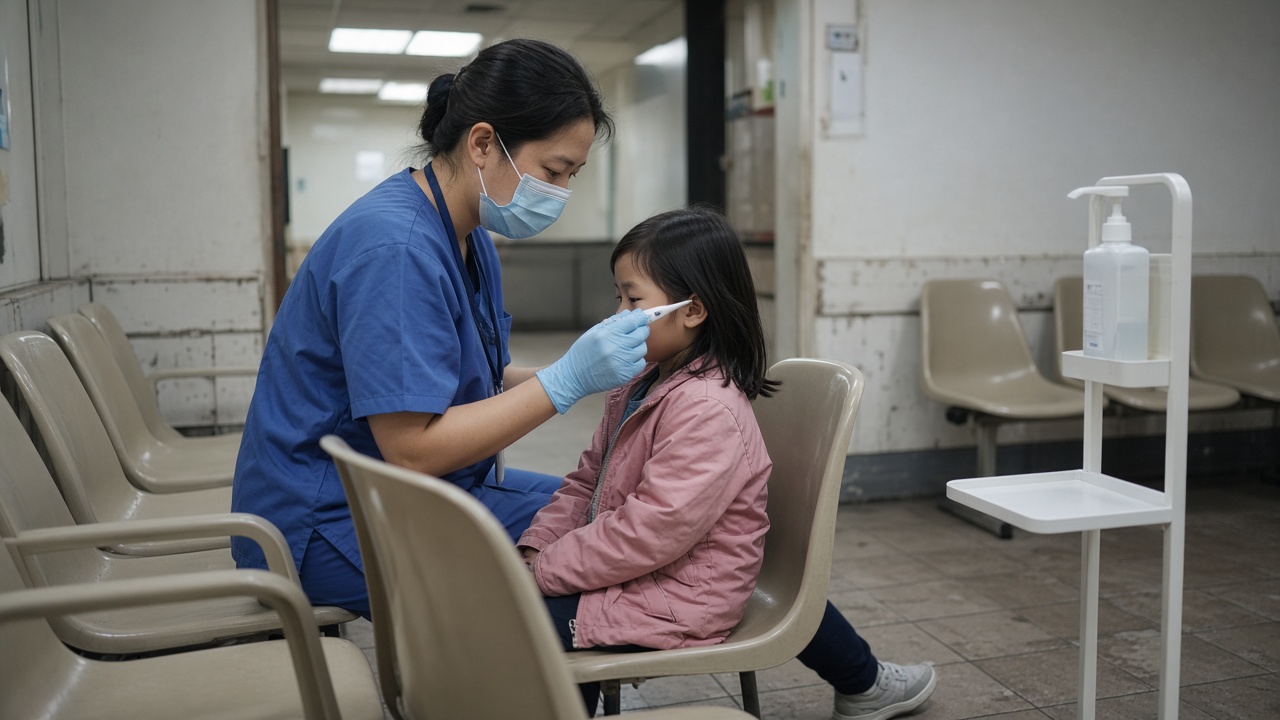
Taipei neighborhood clinics opened extra same-day triage lanes this week after public-health nurses linked a string of febrile illnesses to an elementary school cluster in Da’an, pushing enterovirus checks ahead of Mid-Autumn family travel when crowded trains and night markets raise transmission risk.
What clinics changed
At least fourteen community clinics in Zhongshan, Da’an, and Songshan districts now reserve morning blocks for children under twelve with mouth sores, hand rashes, or temperatures above 38 degrees Celsius. Nurses route those patients to rapid enterovirus panels where available, oral hydration stations, and separate seating—not to general adult cold queues. Taipei City Hospital-affiliated sites said they added roughly 120 triage slots per weekday through October 3, funded from existing seasonal respiratory budgets rather than a new city ordinance.
Physicians told InfoHandle the goal is to catch enterovirus 71 and coxsackie presentations before dehydration sends kids to emergency rooms. Triage does not replace school exclusion rules: principals still require physician notes before return, and clinics fax summaries when parents consent. Adult travelers with mild colds are turned back to regular lines so pediatric throughput stays under forty minutes at peak.
The school cluster and reporting
Taiwan CDC’s weekly surveillance bulletin flagged nine confirmed enterovirus cases associated with one Da’an campus after Labor Day activities mixed grade levels on a shared courtyard. None required intensive care, but three children needed intravenous fluids at a district hospital. City education officials ordered deep cleaning of classrooms and paused mixed-grade clubs until throat-swab negatives return for close contacts.
CDC urged parents not to dose antipyretics before clinic visits, which can mask fever curves triage nurses rely on. MOHW reminded the public that enterovirus spreads through saliva and stool on shared toys—relevant for mooncake gift exchanges where cousins pass handheld games. Officials stopped short of citywide school closures, calling the cluster localized but worth pre-positioning clinic capacity.
Limits and what parents should do
Rapid tests at clinics are not perfect; negative swabs with worsening lethargy still warrant emergency evaluation. Taipei providers said they are not stockpiling intravenous immunoglobulin—a treatment reserved for severe cases under hospital protocols. Travelers heading to grandparents’ homes in central Taiwan should pack oral rehydration salts and avoid sharing utensils during hot-pot gatherings.
Clinics will publish weekly wait-time averages on city hospital portals so parents can choose off-peak slots. If case counts fall after the holiday, triage lanes will shrink to afternoons only, but pediatricians expect at least three more weeks of elevated enterovirus traffic in Taipei’s humid late-September weather.
Pharmacy and school coordination
Community pharmacists near affected campuses stocked oral rehydration solution and acetaminophen syrups after Taipei City Hospital sent a one-page dosing guide for triage nurses to hand parents at checkout. Schools received laminated fever logs so nurses can compare classroom reports with clinic swab results when families dispute exclusion dates. Education bureau staff said the paperwork is tedious but reduces WhatsApp rumors that falsely claim entire districts are shutting down.
Pediatricians emphasized that enterovirus vaccines remain research-stage in Taiwan; prevention still means hand washing and keeping sick children home even when grandparents travel long distances for holiday reunions. Triage lanes are a throughput tool, not a substitute for those basics.