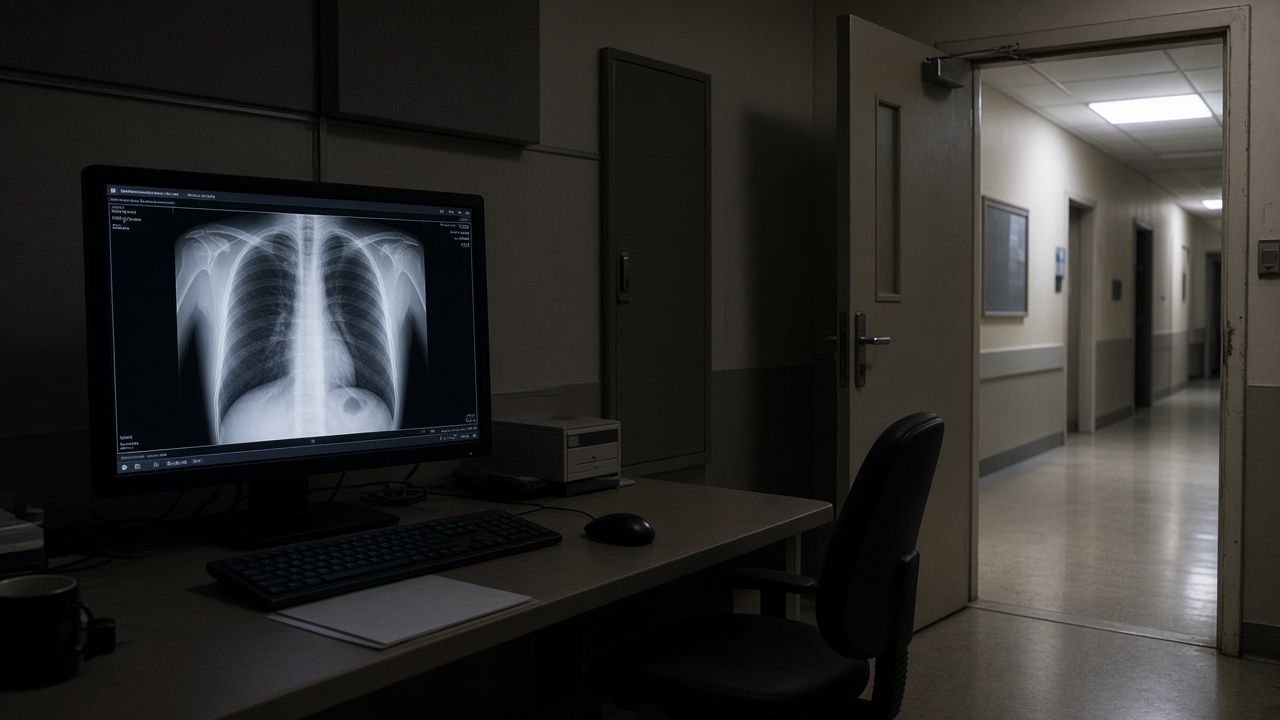
Taiwan’s Food and Drug Administration began accepting dossiers this week for AI-assisted chest X-ray triage tools aimed at regional hospitals, adding questions about overnight staffing and false-alert rates when a single radiologist covers emergency departments across two counties.
What the review track covers
The guidance applies to software that flags suspected pneumothorax, mass lesions, or tuberculosis patterns on digital radiographs before a human reader opens the study. TFDA said it will treat mature products as modification-class devices if vendors already hold approvals abroad, but Taiwan-specific validation sets must include local patient body-type distributions and tuberculosis prevalence seen in eastern and southern referral networks.
Applicants must submit standalone performance on de-identified Taiwan hospital data or on ethically imported cohorts with documented consent. TFDA reviewers want confusion matrices stratified by equipment vendor—Siemens, GE, Fujifilm, and Taiwan-assembled units appear in different county budgets—and by portable versus fixed-room X-ray machines common in township clinics.
Why regional hospitals are the focus
Taipei medical centers already pilot copilot tools with 24-hour attending coverage; the policy gap is tier-B and tier-C hospitals where radiology call pools shrink after 10 p.m. Emergency physicians in Yilan and Hualien told InfoHandle they sometimes wait hours for tele-radiology reads when storms delay highway transfers to Taipei.
AI triage is not autonomous diagnosis under Taiwan law; alerts route to PACS worklists with color codes. TFDA’s template asks vendors to prove alert fatigue stays below thresholds agreed with the Taiwan Society of Radiology, and to show rollback procedures if models drift after firmware updates on imaging consoles.
Reimbursement and liability
National Health Insurance Administration officials said they will not automatically pay AI fees until TFDA clears devices and until a separate health-technology assessment finishes. Hospitals worry about buying software that speeds worklists but lacks NHI codes; TFDA’s letter encourages parallel hospital ethics reviews so pilots can run on institutional budgets while pricing talks continue.
Malpractice insurers briefed on the pathway want logging: which model version produced an alert, whether a physician overrode it, and how long overrides took. Vendors that cannot export immutable audit trails face slower reviews.
Data residency and cross-border models
Several applicants trained weights in Singapore or the United States. TFDA requires on-prem or Taiwan-hosted inference for identifiable patient studies unless hospitals sign risk assessments allowing encrypted cloud routing. Ministry of Health and Welfare data rules after prior telehealth expansions are the backdrop; regional CIOs prefer appliances that sit next to PACS servers because uplinks to Taipei still fail when fiber cuts follow earthquakes.
Clinical equity concerns
Patient advocates asked TFDA to monitor whether AI tools perform worse on elderly farmers with degenerative spine changes that mimic lung opacities. The society’s comment letter urged post-market surveillance in indigenous health service districts, where TB screening campaigns already strain limited staff.
TFDA will let hospitals participate in phased rollouts if they report adverse events within 72 hours—a faster clock than some multinational vendors expect from global safety teams.
Vendor landscape
At least three firms—two multinationals with Singapore hubs and one Taiwan startup spun out of a Taichung medical center—said they filed intent-to-submit forms. None received clearance yet; TFDA targets 120-day review clocks for complete dossiers, though questions-and-answers cycles can extend that.
What hospital CIOs should plan
IT shops should map PACS DICOM routing before buying appliances, because some legacy archives in county hospitals still run Windows Server versions vendors no longer certify. Training materials must be in Traditional Chinese; TFDA rejected English-only clinician guides in a prior digital pathology pilot.
For patients, the near-term effect is invisible unless a flagged scan moves them up a worklist during a pneumonia surge. The policy story is clearer: Taiwan regulators want AI chest triage proven under rural night-shift realities, not just demonstrated in Taipei teaching hospitals with fellows on call.
Training hours for rural nurses
County hospital nursing directors said TFDA should count simulation hours toward credentialing when techs learn to silence false pneumothorax alerts on portable units used in ambulance bays. TFDA’s draft FAQ agrees for accredited programs but leaves scheduling costs to hospitals, a gap philanthropy groups in Taitung are trying to fill with weekend workshops before flu season crowds emergency bays.