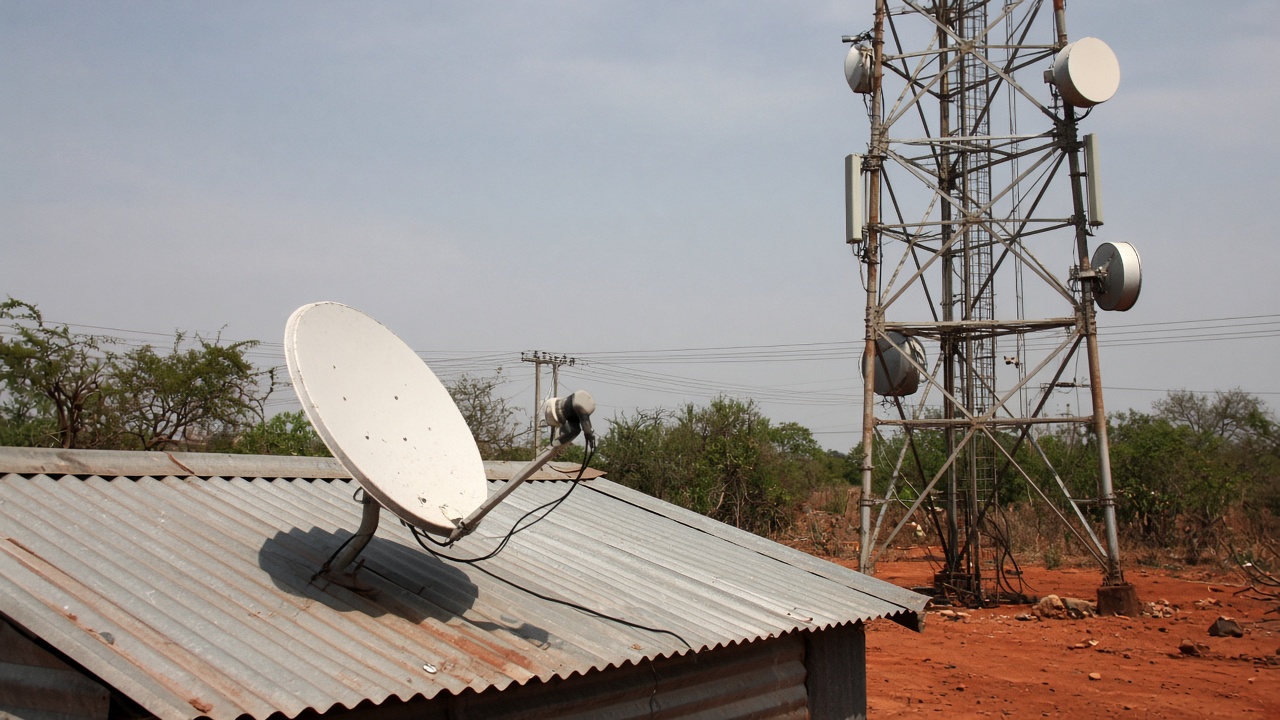
Telstra has expanded a western Queensland trial that routes mobile backhaul through Starlink Enterprise kits when primary links fail, a hedge against the outage spikes that followed the carrier’s paused OneWeb low-Earth-orbit rollout and the storm-damaged microwave corridors that still isolate dozens of remote towers each wet season.
What changed on the ground
Field teams installed dual-path satellite terminals at eight additional sites between Longreach and Mount Isa this month, according to engineers briefed on the program. Each site keeps its existing geostationary or microwave backhaul as the default path; Starlink Enterprise takes over automatically when latency or packet loss crosses thresholds set after Telstra’s 2025 outage review. The configuration mirrors the failover logic Telstra deployed at hundreds of Australia Post licensed offices, but tuned for base-station traffic rather than retail point-of-sale bursts.
Telstra executives have publicly tied Starlink Enterprise to enterprise and government customers, while OneWeb remains the planned LEO path for more than 300 remote mobile sites. Chief executive Vicki Brady told investors in February that OneWeb’s constellation build had lagged plans, prompting Telstra to pause further GEO-to-LEO conversions until coverage gaps close. Western Queensland became the first place network planners bolted on Starlink as an explicit outage-zone backstop rather than waiting on OneWeb capacity.
Why western Queensland
The region mixes long microwave hops vulnerable to lightning strikes with sparse fibre backhaul. Telstra’s own reporting to regulators shows “significant community impact” outages rose sharply after LEO trials began on some sites, then eased as satellite density improved—yet planners still want a second vendor in the rack. Storm cells that tracked across the Channel Country in August took three towers offline for more than six hours; in two cases Starlink paths restored voice and text before repair crews reached damaged microwave dishes.
Local councils along the Landsborough Highway have pressed for faster triple-zero restoration after blackouts stranded travellers. Telstra’s rapid-deployment Starlink kits for field staff—now above 200 units nationally—proved the template: a flat-panel terminal, PoE injector, and automatic handoff rules copied into fixed sites. Western Queensland was chosen because outage duration thresholds for “remote” areas under telecommunications rules kick in at three hours, lower than metropolitan triggers.
Performance and limits
Engineers said Starlink backhaul in the trial sustains roughly 80–120 megabits per second to the tower router, enough for 4G voice and moderate data but not a full stadium load. Upload symmetry matters for telemetry and lawful-intercept backhaul; planners cap concurrent users when the satellite path is active, steering heavy downloads to off-peak windows. Unlike OneWeb’s committed information rates, Starlink Enterprise runs on best-effort commercial terms, so Telstra documents the path as contingency—not a replacement for contracted LEO SLAs.
Rival Optus and NBN Co continue marketing fixed wireless and satellite retail products in overlapping footprints; Telstra’s trial does not sell Starlink directly to consumers at these towers. It is strictly an internal backhaul overlay. Still, the optics matter politically: regional MPs want proof that satellite diversity exists before the next cyclone season.
Regulatory and customer-facing effects
ACMA outage-reporting rules now require earlier disclosure when remote towers drop below service thresholds. Telstra’s September filings will show whether dual-path sites reduce average restoration times. Consumer advocates argue backup backhaul should be mandatory wherever microwave spans exceed a set distance; Telstra counters that capital must follow demonstrated outage patterns, which is why the western Queensland envelope grew before Cape York or the Pilbara.
Retail customers will not see a new plan name. When failover triggers, users may notice slightly higher latency on data but should retain voice and SMS on upgraded 4G layers. Telstra Satellite Messaging for handsets remains a separate consumer product; these tower trials do not enable satellite-to-phone at the sites yet.
What happens next
Network executives will decide by November whether to standardise the Starlink-plus-microwave template across another 40 Queensland sites. That decision hinges on OneWeb launch schedules and whether Telstra can negotiate enterprise pricing at post-office scale. For now, western Queensland is the live experiment: when the sky clears and the microwave link dies, a second dish on the shed roof is supposed to keep triple zero alive long enough for crews to arrive.
Field technicians said the hardest part is not the satellite link but power: sites need battery runtime to survive the minutes between microwave failure and Starlink lock. Generator fuel deliveries in September tested whether eight-hour autonomy is enough; results will feed into a national resilience playbook Telstra shares with emergency services agencies ahead of summer.