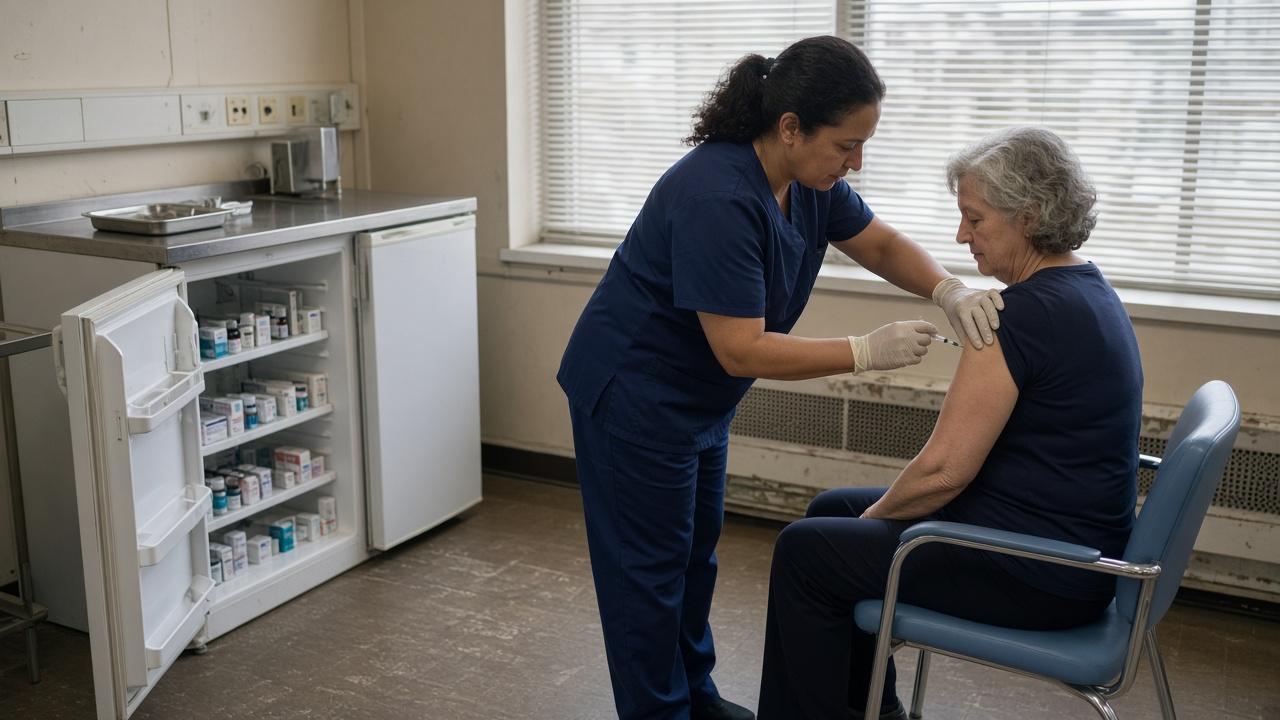
Victoria’s networked polyclinics will run expanded whooping-cough booster appointments through the AFL finals fortnight, targeting adults who last received a pertussis dose more than a decade ago and anyone sharing hotel rooms or house stays with infants under six months. The move follows a run of notifications to clinicians in August linking mild adult coughs to laboratory-confirmed pertussis in babies too young for full primary series protection.
What changed in the clinics
Four Melbourne polyclinic operators—covering inner north, bayside, and western corridor sites—said they added 1,200 combined evening slots from mid-September, bookable through state immunisation portals or same-day triage when a household contact is flagged. Nurses will stock dTpa (reduced-antigen diphtheria-tetanus-pertussis) rather than influenza-only visits, and pharmacists co-located at two sites can administer under Victorian pharmacist vaccination rules when GPs are at capacity.
Officials are not calling it a outbreak-driven mandate. Instead, they frame boosters as travel-season hygiene: finals crowds mean more interstate guests, shared Airbnbs, and grandparents flying in from regions where adult recall rates lag Melbourne. A state health department bulletin reminded clinicians that pertussis immunity wanes within four to five years for many adults, even after childhood schedules.
Absolute risk in plain terms
Whooping cough kills infants; it rarely kills healthy adults. The clinical worry is transmission: an adult with a lingering cough can shed bacteria for weeks. In absolute terms, most boosted adults who still catch pertussis get a miserable cough, not hospitalisation—but neonates lack the airway reserve to weather paroxysms. That asymmetry is why maternity wards still screen partner vaccination status and why polyclinics are prioritising people who will hold a newborn during finals house parties.
The Therapeutic Goods Administration has not changed product labels or eligibility; clinics are working within existing National Immunisation Program advice for pregnant people and catch-up adults. Travelers should not confuse this push with mandatory stadium entry checks—AFL venues are not verifying vaccination at gates. The linkage is epidemiological, not ticketing.
Who should book—and who can wait
Priority groups remain pregnant people at 20–32 weeks, new parents before discharge, and adults with regular infant contact. Polyclinic triage nurses said they will also fast-track adults departing for interstate finals weekends if a household member is immunocompromised. People with a documented pertussis infection in the past two years or a booster within the last five years can defer unless a GP advises otherwise.
Side-effect counselling mirrors routine dTpa: sore arm, low-grade fever. Clinics ask patients to stay 15 minutes post-vaccination when scheduling back-to-back appointments before night sessions at the MCG. For readers weighing cost, state-funded pathways cover many eligible adults; others pay a private consult fee plus vaccine charge if they fall outside program criteria—check the portal rather than assuming a walk-in is bulk-billed.
Finals season ends; pertussis season does not. Clinicians want the booster bump now so contact tracing during crowded travel does not swamp already-full daytime GP lists in October.