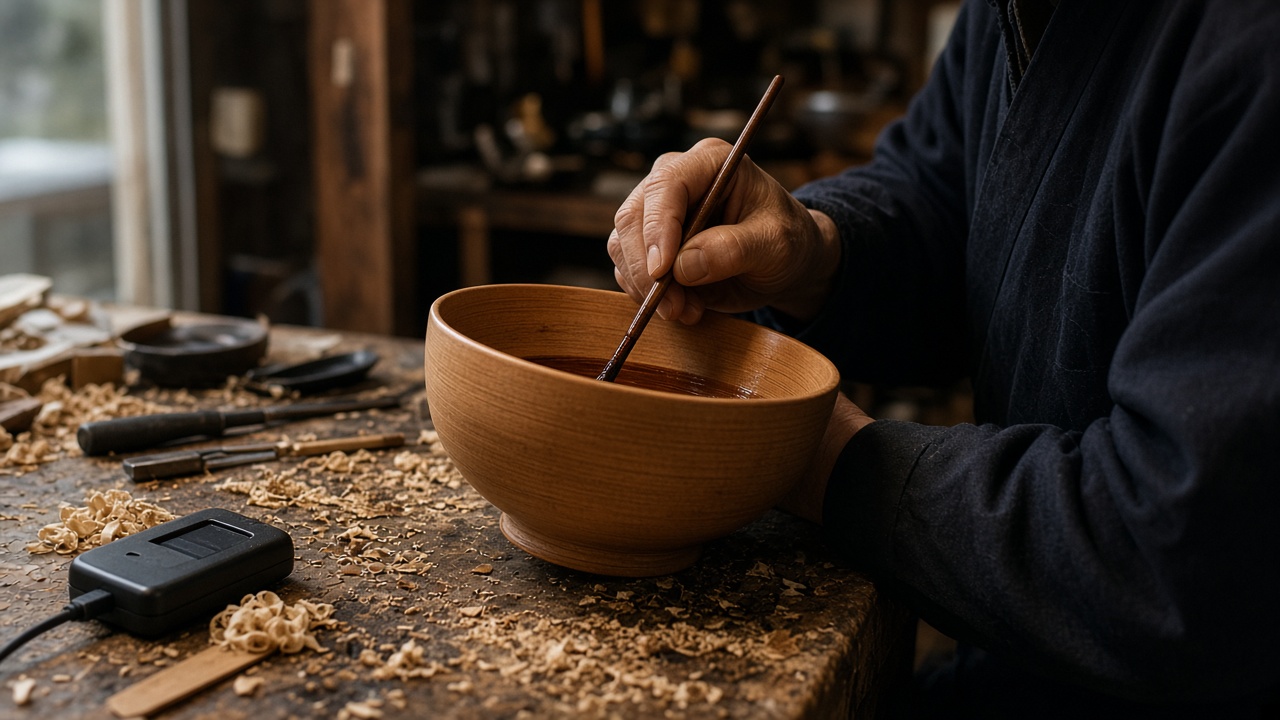
A Wajima lacquerware producers’ cooperative closed a 420 million yen seed extension for its NFC provenance spinout, funding chips embedded in high-end bowls and trays so buyers scanning tags see kiln dates, lacquer layers, and artisan signatures before export customs officers run the same identifiers. The round mixes Ishikawa Prefecture recovery-linked capital with a Tokyo craft-tech fund and strategic angels from department-store buyer desks.
What the round actually buys
About half the cash funds chip assembly and reader pens for twelve master workshops still rebuilding after the 2024 Noto earthquake damaged drying rooms. The rest hires software staff to maintain a registry that maps each NFC UID to photos of base wood, primer coats, and final polishing—metadata luxury resellers asked for after counterfeit “Wajima-style” lacquer appeared on marketplace sites claiming post-disaster solidarity.
Tags sit under foot rims where heat and urushi curing will not delaminate antennas; pilots showed reads through two millimeters of lacquer if phones align within a few centimeters. The spinout licenses names from the cooperative but remains a separate cap table so younger engineers can issue equity without reopening centuries-old guild voting rules.
Ownership and dilution
Founders from two leading families kept combined voting control above fifty-one percent by issuing non-voting shares to the prefectural fund. The Tokyo craft-tech fund took fifteen percent with a pro-rata clause if Series A lands before 2028. Department-store angels received advisory shares, not board seats—buyers want provenance data pipelines, not governance over urushi recipes.
Earlier grant money from METI monozukuri programs converted at a discount; artisans worried grant conversion would dilute them more than the priced round, but negotiators capped total dilution under twenty percent for cooperative members who contributed workshop time instead of cash.
Market story
Export desks in Kanazawa and Tokyo Ginza flagships will pilot scans for tourists buying pieces above 200,000 yen, where customs forms already require craft certificates. JETRO trade counselors helped structure English and Chinese tag landing pages so airport duty-free clerks can demonstrate scans without installing bespoke apps—wallet passes handle the UX.
Counterfeit risk rose as donors sought Noto rebuild symbolism; provenance chips aim to separate cooperative-backed pieces from unrelated lacquerware marketed with similar copy. Lawyers caution tags prove registry membership, not subjective beauty—marketing must not imply government certification beyond Ishikawa’s craft designation.
Operational hurdles
Chip costs add roughly 1,200 yen per piece at current volumes, acceptable on 400,000-yen bowls but not on small chopstick rests. Workshops agreed to absorb tags only on top-tier SKUs until assembly hits ten thousand units annually. Rural broadband gaps mean registry updates sometimes sync from workshop PCs via overnight batches, not live 5G—acceptable for crafts measured in weeks of curing, not seconds of trading.
Artisans debated whether NFC undermines romance; elders accepted after younger members showed export chargeback data where buyers returned items suspecting fraud. Training sessions in Wajima city hall cover tag application after final inspection, with QA photos stored hashed so later edits raise flags.
What if the next round fails
Runway covers eighteen months of chip orders and four engineering salaries. Without Series A, the spinout could pivot to software-only registry licensing for other craft clusters—Arita porcelain makers attended a demo—but hardware margins fund the current roadmap. Prefectural investors signaled patience tied to earthquake recovery milestones, not hockey-stick growth.
For collectors, the near-term change is a tap-to-verify ritual at purchase. For the cooperative, the bet is that provenance tech converts rebuild sympathy into repeat export revenue without letting middlemen own the story. Round closing documents register next week at Wajima city hall; until then, workshops keep producing bowls that must cure whether or not chips arrive on time.
Governance note
Board observers from the cooperative can veto chip vendors that outsource lacquer work overseas—a line artisans insisted on after earlier outsourcing disputes. Investors accepted the veto because brand authenticity is the asset they are funding, not semiconductor margins alone.
Retail rollout
Ginza and Kanazawa flagships plan staff training in October on reader pens so clerks can demonstrate scans without slowing checkout lines during inbound tourism peaks. If chargebacks fall below pre-chip baselines by spring, the cooperative will vote on tagging mid-tier gift sets—a expansion that would require another capital tranche not covered by this seed extension.