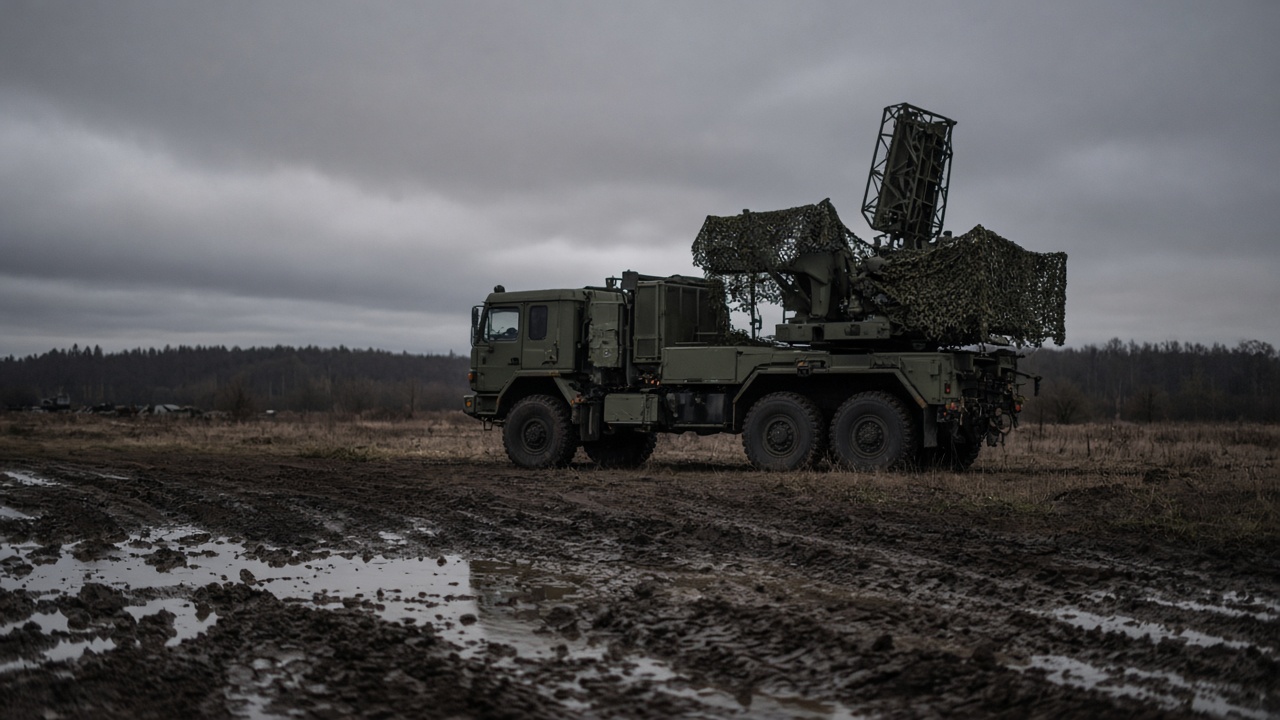
The State Department notified Congress late Friday that it had approved a potential $2.68 billion sale of air-defense development upgrades and related equipment to Ukraine. The package is not a signed contract. It is a Foreign Military Sale case that still has to survive congressional review. If it closes, Kyiv would pay with a mix of European contributions and U.S. Foreign Military Financing appropriated under former President Joe Biden, the department said.
What is on the list
The congressional notification, as reported by Reuters, includes S-300 clone missiles, GAM-67 missiles, range-extended air-defense laser-guided rocket systems, launcher and mobile launching-system modification kits, and counter-drone radars, among other gear. Those line items match the war Ukraine is actually fighting: mass drone waves, ballistic and cruise missiles, and a Soviet-era S-300 inventory that needs missiles and radars it can keep in the field. The department said the sale would “improve Ukraine’s capability to meet current and future threats” and support “self-defense and regional security missions.”
Who pays, and how it is booked
FMF is grant assistance that lets partners buy U.S.-made weapons. The notification adds a bookkeeping twist from last year’s minerals arrangement: the FMF “will be counted as a U.S. capital contribution to the Ukraine Reconstruction Investment Fund via a 1:1 reimbursement.” That fund was stood up as part of a U.S.–Ukraine minerals deal. For U.S. plants that cut those missiles and radars, the practical question is whether Congress lets the case proceed and whether European cash arrives on the same calendar as the FMF draw. Trump said earlier this month he would ask European governments to repay the United States for munitions already sent. This notification does not settle that demand; it routes new hardware through a mixed bill.
The same weekend’s other lever
Hours earlier, Trump signed H.R. 5334, the Graham Russia and Iran sanctions statute. The FMS case and the sanctions law are different papers: one is a DSCA sale still sitting in Congress, the other is already on the books with a 30-day tariff clock. Together they are the administration’s Saturday stack on Ukraine—pressure on Moscow’s oil buyers, and a potential restock of Ukraine’s air-defense magazines with U.S. production. Twenty months into a presidency that promised a fast end to the war, both moves are process, not a cease-fire.
What Congress still holds
Major FMS cases can be blocked or altered during review. The notification’s dollar figure will draw the usual questions from members who want Europe to pay first and from members who want more interceptors in Ukrainian batteries before winter. Russian authorities, meanwhile, claimed a large overnight drone attack on the Moscow region as the country held the second day of State Duma voting; the Kyiv Independent said it could not verify those claims. The sale case does not depend on that reporting. It depends on whether the 118th Congress, in a midterm season, lets a $2.68 billion air-defense file move.