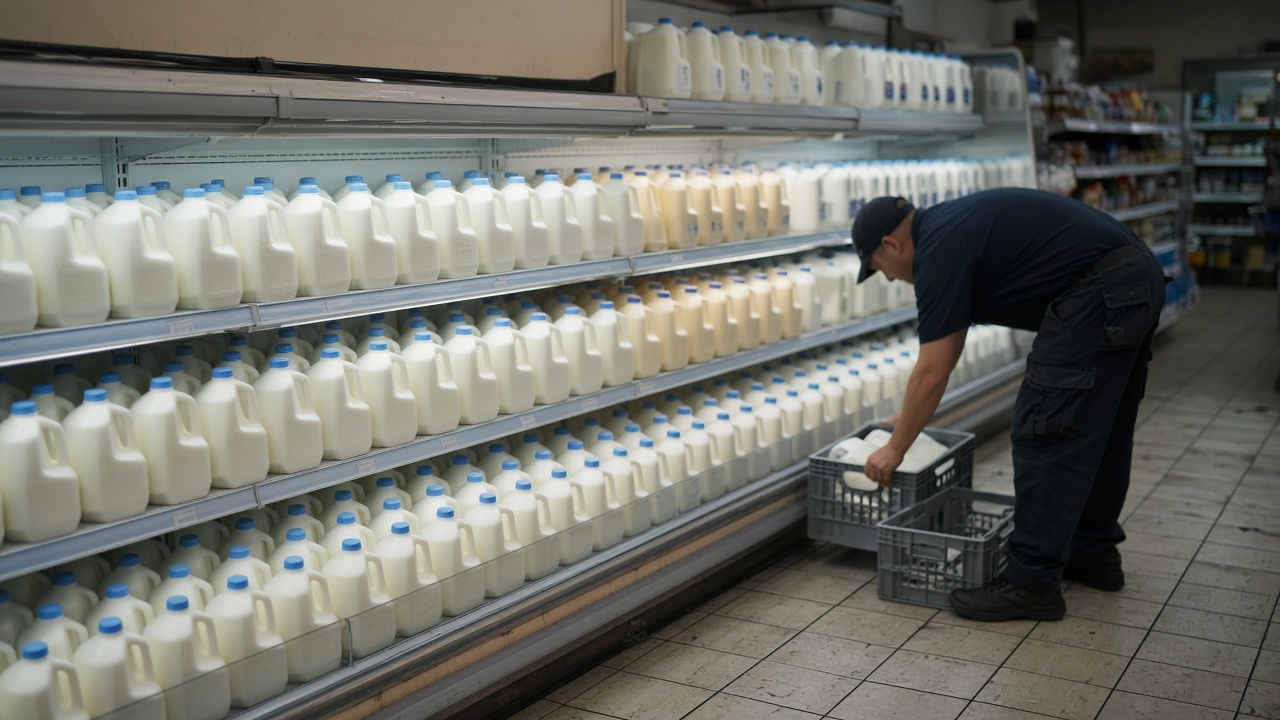
Woolworths has told direct milk suppliers it will hold contract pricing steady through the next processing season even as farmer groups renew calls for a drought levy printed on shelf staples, a split that keeps supermarket milk at yesterday's ticket price while the farm gate argues input costs never normalised after the last dry spell.
What the retailer decided
Commercial teams at Woolworths Group informed fewer than two dozen Farmers' Own suppliers this week that 2026–27 contract terms would roll without a farmgate step-up, according to people briefed on the calls. The decision follows an April move when Woolworths paid an extra 10 cents per litre to direct suppliers but absorbed the cost rather than lifting own-brand two-litre and three-litre bottles. Holding the line now signals the chain will not pass through another processor-led increase ahead of the spring school-holiday trading block.
Woolworths still honours optional 12-month extensions on Farmers' Own agreements as it phases the specialty label off shelves by 2027. For processors Bega and Fonterra, which supply the bulk of Woolworths home-brand milk, contract resets remain tied to commodity indices and labour costs on plant floors—not the headline levy debate playing out in Queensland and New South Wales media.
What farmers are asking for
Advocacy body eastAUSmilk is campaigning for supermarkets to add roughly 30 cents per litre at the checkout, with half flowing to farmers and half to processors covering diesel, fertiliser and grain surcharges. President Tim Bale, himself a Farmers' Own supplier, has argued that without a visible shelf levy, smaller northern farms will exit before contract renewals close. Australian Dairy Farmers president Ben Bennett has called niche brands insufficient, pushing instead for transparent national pricing rather than token programs.
The drought levy Woolworths ran from 2018 to mid-2022 added 10 cents on select own-brand litres during extreme conditions; the retailer retired it when La Niña rainfall improved and farmgate cheques rose. Farmers now want that mechanism rebuilt into processing contracts so relief can switch on without another public campaign. Woolworths has pointed to clauses embedded in processor deals that allow faster support payments, but suppliers say those triggers have not fired despite dry pockets on the Darling Downs.
Shelf economics
Own-brand milk remains one of the most price-sensitive items in Australian baskets. Coles and ALDI have kept two-litre bottles in promotional rotation through winter, limiting Woolworths' room to lift shelf prices even if farm costs climb. Analysts covering Wesfarmers and Woolworths note that every five-cent move on milk translates into measurable traffic elasticity, which is why the April 10-cent farmgate boost never reached stickers.
Processors face a different calculus. Lactalis lifted payments five cents per litre to more than 800 suppliers from May, and other majors are negotiating July 1 openings against elevated energy tariffs on drying plants. If supermarkets freeze shelf prices while processors pay more, margin pressure moves upstream—exactly the squeeze eastAUSmilk says a levy would visible to shoppers.
What happens before Christmas
Boards at Woolworths and its rivals will watch weekly scan data through September as households trade down from branded milk to private label. Any surprise shortage in northern NSW could force spot purchases at higher spot farmgate rates, but executives briefing investors have reiterated that supply contracts, not shelf levies, remain their primary tool.
For farmers still inside Farmers' Own, the contract freeze is a mixed signal: stability on price, but no recognition of the levy campaign that could determine whether they reinvest in fodder before summer. Until processors and retailers align on who funds the next cost spike, the milk aisle will look calm while the farm gate stays loud.
Investor read-through
Woolworths shares have traded on food inflation moderation narratives; holding milk contracts steady supports that story near term even if it aggravates rural lobbyists. The ACCC continues to monitor supermarket supplier conduct, though no new dairy inquiry is active. What matters for September is whether Aldi or Coles blink first on shelf price—if they do, Woolworths' frozen contracts may last only until the next catalogue cycle.