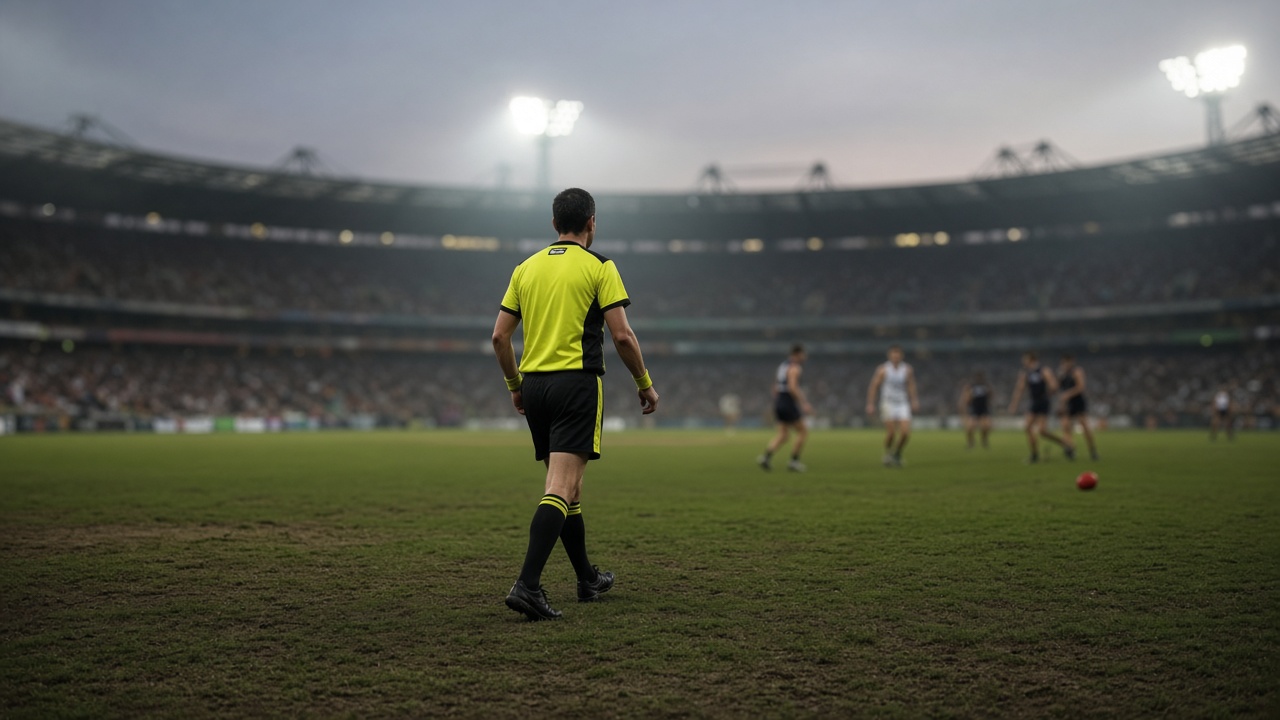
AFL Umpires Association officials released refreshed heat protocols for finals month before a twilight preliminary final at the Melbourne Cricket Ground, mandating extra rotation breaks and ice-bath access when wet-bulb globe temperature readings cross AFL medical thresholds. The MCG bounce is scheduled near 7:20 pm AEDT, but September humidity can still push stress indices into the band that triggers longer quarter breaks for field umpires.
What the protocol does
Field umpires already rotate every fifteen to twenty minutes in hot home-and-away rounds; finals tighten the clock so no official spends a full quarter in the corridor without relief. Boundary and goal umpires get shaded marshalling zones when the league declares heat mode—often invisible on broadcast but obvious to crews who previously stood on bare turf for entire terms.
Mitch Crowley's labour frame: umpires are athletes in yellow shirts whose heart rates spike with play speed. The association negotiated these breaks into the finals schedule after a 2025 semi-final in Brisbane where two field umpires reported heat illness symptoms post-match.
MCG twilight specifics
Twilight starts reduce direct sun on players but trap warmth in the stadium bowl. MCG turf managers water earlier on heat-mode days so surface temperature drops before bounce. Umpires test wireless comms during the longer breaks so play restarts do not lose time to headset swaps.
Players fall under club doctor protocols; umpires rely on league medical staff stationed near the interchange. Blood testing and IV fluids require umpire consent—same privacy rules as players, but fewer cameras on the tunnel.
League versus broadcast
The AFL wants predictable slot times for TV partners; heat mode can push total runtime past three hours if quarters extend. Producers were briefed to pad pre-game segments rather than compress breaks. Fans in upper decks still face radiant heat from concourses; umpire welfare rules do not cover spectators.
After the siren
Protocols expire when the mercury drops or the grand final window ends. The association will debrief crews on whether rotation limits should become standard for all September night games, not just finals. For viewers, the visible change may be a few extra minutes between quarters—the invisible part is whether umpires finish matches without hospital trips, which is the metric the union actually counts.
Player union alignment
AFL Players Association representatives sat in on heat-protocol briefings so interchange caps for umpires are not stricter than rules governing runners and medical staff on the boundary. Disputes are rare, but alignment matters when total stoppage time becomes a broadcast talking point.
Fitness testing
Umpires completed pre-finals fitness testing in August; heat mode adds in-game recovery rather than lowering entry standards. Boundary umpires—often older than field crews—benefit most from shaded marshalling zones because their sprint bursts are shorter but repetitive along the fence line.
Historical comparison
Daytime preliminary finals in Perth and Adelaide earlier this decade prompted earlier heat rules; MCG twilight was seen as safer until humidity readings showed evening stress indices still climbing. The league now treats twilight as its own category rather than assuming sunset equals cool air.
Crowd services
MCG concourse misting fans and free water stations expanded for September, separate from umpire welfare but part of the same BOM watch days. Fans should not expect play to pause for spectator heat—the protocol targets officials and players under club medical staff first.
Broadcast production
Host broadcasters placed additional hydration breaks in run-of-show documents so ad pods flex without cutting umpire recovery time. Camera operators were told not to crowd tunnel shots during ice-bath access—privacy request from the union after social clips circulated last season.
Ground announcers will remind crowds to refill bottles when heat mode activates, a small public-health add-on the league copies from state cricket protocols.
Next week's forecast
BOM's Melbourne forecast for preliminary final week shows warm northerlies ahead of a cooler change; umpire crews will pre-stage ice baths even if daytime highs look mild because stadium humidity lags the airport reading fans check on phones.