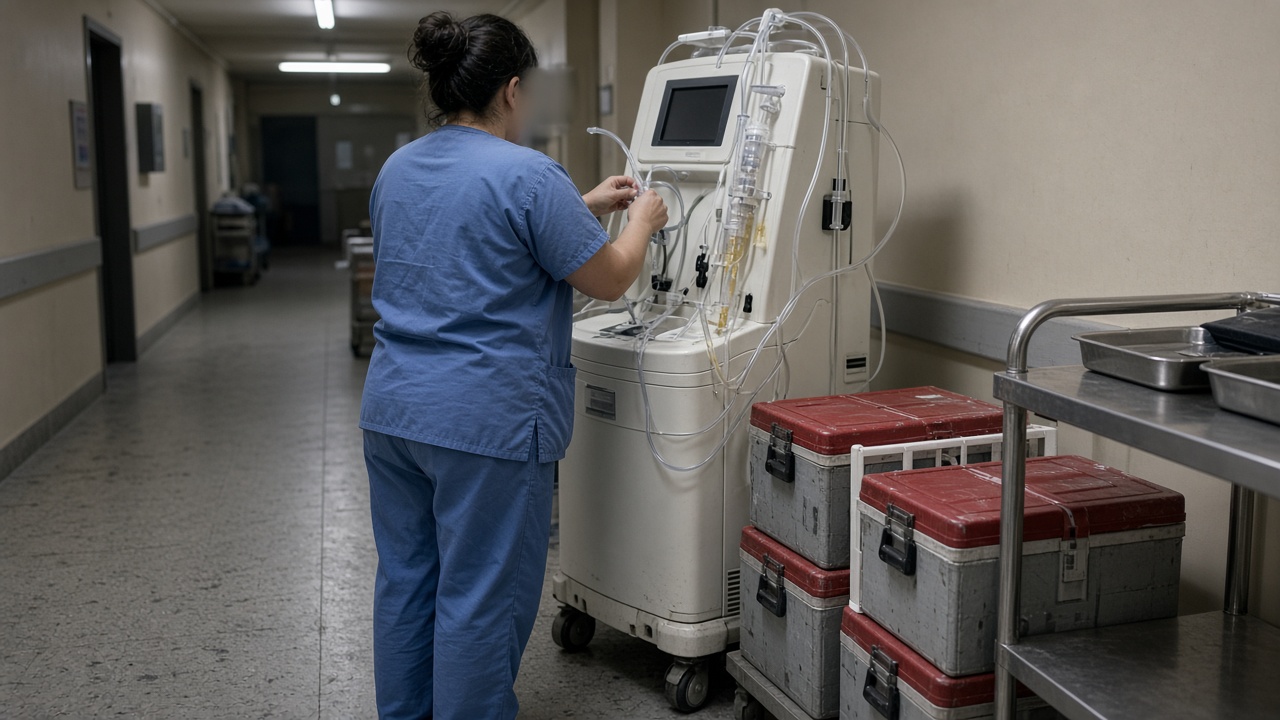
All India Institute of Medical Sciences, New Delhi, added 14 evening platelet transfusion slots across its trauma centre blood bank and paediatric dengue ward after municipal surveillance showed post-monsoon dengue admissions running roughly 18 percent above the same week last year, according to an internal roster resident doctors received Thursday and a briefing note the hospital’s transfusion medicine unit shared with district blood officers.
Who gets a bay
The slots are reserved for patients with laboratory-confirmed platelet counts at or below the thresholds the National Vector Borne Disease Control Programme lists for inpatient monitoring—not for prophylactic transfusions requested solely on the basis of falling trends on private lab printouts. AIIMS registrars said OPD counsellors must attach a treating physician’s note naming the count, the draw time, and whether the patient is bleeding or only febrile. That filter matters because Delhi’s peripheral hospitals reported a surge in families arriving with counts in the 80,000–100,000 range asking for “just one unit to be safe,” a pattern transfusion specialists said wastes scarce single-donor platelets.
Why evenings
Daytime bays already run near capacity for oncology and trauma indications. Dengue peaks after office-hour lab closures in NCR; evening windows let patients referred from East Delhi and Ghaziabad complete repeat counts and transfuse same night if counts cross the ward’s admission line. Blood bank staff extended apheresis machine hours but did not add new donor camps—platelet inventory still depends on voluntary donors who respond to SMS appeals.
Evidence the hospital cited
Hospital educators circulated ICMR-aligned talking points: prophylactic platelets do not shorten fever duration for stable adults, and unnecessary transfusion raises alloimmunisation risk for women who may need surgery later. Residents were told to document counselling when families insist after counts rebound above transfusion triggers. Paediatric slots remain tighter; the roster prioritises children with mucosal bleeding or counts below paediatric cut-offs published in NVBDCP training slides.
Pressure on the wider system
Delhi State Blood Transfusion Council coordinators said six linked hospitals mirrored AIIMS’s evening hours through Sunday, but platelet shelf life of five days means any donor shortfall shows up 48 hours later. Municipal fogging and larval surveys continue in Shahdara and Najafgarh blocks that contributed the largest case uptick. AIIMS did not publish ward-level mortality data; public affairs asked media to cite NVBDCP aggregates rather than anecdotal queues.
What patients should not do
Do not repeat counts hourly from different labs—the variation can trigger unnecessary transfusions. Do not skip oral hydration and paracetamol dosing while waiting for slots; dengue management guidelines still emphasise fluid balance over platelet numbers alone when bleeding is absent. If a private hospital discharges a child with a borderline count, ask for the referral form AIIMS triage now requires; without it, evening bays may redirect families to district hospitals with paediatric observation beds.
AIIMS will review the roster after the next municipal serotype bulletin. For now the operational change is narrow: more timed transfusion chairs for confirmed low counts, not a blanket open door for anxious printouts.