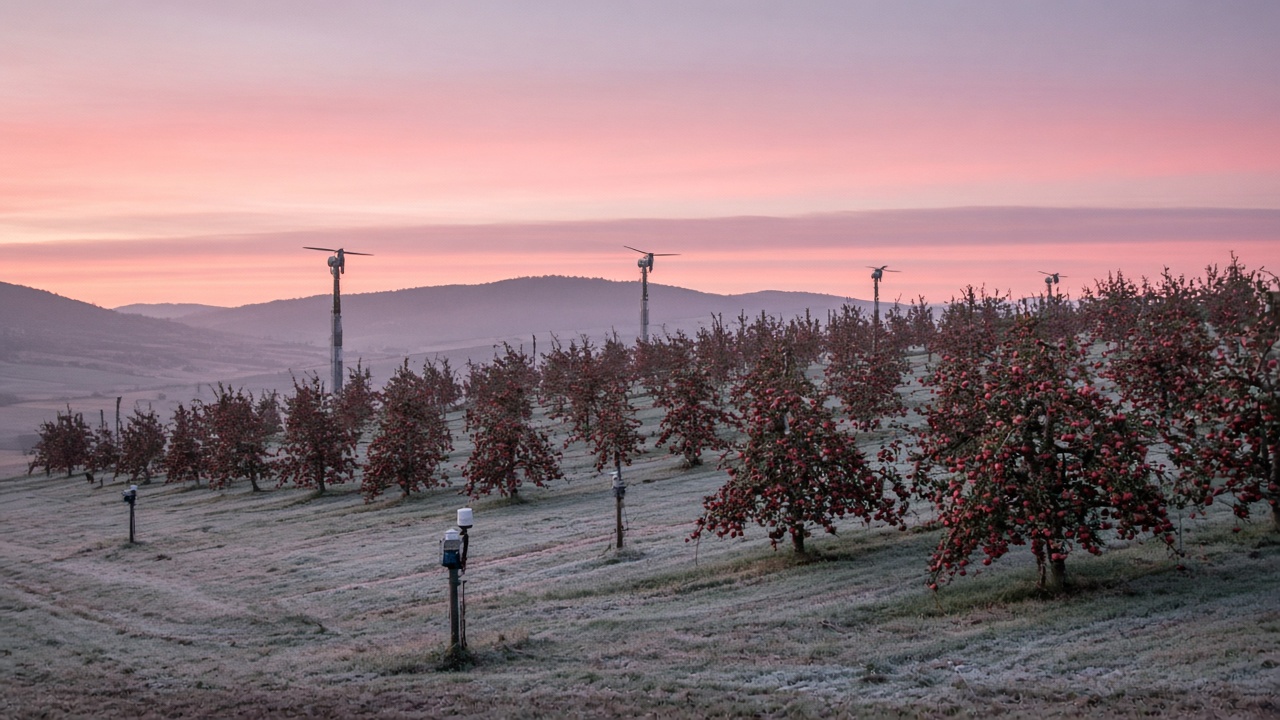
An Aomori apple growers’ cooperative closed a 280 million yen angel extension for its frost-prediction mesh spinout, funding low-power radios and inversion alerts on hillside blocks that lose blossoms when radiative freezes arrive without Japan Meteorological Agency station warnings. The round mixes cooperative member equity, a Tohoku agricultural fund, and strategic angels from cold-storage operators who see margin in fewer panic picks after false alarms.
What the round actually buys
About half the cash deploys sensor nodes and mesh gateways across twelve pilot orchards in Hirosaki and Kuroishi, replacing spotty consumer weather apps with ground-level humidity and temperature gradients. The rest hires firmware staff to maintain alert thresholds cooperatives can tune per cultivar—Fuji blocks tolerate different wind-machine hours than early Honeycrisp rows.
Nodes clip to posts below frost-fan lines; batteries must survive months without orchard Wi-Fi. The spinout licenses cooperative trademarks but keeps a separate cap table so engineers can issue stock without reopening century-old voting rules on who may plant which rootstock.
Ownership and dilution
Grower families retained combined voting control above fifty-five percent by issuing non-voting shares to the Tohoku fund. Cold-storage angels took twelve percent with pro-rata rights if a Series A closes before 2028. Earlier METI startup-support grants converted at a discount capped so member growers who contributed land for sensor posts did not dilute below seventy percent economic interest.
The business in one sentence
Sell frost-timing alerts and fan-run playbooks to cooperatives that currently wake crews on guesswork, monetizing fewer wasted diesel hours and less blossom loss—not hardware glamour.
Why angels bet now
2025 spring freezes clipped yields on exposed slopes while valley stations reported safe lows; growers photographed ice on blossoms when apps showed green. Cooperative leaders argued mesh data could prove insurance claims and justify fan fuel subsidies prefecture agriculture desks administer.
Competitors pitch satellite-only frost maps; the spinout counters that radiative freezes are hyperlocal. Angels from cold storage want predictable harvest volumes more than sensor margins—they earn on volume handled, not IoT subscriptions alone.
What if the next round does not exist
Runway covers two frost seasons and six engineers. Without Series A, the spinout could license alert software to other fruit cooperatives while cooperatives own deployed hardware—a fallback board members accepted when angel terms were negotiated. Tohoku fund managers signaled patience tied to blossom-save metrics, not hockey-stick SaaS multiples.
Operational hurdles
Mesh backhaul depends on farm-truck LTE hotspots until some blocks gain fiber; alerts must queue offline and burst when trucks return to barns. Frost fans share diesel budgets with thinning crews; false positives burn trust faster than missed alerts. Pilot orchards agreed to publish anonymized save rates after 2027 harvest audits.
Governance
Cooperative observers can veto cloud vendors that store data outside Japan—a red line after ransomware scares at packing houses. Engineers must open sensor calibration logs to prefecture agriculture inspectors during subsidy reviews.
What changes for growers
Near term, night foremen get SMS with gradient maps instead of a single valley thermometer reading. Long term, insurers may price policies using mesh histories if save rates beat baseline—speculation the spinout avoids in investor decks until data exists. Round documents register at Hirosaki city hall next week; until nodes ship, crews still set alarm clocks for the coldest hours and hope the valley guess holds.
Community oversight
Hirosaki town agriculture council will host winter briefings where the spinout explains missed alerts in plain language—a transparency step packers requested after rumor spread about secret land sales on frost maps. Member growers retain rights to pause alerts during pollination weeks when fan noise disrupts bee boxes cooperatives rent.
Retail linkage
Department-store produce buyers attended a closed demo asking whether mesh data could back “frost-safe” marketing claims; lawyers warned labels must not overpromise when fans only raise orchard temperature a few degrees. Packers nonetheless want export documentation if 2027 saves beat valley thermometers—potential upside angels cited in closing memos.
Hardware supply
Sensor lead times still depend on Taiwanese radio modules; the spinout stockpiled spares after 2025 shipping slips delayed Hokkaido grape pilots. Cooperative treasurers approved a small inventory line item so spring installs do not wait on single-source chips.