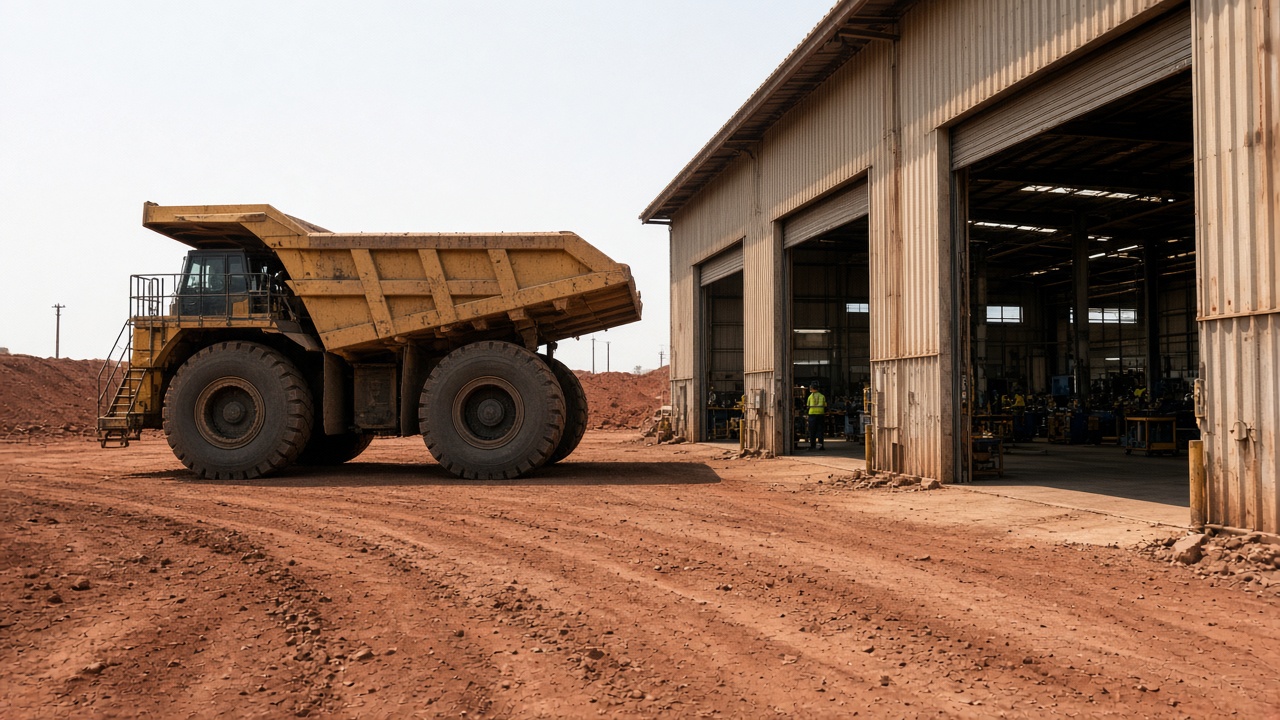
BHP Group Ltd told investors it is holding its full-year Western Australia iron ore production guidance even as a backlog of haul-truck maintenance in the Pilbara will pull September load rates below plan, according to an operational update circulated ahead of the company’s quarterly production report. Mine managers are resequencing workshop bays and deferring non-critical component swaps so port stockpiles can still build before cyclone season, a trade-off that keeps annual tonne targets intact at the cost of a choppier quarterly profile.
What the backlog actually is
Maintenance planners described hundreds of overdue hours on Komatsu and Caterpillar ultra-class trucks across Newman and Mining Area C, concentrated on braking systems, payload sensors, and engine rebuilds that slipped when fly-in fly-out rosters ran short in July. BHP said no guidance cut is required because rail and port capacity can absorb a softer September while catch-up work runs through October. Contractors reported some bays booked back-to-back with 12-hour shifts, a pace safety reps said they will audit after a near-miss tyre-handling incident last month.
The company framed the issue as timing, not structural underinvestment. Capital spend on autonomous haulage and debottlenecking at Port Hedland remains on track, executives told analysts in a closed briefing. Still, union delegates at one site argued that pushing trucks back into production before full brake tests invites downtime later, especially when red dust clogs cooling lines in heat above 40 degrees Celsius.
Why guidance stayed unchanged
BHP’s published range for WA iron ore tonnes assumes weather and maintenance variability. Holding guidance signals confidence that deferred loads can be recovered before the December quarter, when Chinese steel mills typically restock ahead of Lunar New Year shipping windows. Analysts at two major banks said the message matters more for sentiment than for spot prices: iron ore futures in Singapore barely moved on the update, while BHP’s ASX listing traded in line with the broader materials index during Sydney afternoon trade.
Investors will watch October rail dispatches from BHP’s integrated network. If maintenance overruns collide with a late wet season, the cushion narrows. Management declined to quantify the September shortfall in public remarks, but people familiar with the planning said internal targets implied a mid-single-digit percentage dip versus nameplate capacity for the month.
Contractor and labour pressure
Specialist maintenance firms in Karratha and Port Hedland said lead times for turbochargers and final drives lengthened after global mining demand picked up. BHP’s preferred vendors prioritised queue slots for trucks already in pit service, leaving parked units waiting on fenced hardstands. FIFO recruitment remains competitive with LNG projects on the Burrup Peninsula, and several supervisors said overtime caps slowed weekend catch-up.
The company is leaning on remote diagnostics to clear minor faults without pulling trucks into workshops, a tactic that works for sensor recalibrations but not for major powertrain work. OEM field teams from Japan and the United States rotated through two sites in August to train local crews on faster swap-out procedures, according to contractor schedules reviewed by InfoHandle.
Port and price context
Pilbara Ports Authority data show overall iron ore exports steady week-on-week, suggesting BHP’s issue is not yet a system-wide constraint. Rival miners have flagged their own maintenance windows; the market often treats September as a seasonally softer production month anyway. What differs this year is the stacked backlog after roster gaps, not a single planned shutdown.
For Chinese buyers, the operational noise sits beneath a more important debate on steel mill margins and property-linked demand. BHP’s update did not mention customer deferrals; Fortescue and Rio Tinto investors will compare notes when those companies report, watching whether maintenance stories cluster or diverge.
What the board signed off
Company filings show the operational committee approved the maintenance-heavy September plan in late August, accepting lower short-term unit costs per tonne in exchange for fewer unplanned failures during the December shipping push. ESG reviewers asked for evidence that dust suppression and noise controls stay within licence conditions while extra trucks queue near workshops; site managers submitted revised traffic plans.
Retail shareholders may see the story as technical, but superannuation funds with heavy BHP weightings treat production guidance as a bellwether for dividend cover. Holding guidance avoids a headline cut; the market’s next question is whether October tonnes prove the backlog was a blip or the start of a longer repair cycle that eventually forces a number change.
Near-term checkpoints
Analysts listed three watch items: weekly truck availability counts in the quarterly appendix, any change to capitalised stripping ratios, and commentary on China port inventories. BHP said it will update the market again with formal production figures in October. Until then, Pilbara maintenance bays remain the choke point that determines whether this year’s guidance hold survives contact with red dirt and cyclone calendars.