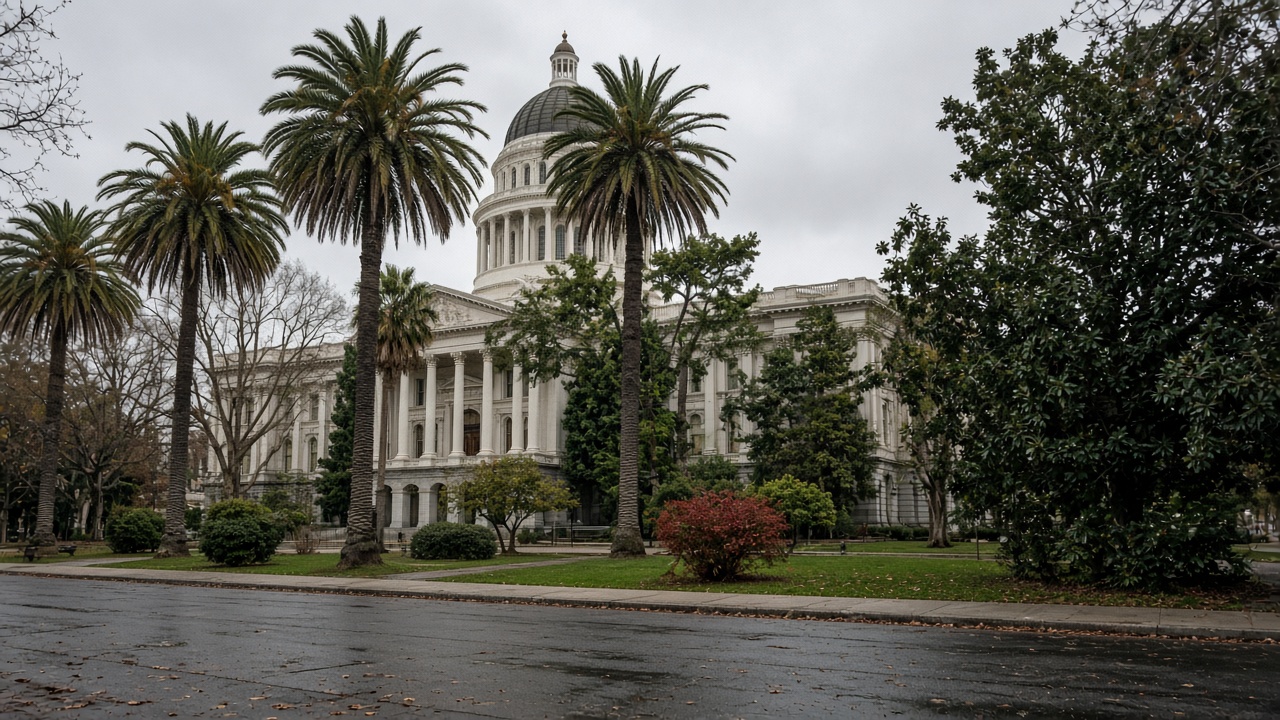
Governor Gavin Newsom signed legislation Friday extending California’s AI transparency requirements to state contractors, mandating training-data summaries and risk assessments in procurement renewals for analytics, call-center, and document-classification tools used by agencies from DMV field offices to Medi-Cal eligibility vendors.
What is on the calendar
The bill builds on AB 2013’s disclosure framework for generative models sold to Sacramento departments, adding contractor attestation forms due ninety days before contract extensions. Vendors must list data categories used in fine-tuning, whether copyrighted or personal information was included, and mitigation steps for hallucination in benefits decisions. The Department of Technology will publish template questionnaires in October for January renewals.
Newsom’s signing message emphasized enforcement through procurement law rather than private-sector model bans stalled last session. Agencies cannot award extensions if vendors refuse summaries—a whip count measured in contract dollars, not floor votes.
Who has the votes
Democratic supermajorities passed the bill along party lines; Republican opponents argued compliance costs push small integrators out of state bids. Tech industry groups secured amendments limiting retroactive liability for models deployed before 2024 but not exempting renewals. The State CIO coalition backed the measure after pilot audits found three chatbot pilots lacked documented training sets.
Unionized state workers supported disclosure, fearing opaque automation in unemployment and disability reviews. Civil-liberty groups wanted stronger public-records access to vendor summaries; final language allows redaction of trade secrets reviewed by DT.
What happens next
DT must certify vendor forms by March 2027 for all active AI-enabled contracts above $250,000. Failure triggers default termination clauses in the standard state master agreement. Vendors serving counties through joint powers authorities must flow down the same attestations—affecting Bay Area transit chatbots and Southern California toll customer service bots.
Newsom declined to sign a companion bill on frontier-model safety testing, keeping contractor transparency as the operative policy this cycle.
What we are watching
Watch whether Sacramento sues vendors who file incomplete summaries or whether enforcement stays administrative. Federal contractors serving California under dual jurisdiction may face conflicting Pentagon data rules—DT said it will issue conflict guidance before fiscal year close.
Sarah Johnson’s desk tracks procedure: this changes procurement law and renewal calendars, not just press releases. Agencies that miss January attestations will shrink vendor pools whether or not headlines follow.
Vendor landscape
Large cloud integrators told InfoHandle they already maintain private model cards for federal clients; California forms mirror those fields with state-specific attestations about public-benefits data. Smaller call-center AI vendors may struggle—precisely the outcome opponents warned about—but DT said micro-purchase pilots below $250,000 remain exempt while agencies test narrow use cases.
County governments buying through state master contracts should expect flow-down clauses in November amendments. Legal shops that sleep through renewals will lose renewals, not just pay late fees.